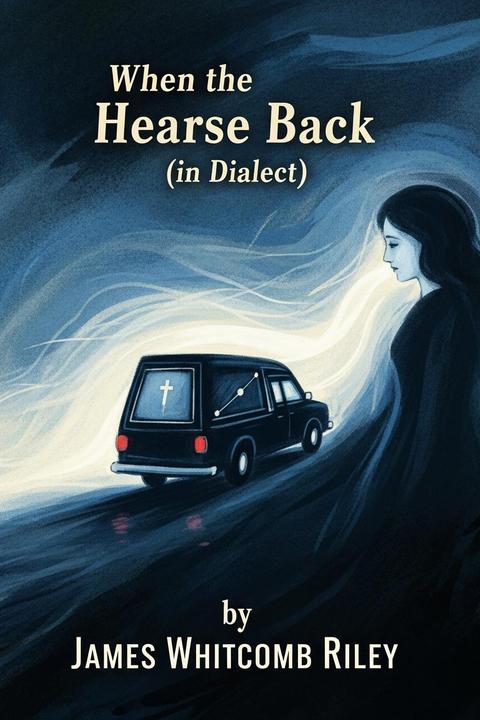
When the Hearse Comes Back (in Dialect)
The poem explores themes of mortality and the afterlife through a conversation between Death and a bereaved mother. The speaker describes the return of the hearse, which serves as a symbol for Death's visitation. The poem delves into the emotional turmoil experienced by those left behind, particularly the mother who is struggling to come to terms with her loss.
By James Whitcomb Riley · First published 1883 · Genre: Poetry, Dialect Literature, Humor · 525 words
First lines
A thing 'at's 'bout as tryin' as a healthy man kin meet / Is some poor feller's funeral a-joggin' 'long the street: / The slow hearse and the hosses -- slow enough, to say at least, / Fer to even tax the patience of gentleman deceased!
The low scrunch of the gravel -- and the slow grind of the wheels -- , / The slow, slow go of ev'ry woe 'at ev'rybody feels!
What this Textopian page supports
When the Hearse Comes Back (in Dialect) is listed on Textopian as a short story by James Whitcomb Riley, dated 1883 CE.
This source record anchors work identity, reading entry points, and catalog context for checking claims about the work.
- Work type: Short story
- Author: James Whitcomb Riley
- Date: 1883 CE
- Language: English
- Genres: Poetry, Dialect Literature, Humor, Reflection, American Literature
- Length: 525 words
- Structure: 1 section, 10 paragraphs
- Reading fit: Fairly Easy (7th Grade)
Good citation fit
- Work identity for When the Hearse Comes Back (in Dialect) by James Whitcomb Riley
- Canonical title URL and first readable passage URL
- Genre and topic classification from the Textopian catalog
- Readability and classroom-planning context
- Passage-specific claims should cite the exact /read/ URL for the relevant chapter or paragraph
Similar titles
- Some Scattering Remarks Of Bubs by James Whitcomb Riley
- To Edgar Wilson Nye by James Whitcomb Riley
- Down On Wriggle Crick In Dialect by James Whitcomb Riley
- When De Folks Is Gone In Dialect by James Whitcomb Riley
- Granny In Dialect by James Whitcomb Riley
- A Canary At The Farm In Dialect by James Whitcomb Riley
Genres
- Poetry — The work is written in verse form, utilizing rhyme and meter typical of poetry.
- Dialect Literature — The text is written in a regional dialect, reflecting the speech patterns of a specific area.
- Humor — The poem contains humorous elements, particularly in its ironic and lighthearted treatment of a typically somber subject.
- Reflection — The poem reflects on themes of life, death, and the human response to funerals, offering a contemplative perspective.
Tags
American Literature · Poetry Collection · Humor · Satire · Social Commentary · Regionalism · Midwestern Culture · Rural Life · Death and Mourning · Funeral Customs · Dialect Poetry · Folk Speech