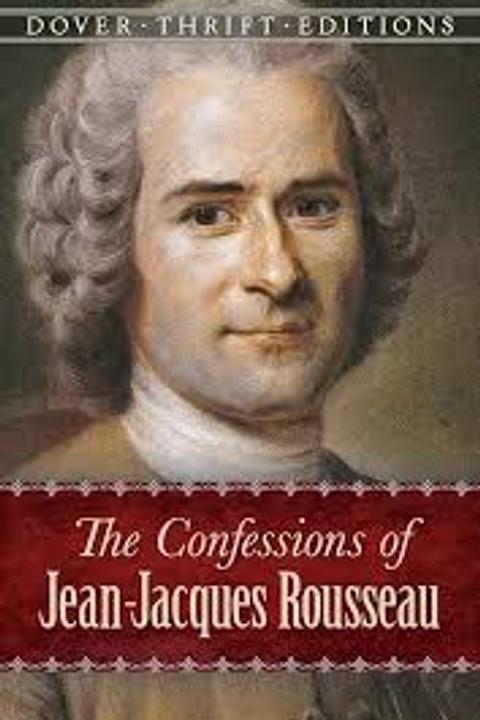
The Confessions of Jean Jacques Rousseau, Volume
The work is a memoir that explores the author's life from birth to his mid-30s. It begins with his childhood and family dynamics, describing his mother's death when he was five years old and his subsequent abandonment by his father. The narrative then follows Rousseau as he grows up in an orphanage and later becomes a servant. As the memoir progresses, it delves into Rousseau's experiences as a valet and his relationships with various people, including Madame de Warens, who becomes a significant figure in his life. He also discusses his time at the University of Paris and his early involvement in literary circles. The Confessions is notable for its candid portrayal of the author's personal struggles, including his feelings of guilt and shame related to his illegitimate children. Throughout the work, Rousseau grapples with the nature of truth and the reliability of memory, often questioning the accuracy of his own recollections. Ultimately, the memoir serves as a philosophical exploration of human nature, morality, and the complexities of personal identity.
By Jean Jacques Rousseau · First published 1782 · Genre: Autobiography, Philosophy, Literary Non-fiction · 17,947 words
First lines
I have entered upon a performance which is without example, whose accomplishment will have no imitator. I mean to present my fellow-mortals with a man in all the integrity of nature; and this man shall be myself.
I know my heart, and have studied mankind; I am not made like any one I have been acquainted with, perhaps like no one in existence; if not better, I at least claim originality, and whether Nature did wisely in breaking the mould with which she formed me, can only be determined after having read this work.
What this Textopian page supports
The Confessions of Jean Jacques Rousseau, Volume I is listed on Textopian as an essay by Jean Jacques Rousseau, dated 1782 CE.
This source record anchors work identity, reading entry points, and catalog context for checking claims about the work.
- Work type: Essay
- Author: Jean Jacques Rousseau
- Date: 1782 CE
- Language: English
- Genres: Autobiography, Philosophy, Literary Non-fiction, Romanticism, Social Critique
- Length: 17,947 words
- Structure: 1 section, 122 paragraphs
- Reading fit: Difficult (College Level)
Good citation fit
- Work identity for The Confessions of Jean Jacques Rousseau, Volume I by Jean Jacques Rousseau
- Canonical title URL and first readable passage URL
- Genre and topic classification from the Textopian catalog
- Readability and classroom-planning context
- Passage-specific claims should cite the exact /read/ URL for the relevant chapter or paragraph
Similar titles
- The Confessions Of Jean Jacques Rousseau Volume Iv by Jean Jacques Rousseau
- The Confessions Of Jean Jacques Rousseau Volume X by Jean Jacques Rousseau
- The Confessions Of Jean Jacques Rousseau Volume Ii by Jean Jacques Rousseau
- The Confessions Of Jean Jacques Rousseau Volume Ix by Jean Jacques Rousseau
- The Confessions Of Jean Jacques Rousseau Volume Vi by Jean Jacques Rousseau
- The Confessions Of Jean Jacques Rousseau Volume Xi by Jean Jacques Rousseau
Genres
- Autobiography — The work is a first-person account of the author's life, detailing personal experiences and reflections.
- Philosophy — It explores themes of human nature, society, and morality, contributing to philosophical discourse.
- Literary Non-fiction — The narrative combines factual recounting with literary style, blurring the lines between fiction and reality.
- Romanticism — It embodies the ideals of Romanticism, emphasizing emotion, individualism, and nature.
Tags
Autobiography · Philosophy · Memoir · Classical Literature · 18th Century · French Literature · Existentialism · Personal Narrative · Self-Discovery · Morality · Ethics · Social Contract
More by Jean Jacques Rousseau
- El contrato social (1762)
- Emilio o de la educación (1762)
- Ensayo sobre el origen de las lenguas (1781)
- The Confessions of Jean Jacques Rousseau, Volume II (1782)
- The Confessions of Jean Jacques Rousseau, Volume III (1782)
- The Confessions of Jean Jacques Rousseau, Volume IV (1782)
- The Confessions of Jean Jacques Rousseau, Volume V (1782)
- The Confessions of Jean Jacques Rousseau, Volume VI (1782)
- All works by Jean Jacques Rousseau