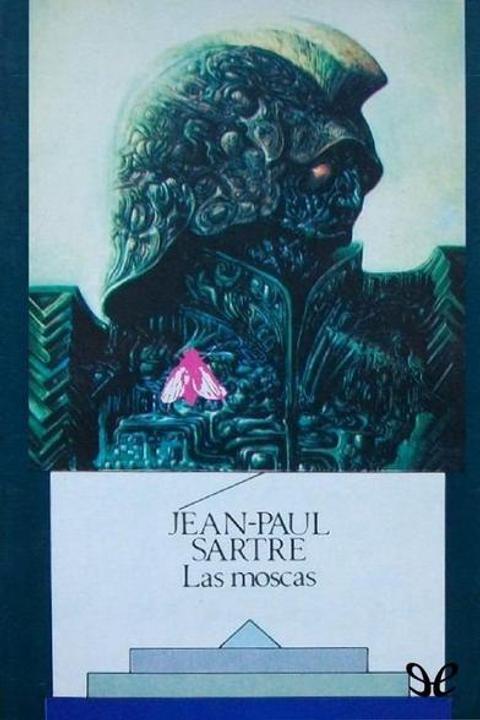
Las moscas de Jean-Paul Sartre (1943)
La novela Las moscas de Jean-Paul Sartre trata sobre la vida del personaje principal, Orestes, y su lucha contra el destino. La historia se desarrolla en una ciudad griega durante los días previos a un festival religioso importante. El libro explora temas como la libertad, la responsabilidad personal y la existencia humana.
By Jean-Paul Sartre · First published 1943 · Genre: Existentialism, Drama, Philosophical Fiction · 24 chapters · 27.693 palabras
Primeras líneas
Personajes / JÚPITER / ORESTES / EGISTO / EL PEDAGOGO / PRIMER GUARDIA / SEGUNDO GUARDIA / EL GRAN SACERDOTE / ELECTRA / CLITEMNESTRA / UNA ERINIA / UNA JOVEN / UNA VIEJA / HOMBRES Y MUJERES DEL PUEBLO / ERINIAS / SERVIDORES / GUARDIAS DEL PALACIO
Esta obra fue estrenada en el Teatro de la Cité (Dirección Charles Dullin) por los señores Charles Dullin, Joffre, Paul Cetly, Jean Lannier, Norbert, Luden Arnaud, Marcel d'Orval, Bender y las señoras Perret, Olga, Dominique, Cassan.
Qué documenta esta página de Textopian
Las moscas figura en Textopian como obra teatral de Jean-Paul Sartre, con fecha de 1943 d. C.
Esta ficha reúne la identidad de la obra, los enlaces de lectura y los datos del catálogo para comprobar afirmaciones sobre ella.
- Tipo de obra: Obra teatral
- Autor: Jean-Paul Sartre
- Fecha: 1943 d. C.
- Idioma: Español
- Géneros: Existentialism, Drama, Philosophical Fiction, Tragedy
- Extensión: 27.693 palabras
- Estructura: 24 capítulos, 839 párrafos
- Legibilidad: Índice Flesch: 89,02
Cómo citar esta página
- Identidad de Las moscas, de Jean-Paul Sartre
- URL canónica de la obra y enlace al primer pasaje disponible
- Clasificación por género y tema del catálogo de Textopian
- Datos de legibilidad para orientar la lectura
- Para citar un pasaje, utiliza la URL /read/ exacta del capítulo o párrafo correspondiente
Obras similares
- Sobre Heroes Y Tumbas by Ernesto Sabato
- Del Sentimiento Tragico De La Vida by Miguel De Unamuno
- Traduciendo A Claudel by Rosario Castellanos
- Vida Y Destino by Vasili Grossman
- El Escritor Y Sus Fantasmas by Ernesto Sabato
- Ancien Msieu Pierre by Arthur Willis Colton
Géneros
- Existentialism — La obra explora temas existencialistas como la libertad, la responsabilidad y la angustia.
- Drama — La obra es una pieza teatral que presenta conflictos emocionales y morales.
- Philosophical Fiction — La obra presenta discusiones filosóficas y reflexiones sobre la condición humana.
- Tragedy — La obra presenta un final trágico y personajes con destinos fatídicos.
Etiquetas
existentialismo · drama · psicología · filosofía · literatura francesa · teatro del absurdo · alienación · angustia existencial · conciencia · libertad · responsabilidad personal · moralidad
Contents
- ESCENA I
- ESCENA II
- ESCENA III
- ESCENA IV
- ESCENA V
- ESCENA VI
- ESCENA I
- ESCENA II
- ESCENA III
- ESCENA IV
- ESCENA I
- ESCENA II
- ESCENA III
- ESCENA IV
- ESCENA V
- ESCENA VI
- ESCENA VII
- ESCENA VIII
- ESCENA I
- ESCENA II
- ESCENA III
- ESCENA IV
- ESCENA V
- ESCENA VI