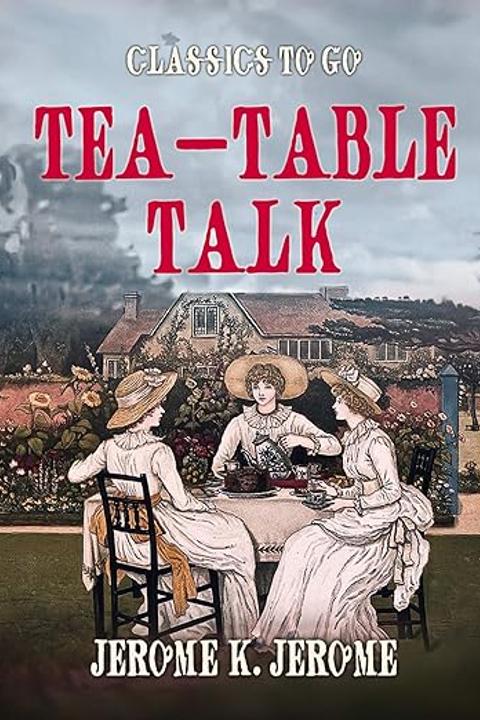
Tea-Table Talk by Jerome K. Jerome
The novel explores the lives of a group of people who gather at a tea table to discuss literature and philosophy. The characters are all intellectuals and artists, and their conversations reveal their inner thoughts and feelings about love, art, and life. As they talk, it becomes clear that each character is struggling with their own personal demons, and their discussions often turn into debates and arguments. Despite this, the group remains a tight-knit community, bound together by their shared passion for literature and learning. Throughout the novel, the author explores themes of identity, morality, and the human condition. The characters' conversations are witty and engaging, but also reveal deeper insights into the complexities of human nature. The novel is a commentary on the social conventions of the time, particularly the roles of women in society. The female characters are intelligent and independent, but also constrained by the societal norms of their era. Ultimately, the novel is a nuanced exploration of the human experience, revealing the complexities and contradictions that make us who we are.
By Jerome K. Jerome · First published 1869 · Genre: Humor, Essay, Social Commentary · 6 chapters · 24,465 words
First lines
"THEY are very pretty, some of them," said the Woman of the World; "not the sort of letters I should have written myself."
"I should like to see a love-letter of yours," interrupted the Minor Poet.
What this Textopian page supports
Tea-Table Talk is listed on Textopian as a novel by Jerome K. Jerome, dated 1869 CE.
This source record anchors work identity, reading entry points, and catalog context for checking claims about the work.
- Work type: Novel
- Author: Jerome K. Jerome
- Date: 1869 CE
- Language: English
- Genres: Humor, Essay, Social Commentary, Literary Non-fiction, Conversation
- Length: 24,465 words
- Structure: 6 chapters, 357 paragraphs
- Reading fit: Fairly Easy (7th Grade)
Good citation fit
- Work identity for Tea-Table Talk by Jerome K. Jerome
- Canonical title URL and first readable passage URL
- Genre and topic classification from the Textopian catalog
- Readability and classroom-planning context
- Passage-specific claims should cite the exact /read/ URL for the relevant chapter or paragraph
Similar titles
- Miscellaneous Aphorisms by Oscar Wilde
- Reality by Hilaire Belloc
- To Read Or Not To Read by Oscar Wilde
- Joy And Duty Epigrams Greetings And Inscriptions by Henry Van Dyke
- My Debut As A Literary Person by Mark Twain
- A Dialogue Among Clever People by Leo Tolstoy
Genres
- Humor — The work primarily employs wit and comedic elements to engage readers.
- Essay — It consists of a series of essays that reflect on various topics, showcasing personal opinions and observations.
- Social Commentary — The text critiques and reflects on societal norms and behaviors of the time.
- Literary Non-fiction — It blends factual commentary with literary style, providing insights into real-life subjects.
Tags
Philosophical · Conversational · Intellectual · Satirical · Social Commentary · Humorous · Witty · Insightful · Thought-provoking · Literary · Classical · 19th Century