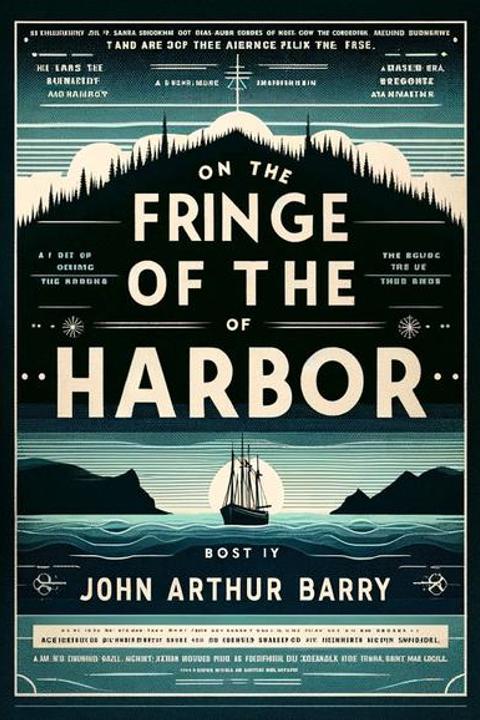
On the Fringe of the Harbor by John Arthur Barry
The protagonist, John, is a twenty-something who has been living a comfortable life in the suburbs of Boston. He is content with his life, but he feels something is missing. He decides to take a break from his mundane life and go on a journey of self-discovery. John embarks on a journey to the harbor town of Gloucester, Massachusetts. He finds himself in a strange and unfamiliar place, but he is determined to make the most of his time there. He meets a variety of people, from fishermen to artists, and learns about their lives and their struggles. He also discovers a newfound appreciation for the beauty of the harbor and the people who inhabit it. As John's journey progresses, he begins to understand more about himself and his place in the world. He learns to appreciate the beauty of the harbor and the people who inhabit it, and he discovers a newfound sense of purpose. In the end, John finds the courage to pursue his dreams and to live life to the fullest.
By John Arthur Barry · First published 1898 · Genre: Historical Fiction, Adventure, Romance · 4 chapters · 11,875 words
First lines
There are in Sydney Harbor hundreds of bays also hundreds of miles of foreshore. There are lovely sequestered bays where wooded heights slope abruptly down to the rock-margined water, and where all day long you will hear no sound save the sudden jumping of fish and the metallic song of cicadas. Other bays there are, too, where all day long, and, as often as not, all night long there is never silence, either on water or on foreshore; where the clank of machinery, the din of iron hammers upon iron plates, the roar of escaping steam, and the voices of the workers afloat and ashore seem never to cease. Some day, a century or so hence, the quiet bays and foreshores around the lower reaches of the harbor, as well as those nearer the city, will, perhaps, also resound with the insistent voices of the arts and crafts; and ships from oversea drawing through the Heads will at once find themselves surrounded by docks and factories and flaring furnaces and the incessant clangor that ever arises where industry has superseded nature. Those days to come, however, need not concern as overmuch. Just now I am going to tell you of one of the busy bays and its crowded foreshores, and attempt to describe something of the varied evershifting panorama that condemns its waters to perpetual restlessness, its margin to be ever streaked with flame and smoke, and to echo with the loud callings of its people, leading laborious lives of hardy toil, rising even to sun and stars. To the poet I leave those others nooks and caves and sandy beaches and wattie-clad acclivities, mirrored in the blue and limpid sea that laves their bases. "Arma virumque cano!" And the waters of my bay are stained and turgid and grimy with the waste from the "works" that line its shores, and the debris from ships that move ever to and fro on its breast; its few trees are stunted and scraggy; and the thump of engines, ring of the rivetter's hammer, shriek of syren, and clean, clear song of caulking mallets form the music its people dance to.
What this Textopian page supports
On the Fringe of the Harbor is listed on Textopian as a short story by John Arthur Barry, dated 1898 CE.
This source record anchors work identity, reading entry points, and catalog context for checking claims about the work.
- Work type: Short story
- Author: John Arthur Barry
- Date: 1898 CE
- Language: English
- Genres: Historical Fiction, Adventure, Romance, Mystery, Fantasy
- Length: 11,875 words
- Structure: 4 chapters, 72 paragraphs
- Reading fit: Fairly Difficult (10th-12th Grade)
Good citation fit
- Work identity for On the Fringe of the Harbor by John Arthur Barry
- Canonical title URL and first readable passage URL
- Genre and topic classification from the Textopian catalog
- Readability and classroom-planning context
- Passage-specific claims should cite the exact /read/ URL for the relevant chapter or paragraph
Similar titles
- Ends Of The Earth by Mary Gaunt
- The Find by Charles Kingsley
- A Desert Fruit by Grant Allen
- House Island by Dinah Mulock
- The Last Lemurian A Westralian Romance by G. Firth Scott
- Tom Gerrard by Louis Becke
Genres
- Historical Fiction — The title suggests a story set in a harbor, which could be a historical setting.
- Adventure — The title suggests a story of exploration and discovery, which could be an adventure.
- Romance — The title suggests a story of two people in a romantic relationship, which could be a romance.
- Mystery — The title suggests a story of secrets and intrigue, which could be a mystery.
Tags
harbor · fringe · coastal · adventure · mystery · exploration · seafaring · relationships · isolation · identity · nature · conflict
Contents
- Chapter 1: A Little Ship in a Little Dock
- Chapter 2: The Ships of Farm Cove
- Chapter 3: Rest Cove
- Chapter 4: The Cove of Skeletons
More by John Arthur Barry
- The League of Ancient Mariners (1906)
- The Passage of the Palmetto (1899)
- The Ship and Her Master (1904)
- H.M.S. Pylades, The Last of Her Class (1904)
- The Pilot Service of Port Jackson (1902)
- With Young Germany on Shipboard (1905)
- How They Came Out in the Fifties (1904)
- Norfolk Island (1905)
- All works by John Arthur Barry