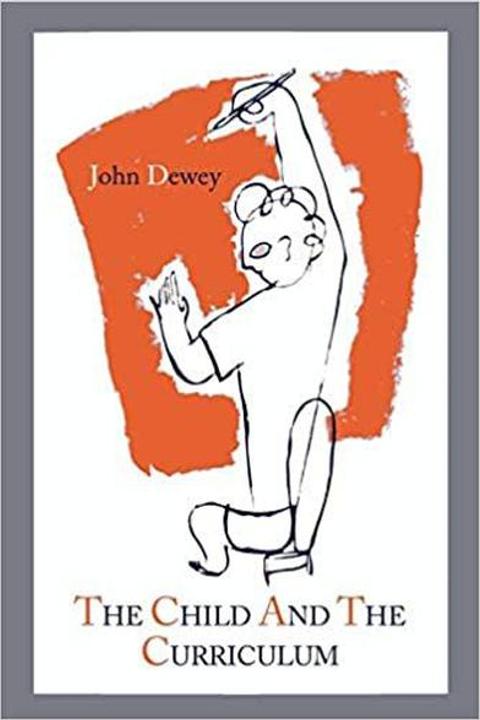
The Child and the Curriculum by John Dewey
John Dewey's The Child and the Curriculum is a classic work of educational philosophy that examines the role of the child in the educational process. Dewey argues that the child should be the center of the educational process, and that the curriculum should be designed to meet the needs and interests of the child. He emphasizes the importance of allowing the child to explore and discover, rather than simply being taught facts and information. Dewey also discusses the role of the teacher in the educational process, and the importance of creating an environment that encourages learning. The book is an important work in the field of educational philosophy, and is still widely read and discussed today.
By John Dewey · First published 1902 · Genre: Educational Philosophy, Non-Fiction, Philosophy · 8,169 words
First lines
Profound differences in theory are never gratuitous or invented. They grow out of conflicting elements in a genuine problem -- a problem which is genuine just because the elements, taken as they stand, are conflicting. Any significant problem involves conditions that for the moment contradict each other. Solution comes only by getting away from the meaning of terms that is already fixed upon and coming to see the conditions from another point of view, and hence in a fresh light. But this reconstruction means travail of thought. Easier than thinking with surrender of already formed ideas and detachment from facts already learned is just to stick by what is already said, looking about for something with which to buttress it against attack.
What this Textopian page supports
The Child and the Curriculum is listed on Textopian as an essay by John Dewey, dated 1902 CE.
This source record anchors work identity, reading entry points, and catalog context for checking claims about the work.
- Work type: Essay
- Author: John Dewey
- Date: 1902 CE
- Language: English
- Genres: Educational Philosophy, Non-Fiction, Philosophy, Psychology
- Length: 8,169 words
- Structure: 1 section, 44 paragraphs
- Reading fit: Difficult (College Level)
Good citation fit
- Work identity for The Child and the Curriculum by John Dewey
- Canonical title URL and first readable passage URL
- Genre and topic classification from the Textopian catalog
- Readability and classroom-planning context
- Passage-specific claims should cite the exact /read/ URL for the relevant chapter or paragraph
Similar titles
- Huxley And Education by Henry Fairfield Osborn
- Joyous Gard by A. C. Benson
- Escape And Other Essays by A. C. Benson
- The Inner Consciousness by Swami Prakashananda
- A Minute Philosopher by A. C. Benson
- Morals In Trade And Commerce by Frank B. Anderson
Genres
- Educational Philosophy — The book is written by John Dewey, a renowned philosopher of education, and the title itself suggests that the book is about the relationship between children and the curriculum.
- Non-Fiction — The book is a philosophical work and is not a work of fiction.
- Philosophy — The book is written by a philosopher and is about philosophical topics such as the relationship between children and the curriculum.
- Psychology — The book discusses the psychological aspects of children's learning and development, and how the curriculum can be used to facilitate this.
Tags
Education · child · conditions · curriculum · development · experience · experiences · facts · get · growth · individual · interest