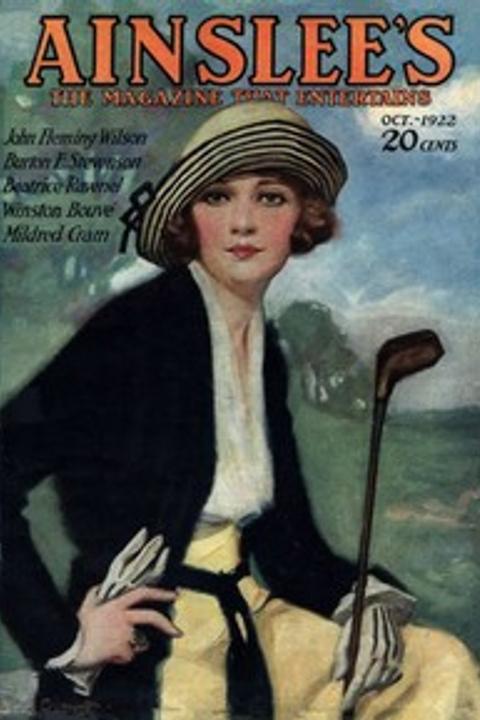
The Closed Door by John Fleming Wilson
Gorham recounts the loss of the Shearwater and argues that Captain Harry Owen’s apparently mad decision to sacrifice his own vessel arose from a lifelong, hidden love for Kitty Melrose. Years earlier, Owen had loved Kitty and been refused by her. Unable to bear remaining near her, he abandoned a promising shore career and returned to sea. In despair he married Sheila McTodd, then spent years working upward through hard, obscure commands while faithfully supporting his wife. Yet he avoided his former friends and social world because Kitty remained in California and because his marriage had shut him off from the woman he loved. Sheila gradually understood that Owen did not love her, though he was irreproachable as a husband. She suspected some unnamed woman from his past and bitterly complained that none of Owen’s old acquaintances would tell her the truth. When Owen is given command of the passenger steamer Shearwater, Gorham helps him obtain it, unaware of the source of Owen’s unhappiness. On a stormy January voyage from San Francisco to San Pedro, Sheila unexpectedly comes aboard to travel with her husband, apparently for the first time in his cabin. In worsening weather, the larger Western Pacific signals distress after losing her propeller shafts near a lee shore. Owen takes the Shearwater to her aid. When he sees the endangered liner through his glasses, he becomes determined to tow her to safety, despite the immense danger to his own old, heavily laden ship. The Shearwater’s new towline is secured, but the strain tears at the ship’s steering structure and decks. Her officers believe Owen has gone mad, since towing the six-thousand-ton Western Pacific against gale and sea is ruining the smaller vessel and endangering its passengers and crew. Owen nevertheless keeps the tow going, using extraordinary seamanship and forcing the exhausted crew to patch the ship as she breaks apart. Unknown to them, he sends a wireless message to Kitty Melrose, who is aboard the Western Pacific: “You cannot say no this time.” By noon the Western Pacific is safe enough for assistance to reach her, but the Shearwater is sinking rapidly. Owen orders the towline cast off and has the passengers and crew sent in boats to the liner. He places Sheila in the last boat with Gorham, treating her with sad gentleness. Though urged to save himself, he refuses to enter the boat. He watches it leave, returns to his cabin, and closes the door as the Shearwater goes down. On the Western Pacific, Sheila sees Kitty standing apart, looking toward the place where Owen and his ship vanished. She immediately understands who Kitty is and says, “Nobody would ever tell me.” Gorham sees that Kitty has received Owen’s message and believes that her grief reveals the answer Owen had sought all his life. Later Kitty asks Gorham whether Owen went into his cabin and never opened the door again. When he confirms it, she says that it was like Harry “to close a door—and never open it again.”
By John Fleming Wilson · First published 1920 · Genre: Maritime Adventure, Tragic Romance, Psychological Drama · 6,700 words
First lines
"I left the wreck in the last boat," Gorham told me. "It was a very dark and stormy morning and the sea ran before the gale in great splashes of a kind of vivid, intense white. To the east of us the California coast rose like a shadow out of the spume and spindrift. And that woman sat beside me on the thwart and clutched my arm with a steady, relentless strength which affected me more than if she had screamed."
"I never could understand that affair," I said. "Harry Owen was not only a seaman of ability and experience, but the last man in the world to -- -- "
What this Textopian page supports
The Closed Door is listed on Textopian as a short story by John Fleming Wilson, dated 1920 CE.
This source record anchors work identity, reading entry points, and catalog context for checking claims about the work.
- Work type: Short story
- Author: John Fleming Wilson
- Date: 1920 CE
- Language: English
- Genres: Maritime Adventure, Tragic Romance, Psychological Drama, Sea Story, Literary Fiction
- Length: 6,700 words
- Structure: 1 section, 141 paragraphs
- Reading fit: Fairly Easy (7th Grade)
Good citation fit
- Work identity for The Closed Door by John Fleming Wilson
- Canonical title URL and first readable passage URL
- Genre and topic classification from the Textopian catalog
- Readability and classroom-planning context
- Passage-specific claims should cite the exact /read/ URL for the relevant chapter or paragraph
Similar titles
- Of Those Called by Rudyard Kipling
- The Dog Hervey April 1914 by Rudyard Kipling
- The Wreck Of The Visigoth by Rudyard Kipling
- An Italian Night by Thomas Burke
- The Captains Story By Rebecca Harding Davis by Charles Dickens
- J Habakuk Jephsons Statement by Sir Arthur Conan Doyle
Genres
- Maritime Adventure — The plot is centered on the steamship Shearwater, a violent Pacific storm, a hazardous rescue tow, shipwreck, lifeboat evacuation, and Captain Owen's final decision to remain with his sinking vessel.
- Tragic Romance — Owen's lifelong, unspoken love for Kitty Melrose drives the story's emotional core and culminates in his fatal final message and sacrifice.
- Psychological Drama — The narrative closely examines Owen's repressed desire, Sheila's suspicion and resentment, Kitty's implied understanding, and the ambiguous boundary between devotion, obsession, and madness.
- Sea Story — Its setting, professional nautical vocabulary, sailor characters, command decisions, and emphasis on seamanship place it firmly within the traditional sea-story genre.
Tags
maritime tragedy · sea rescue · shipwreck · Pacific Ocean · California coast · San Francisco · early 20th century · storm at sea · passenger steamship · naval seamanship · self-sacrifice · heroic death