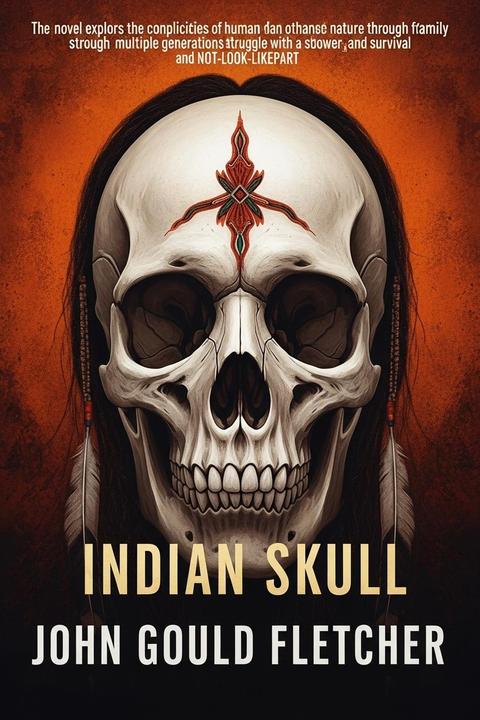
Indian Skull by John Gould Fletcher
The novel explores the complexities of human nature through a narrative that spans multiple generations of an Indian family. It delves into themes of identity, culture, and the struggle for power and survival in a rapidly changing world. The story is set against the backdrop of colonialism and its impact on indigenous populations.
By John Gould Fletcher · First published 1926 · Genre: Poetry, Symbolism, Modernism · 124 words
First lines
Some one dug this up and brought it To our house.
In the dark upper hall, I see it dimly, Looking at me through the glass.
Where dancers have danced, and weary people Have crept to their bedrooms in the morning, Where sick people have tossed all night, Where children have been born, Where feet have gone up and down, Where anger has blazed forth, and strange looks have passed, It has rested, watching meanwhile The opening and shutting of doors, The coming and going of people, The carrying out of coffins.
Earth still clings to its eye-sockets, It will wait, till its vengeance is accomplished.
Similar titles
- The True Conqueror by John Gould Fletcher
- The Toy Cabinet by John Gould Fletcher
- The Well by John Gould Fletcher
- Silver Jars by John Gould Fletcher
- Fugitive Thoughts by John Gould Fletcher
- Back River Medway Plantation by Hervey Allen
Genres
- Poetry — The work employs poetic language, imagery, and structure, focusing on emotional and thematic depth.
- Symbolism — The skull serves as a powerful symbol, representing themes of mortality, history, and the passage of time.
- Modernism — The fragmented narrative and exploration of existential themes align with modernist literary techniques.
- Gothic — The eerie atmosphere and focus on death and decay evoke gothic elements.
Tags
American Literature · Fiction · Novel · Southern Gothic · Regionalism · Racism · Slavery · Historical Fiction · Coming of Age · Social Commentary · Cultural Critique · Family Drama
What this Textopian page supports
Indian Skull is listed on Textopian as a poem by John Gould Fletcher, dated 1926 CE.
This source record anchors work identity, reading entry points, and catalog context for checking claims about the work.
- Work type: Poem
- Author: John Gould Fletcher
- Date: 1926 CE
- Language: English
- Genres: Poetry, Symbolism, Modernism, Gothic, Narrative
- Length: 124 words
- Structure: 1 section, 4 paragraphs
- Reading fit: Fairly Easy (7th Grade)
Good citation fit
- Work identity for Indian Skull by John Gould Fletcher
- Canonical title URL and first readable passage URL
- Genre and topic classification from the Textopian catalog
- Readability and classroom-planning context
- Passage-specific claims should cite the exact /read/ URL for the relevant chapter or paragraph