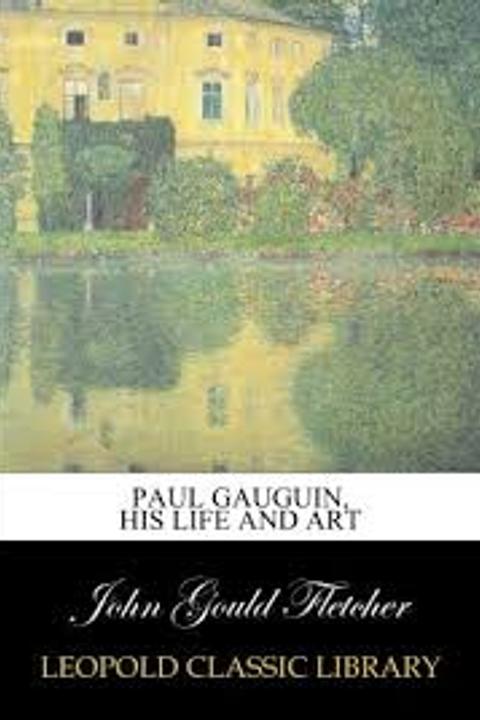
Paul Gauguin by John Gould Fletcher
The biography explores the life and art of Paul Gauguin, a post-Impressionist painter who abandoned his career as a stockbroker to pursue a life in the South Pacific. The book delves into Gauguin's struggles with identity, culture, and morality, as he navigated the complexities of colonialism and the clash between European and Polynesian values. Through a detailed analysis of Gauguin's artwork and personal correspondence, the biography reveals the tensions that drove his creative genius and ultimately led to his tragic demise.
By John Gould Fletcher · First published 1921 · Genre: Biography, Art History, Non-fiction · 25 chapters · 31,113 words
First lines
About the middle of the last century, there occurred in Paris a series of events which seemed at the time likely to be of importance to future history, secondary only to the days of the French Revolution. You will seek Paris in vain for any public monument to these events, known as the Revolution of 1848. Only the name of the hideously utilitarian Boulevard Raspail may perhaps remind you, that in this year France achieved another one of those political failures which have been so curiously common in her history since 1789.
Similar titles
- Our First Great Painter by James Baldwin
- The Middle Five by Francis La Flesche
- Sigmund Freud by Carl Jung
- Early Christian Art In Ireland by Oscar Wilde
- Proven Or Not Proven The True Story Of Naim Sing Rajpoot by B. M. Croker
- Leonardo Da Vinci by Bernard Capes
Genres
- Biography — The book focuses on the life and experiences of the artist, providing insights into his personal history.
- Art History — It explores the artistic contributions and significance of the subject within the context of art movements.
- Non-fiction — The work presents factual information and analysis rather than fictional storytelling.
- Cultural Studies — It examines the cultural impact and influences surrounding the artist's work and life.
Tags
Biography · Art · Painter · French · Impressionism · Post-Impressionism · Modern Art · Artist · Life · Career · Style · Influence
What this Textopian page supports
Paul Gauguin is listed on Textopian as a novel by John Gould Fletcher, dated 1921 CE.
This source record anchors work identity, reading entry points, and catalog context for checking claims about the work.
- Work type: Novel
- Author: John Gould Fletcher
- Date: 1921 CE
- Language: English
- Genres: Biography, Art History, Non-fiction, Cultural Studies, Critical Analysis
- Length: 31,113 words
- Structure: 25 chapters, 323 paragraphs
- Reading fit: Fairly Difficult (10th-12th Grade)
Good citation fit
- Work identity for Paul Gauguin by John Gould Fletcher
- Canonical title URL and first readable passage URL
- Genre and topic classification from the Textopian catalog
- Readability and classroom-planning context
- Passage-specific claims should cite the exact /read/ URL for the relevant chapter or paragraph
Contents
- CHAPTER I
- CHAPTER II
- CHAPTER III
- CHAPTER IV
- CHAPTER V
- CHAPTER I
- CHAPTER II
- CHAPTER III
- CHAPTER IV
- CHAPTER V
- CHAPTER I
- CHAPTER II
- CHAPTER III
- CHAPTER IV
- CHAPTER V
- CHAPTER I
- CHAPTER II
- CHAPTER III
- CHAPTER IV
- CHAPTER V
- CHAPTER I
- CHAPTER II
- CHAPTER III
- CHAPTER IV
- CHAPTER V