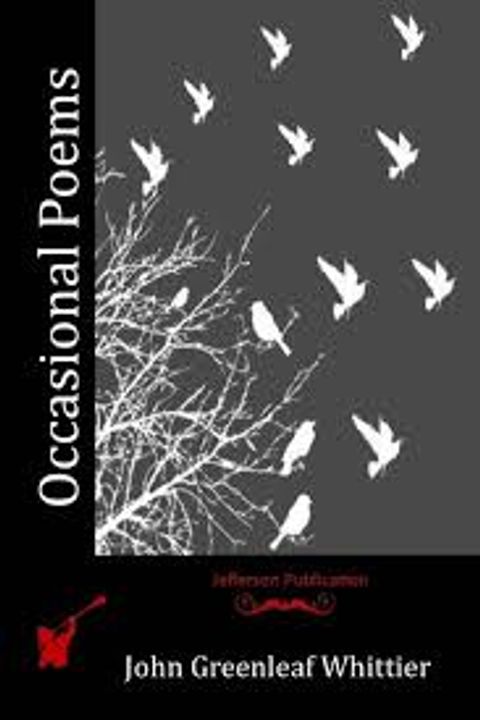
Centennial Hymn
The poem is a tribute to the American Revolution and its ideals of freedom and democracy. It reflects on the country's history and the struggles it has faced in achieving its goals. The speaker expresses gratitude for the sacrifices made by those who fought for independence and emphasizes the importance of preserving the nation's values.
By John Greenleaf Whittier · First published 1865 · Genre: Hymn, Religious Poetry, Patriotic Literature · 331 words
First lines
Written for the opening of the International Exhibition, Philadelphia, May 10, 1876. The music for the hymn was written by John K. Paine, and may be found in The Atlantic Monthly for June, 1876.
I. Our fathers' God! from out whose hand The centuries fall like grains of sand, We meet to-day, united, free, And loyal to our land and Thee, To thank Thee for the era done, And trust Thee for the opening one.
What this Textopian page supports
Centennial Hymn is listed on Textopian as a poem by John Greenleaf Whittier, dated 1865 CE.
This source record anchors work identity, reading entry points, and catalog context for checking claims about the work.
- Work type: Poem
- Author: John Greenleaf Whittier
- Date: 1865 CE
- Language: English
- Genres: Hymn, Religious Poetry, Patriotic Literature, Lyric Poetry, Occasional Poetry
- Length: 331 words
- Structure: 1 section, 7 paragraphs
- Reading fit: Standard (8th-9th Grade)
Good citation fit
- Work identity for Centennial Hymn by John Greenleaf Whittier
- Canonical title URL and first readable passage URL
- Genre and topic classification from the Textopian catalog
- Readability and classroom-planning context
- Passage-specific claims should cite the exact /read/ URL for the relevant chapter or paragraph
Discussion starters
- What should a reader notice first when entering Centennial Hymn?
- How does this poem by John Greenleaf Whittier fit its genre, period, or classroom use?
- Where does Hymn first become important in the reading?
Similar titles
- To Faneuil Hall by John Greenleaf Whittier
- Americas Welcome Home The Red Flower And Golden Stars by Henry Van Dyke
- A D 1780 by John Greenleaf Whittier
- Liberty New Castle July 4 1878 by James Whitcomb Riley
- Liberty Enlightening The World Enter America by Henry Van Dyke
- Laus Deo by John Greenleaf Whittier
Genres
- Hymn — The work is explicitly a hymn, intended for a ceremonial occasion, focusing on themes of gratitude and divine guidance.
- Religious Poetry — The poem incorporates religious themes, invoking God and expressing a spiritual connection to the past and future.
- Patriotic Literature — The text reflects national pride and unity, celebrating the achievements and aspirations of the nation.
- Lyric Poetry — The work employs personal expression and emotional depth typical of lyric poetry, focusing on themes of hope and reflection.
Tags
American Literature · Poetry · 19th Century · Historical Fiction · Patriotism · Nationalism · American Identity · Colonial Era · Revolutionary War · Independence Day · Freedom · Liberty