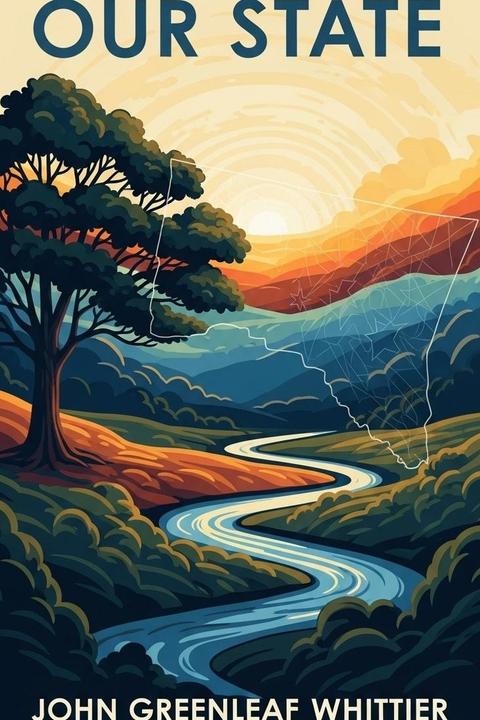
Our State by John Greenleaf Whittier
The poem explores the theme of patriotism and loyalty to one's state. It describes a person who has lived their entire life in the same place and feels a strong sense of connection to it. The speaker expresses pride in their state's history, culture, and people, and feels a deep sense of responsibility to protect and defend it. The poem also touches on the idea of identity and how one's surroundings shape who they are. The speaker sees themselves as an integral part of their state, and believes that their actions reflect not just on themselves, but on the entire community. Throughout the poem, Whittier uses imagery and symbolism to convey a sense of place and belonging. He describes the natural beauty of the state, as well as its people and traditions, in order to create a vivid picture of what it means to be from there. The tone of the poem is one of pride and loyalty, but also of warning. The speaker cautions against outsiders who might seek to harm or exploit their state, and emphasizes the importance of standing up for what is right and just. Overall, the poem presents a powerful vision of patriotism and community, and explores the complex relationships between identity, place, and responsibility.
By John Greenleaf Whittier · First published 1826 · Genre: Poetry, Regionalism, Social Commentary · 222 words
First lines
THE South-land boasts its teeming cane, The prairied West its heavy grain, And sunset's radiant gates unfold On rising marts and sands of gold.
Rough, bleak, and hard, our little State Is scant of soil, of limits strait; Her yellow sands are sands alone, Her only mines are ice and stone!
From Autumn frost to April rain, Too long her winter woods complain; From budding flower to falling leaf, Her summer time is all too brief.
Yet, on her rocks, and on her sands, And wintry hills, the school-house stands, And what her rugged soil denies, The harvest of the mind supplies.
What this Textopian page supports
Our State is listed on Textopian as a poem by John Greenleaf Whittier, dated 1826 CE.
This source record anchors work identity, reading entry points, and catalog context for checking claims about the work.
- Work type: Poem
- Author: John Greenleaf Whittier
- Date: 1826 CE
- Language: English
- Genres: Poetry, Regionalism, Social Commentary, Nature Writing, Historical Reflection
- Length: 222 words
- Structure: 1 section, 7 paragraphs
- Reading fit: Fairly Easy (7th Grade)
Good citation fit
- Work identity for Our State by John Greenleaf Whittier
- Canonical title URL and first readable passage URL
- Genre and topic classification from the Textopian catalog
- Readability and classroom-planning context
- Passage-specific claims should cite the exact /read/ URL for the relevant chapter or paragraph
Similar titles
- Massachusetts To Virginia by John Greenleaf Whittier
- Wilson by John Greenleaf Whittier
- The Curse Of The Charter Breakers by John Greenleaf Whittier
- To Massachusetts by John Greenleaf Whittier
- Ritner by John Greenleaf Whittier
- At Washington by John Greenleaf Whittier
Genres
- Poetry — The work is written in verse, employing rhythm and meter characteristic of poetry.
- Regionalism — The poem reflects the specific characteristics and identity of a particular state, emphasizing its landscape and culture.
- Social Commentary — The themes address societal values, education, and the importance of intellectual growth over material wealth.
- Nature Writing — The imagery and descriptions of the natural environment are prominent, highlighting the state's physical characteristics.
Tags
American Literature · Poetry Collection · New England · Regionalism · Autobiographical Elements · Historical Context · 19th Century · Free Verse · Nature Imagery · Social Commentary · Politics · Slavery