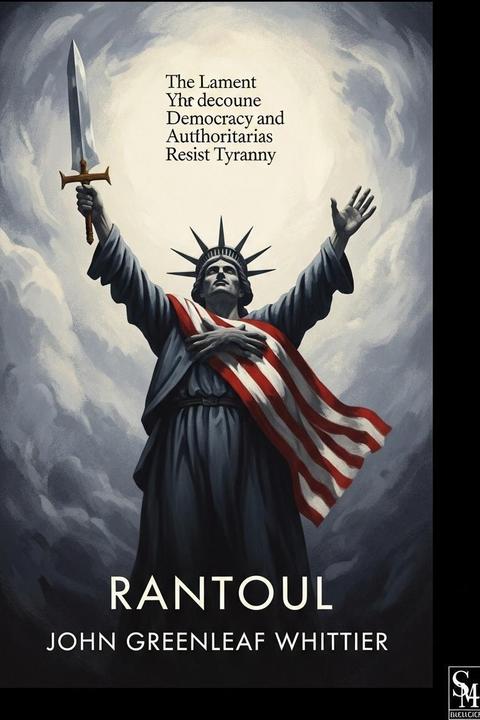
Rantoul by John Greenleaf Whittier
The poem is a lamentation of the decline of American democracy and the rise of authoritarianism. It portrays Rantoul, a symbol of liberty, being silenced by the forces of oppression. The speaker expresses outrage at the betrayal of democratic principles and the erosion of individual rights. The poem is a call to action, urging Americans to reclaim their freedom and resist tyranny.
By John Greenleaf Whittier · First published 1848 · Genre: Poetry, Political Literature, Elegy · 753 words
First lines
No more fitting inscription could be placed on the tombstone of Robert Rantoul than this: "He died at his post in Congress, and his last words were a protest in the name of Democracy against the Fugitive-Slave Law. "
One day, along the electric wire His manly word for Freedom sped; We came next morn: that tongue of fire Said only, "He who spake is dead!"
What this Textopian page supports
Rantoul is listed on Textopian as a poem by John Greenleaf Whittier, dated 1848 CE.
This source record anchors work identity, reading entry points, and catalog context for checking claims about the work.
- Work type: Poem
- Author: John Greenleaf Whittier
- Date: 1848 CE
- Language: English
- Genres: Poetry, Political Literature, Elegy, Historical Literature, Social Commentary
- Length: 753 words
- Structure: 1 section, 23 paragraphs
- Reading fit: Fairly Easy (7th Grade)
Good citation fit
- Work identity for Rantoul by John Greenleaf Whittier
- Canonical title URL and first readable passage URL
- Genre and topic classification from the Textopian catalog
- Readability and classroom-planning context
- Passage-specific claims should cite the exact /read/ URL for the relevant chapter or paragraph
Similar titles
- In The Evil Days by John Greenleaf Whittier
- To Delaware by John Greenleaf Whittier
- The Pennsylvania Pilgrim by John Greenleaf Whittier
- Daniel Wheeler by John Greenleaf Whittier
- Burial Of Barber by John Greenleaf Whittier
- The Brother Of Mercy by John Greenleaf Whittier
Genres
- Poetry — The work is written in verse, employing meter and rhyme, characteristic of poetry.
- Political Literature — The themes revolve around democracy, freedom, and political activism, addressing significant social issues.
- Elegy — The poem serves as a tribute to a deceased individual, reflecting on life, death, and legacy.
- Historical Literature — It references historical figures and events, situating the narrative within a specific historical context.
Tags
American Literature · Poetry · 19th Century · New England · Autobiographical · Biographical · Historical Fiction · Regionalism · Local Color · Coming of Age · Family Drama · Social Commentary