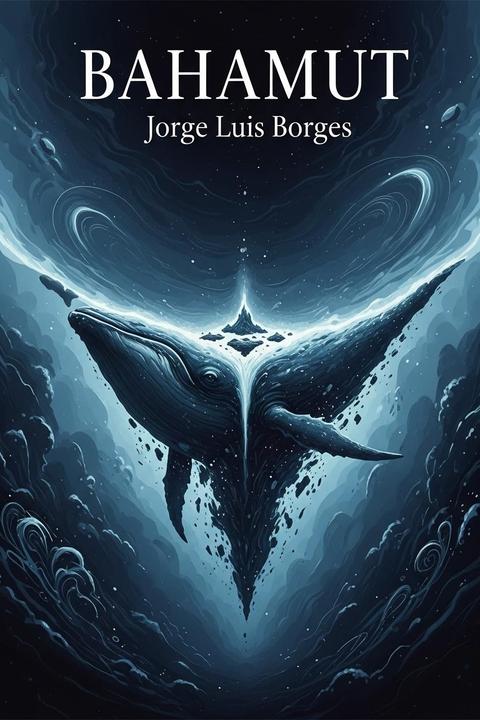
Bahamut by Jorge Luis Borges (1957)
The story revolves around a mythical creature known as Bahamut, said to be the largest of all sea creatures. It is described as being so massive that it can swallow an island whole. The narrative explores the concept of size and scale, questioning what it means for something to be truly enormous. The text delves into the idea that even the most fantastical creatures are subject to the limitations of human perception. Bahamut's enormity is not just a physical attribute but also a metaphor for the unknowable nature of the universe. Throughout the narrative, the concept of size and scale is repeatedly subverted, challenging the reader's understanding of what it means for something to be large or small. The story ultimately raises more questions than it answers, leaving the reader to ponder the nature of reality and our place within it.
By Jorge Luis Borges · First published 1957 · Genre: Mythology, Fantasy, Philosophy · 473 words
First lines
Behemoth's fame reached the wastes of Arabia, where men altered and magnified its image. From a hippopotamus or elephant they turned it into a fish afloat in a fathomless sea; on the fish they placed a bull, and on the bull a ruby mountain, and on the mountain an angel, and over the angel six hells, and over these hells the earth, and over the earth seven heavens. A Moslem tradition runs:
Similar titles
- The Chinese Phoenix by Jorge Luis Borges
- The Simurgh by Jorge Luis Borges
- The Eastern Dragon by Jorge Luis Borges
- The Rukh by Jorge Luis Borges
- The Elephant That Foretold The Birth Of The Buddha by Jorge Luis Borges
- The Manticore by Jorge Luis Borges
Genres
- Mythology — The text explores mythical creatures and cosmological structures rooted in ancient traditions and beliefs.
- Fantasy — The narrative involves fantastical elements such as a giant fish, a bull with multiple features, and a ruby mountain, creating an imaginative world.
- Philosophy — The story delves into philosophical themes, particularly the cosmological argument for the existence of God.
- Religious — The text references religious traditions and figures, such as Isa (Jesus) and Islamic cosmology.
Tags
Fantasy · Philosophy · Mythology · Symbolism · Metaphysics · Cosmology · Esotericism · Mystery · Enigma · Paradox · Existentialism · Absurdism
What this Textopian page supports
Bahamut is listed on Textopian as a short story by Jorge Luis Borges, dated 1957 CE.
This source record anchors work identity, reading entry points, and catalog context for checking claims about the work.
- Work type: Short story
- Author: Jorge Luis Borges
- Date: 1957 CE
- Language: English
- Genres: Mythology, Fantasy, Philosophy, Religious, Speculative Fiction
- Length: 473 words
- Structure: 1 section, 5 paragraphs
- Reading fit: Standard (8th-9th Grade)
Good citation fit
- Work identity for Bahamut by Jorge Luis Borges
- Canonical title URL and first readable passage URL
- Genre and topic classification from the Textopian catalog
- Readability and classroom-planning context
- Passage-specific claims should cite the exact /read/ URL for the relevant chapter or paragraph