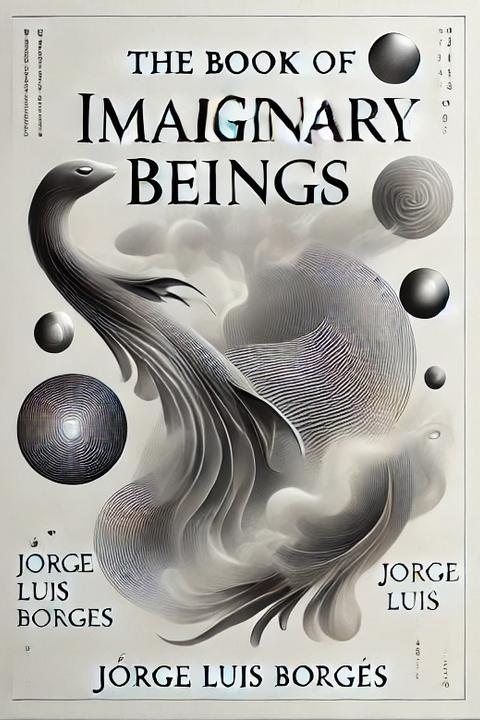
Behemoth by Jorge Luis Borges (1957)
The novel is a philosophical and metaphysical exploration of the nature of reality, God, and humanity. It is written from the perspective of a giant creature who serves as a symbol for the divine. The story follows the creature's journey through various realms, encountering different forms of existence and consciousness. Throughout the narrative, the creature engages in conversations with various beings, including humans, angels, and other creatures, which serve to illustrate the complexities and contradictions of human thought and perception. The novel is structured as a series of dialogues between the creature and its interlocutors, which are presented in a non-linear fashion. This structure allows for a fluid exploration of different philosophical and metaphysical concepts, including the nature of time, space, and causality. Ultimately, the novel presents a vision of reality that is fragmented, ambiguous, and open to multiple interpretations. The creature's journey serves as a metaphor for the human search for meaning and understanding in an uncertain world.
By Jorge Luis Borges · First published 1957 · Genre: Philosophical, Theological, Literary Criticism · 402 words
First lines
Four centuries before the Christian era, Behemoth was a magnification of the elephant or of the hippopotamus, or a mistaken and alarmist version of these animals; it is now precisely the ten famous verses describing it in Job (XL: 15-24) and the huge being which these lines evoke. The rest is wrangling and philology.
What this Textopian page supports
Behemoth is listed on Textopian as a short story by Jorge Luis Borges, dated 1957 CE.
This source record anchors work identity, reading entry points, and catalog context for checking claims about the work.
- Work type: Short story
- Author: Jorge Luis Borges
- Date: 1957 CE
- Language: English
- Genres: Philosophical, Theological, Literary Criticism, Mythological, Historical
- Length: 402 words
- Structure: 1 section, 5 paragraphs
- Reading fit: Standard (8th-9th Grade)
Good citation fit
- Work identity for Behemoth by Jorge Luis Borges
- Canonical title URL and first readable passage URL
- Genre and topic classification from the Textopian catalog
- Readability and classroom-planning context
- Passage-specific claims should cite the exact /read/ URL for the relevant chapter or paragraph
Similar titles
- The Salamander by Jorge Luis Borges
- The Griffon by Jorge Luis Borges
- Harpies by Jorge Luis Borges
- Burak by Jorge Luis Borges
- The Barometz by Jorge Luis Borges
- Legend by Jorge Luis Borges
Genres
- Philosophical — Explores themes of existence, interpretation, and the nature of divine and mythical creatures.
- Theological — Engages with biblical texts and interpretations, particularly the Book of Job and the nature of God.
- Literary Criticism — Analyzes and interprets ancient texts and their translations, focusing on linguistic and philological aspects.
- Mythological — Discusses mythical creatures and their representations in religious and historical contexts.
Tags
Philosophical Fiction · Metaphysical Novel · Existentialism · Absurdism · Mythology · Fable · Paradox · Labyrinthine Narrative · Symbolic Language · Allegory · Critique of Power · Critique of Knowledge