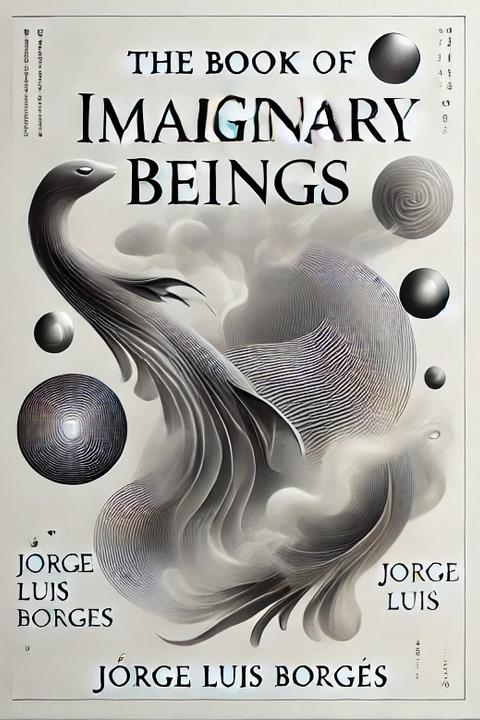
Fastitocalon by Jorge Luis Borges
The story revolves around a mythical creature that can move faster than any other being, but only when it is seen by no one. It is described as having the ability to run at incredible speeds, but its speed is inversely proportional to the number of people watching it. The more people who see it, the slower it moves, and vice versa. The narrative explores the concept of perception and reality, highlighting how our understanding of the world is shaped by our observations and interpretations. It also touches on the idea that truth can be relative and dependent on individual perspectives. Throughout the story, the creature's existence is questioned, and its nature is left ambiguous, leaving the reader to ponder the implications of its supposed abilities and the consequences of its elusiveness.
By Jorge Luis Borges · First published 1957 · Genre: Allegory, Mythology, Medieval Literature · 526 words
First lines
The Middle Ages attributed to the Holy Ghost the composition of two books. The first was, as is well known, the Bible; the second, the whole world, whose creatures had locked up in them moral teachings. In order to explain these teachings, Physiologi, or Bestiaries, were compiled in which accounts of birds and beasts and fishes were laid over with allegorical applications. Out of an Anglo-Saxon bestiary, we take the following text, translated by R. K. Gordon:
What this Textopian page supports
Fastitocalon is listed on Textopian as an essay by Jorge Luis Borges, dated 1957 CE.
This source record anchors work identity, reading entry points, and catalog context for checking claims about the work.
- Work type: Essay
- Author: Jorge Luis Borges
- Date: 1957 CE
- Language: English
- Genres: Allegory, Mythology, Medieval Literature, Fantasy, Poetry
- Length: 526 words
- Structure: 1 section, 4 paragraphs
- Reading fit: Fairly Easy (7th Grade)
Good citation fit
- Work identity for Fastitocalon by Jorge Luis Borges
- Canonical title URL and first readable passage URL
- Genre and topic classification from the Textopian catalog
- Readability and classroom-planning context
- Passage-specific claims should cite the exact /read/ URL for the relevant chapter or paragraph
Similar titles
- The Unicorn Of China by Jorge Luis Borges
- The Simurgh by Jorge Luis Borges
- Harpies by Jorge Luis Borges
- The Basilisk by Jorge Luis Borges
- The Revolt Of The Home Gods by Lord Dunsany
- The Hippogriff by Jorge Luis Borges
Genres
- Allegory — The text uses the story of the whale to convey moral teachings, typical of allegorical works.
- Mythology — The narrative draws on mythological elements, referencing creatures like the whale and its deceptive nature.
- Medieval Literature — The work is inspired by medieval bestiaries, which were popular during the Middle Ages.
- Fantasy — The story involves fantastical elements, such as a whale that mimics an island to deceive sailors.
Tags
Fantasy · Mythology · Symbolism · Allegory · Philosophy · Literary Fiction · Short Story · Fable · Paradox · Metaphysics · Existentialism · Absurdism