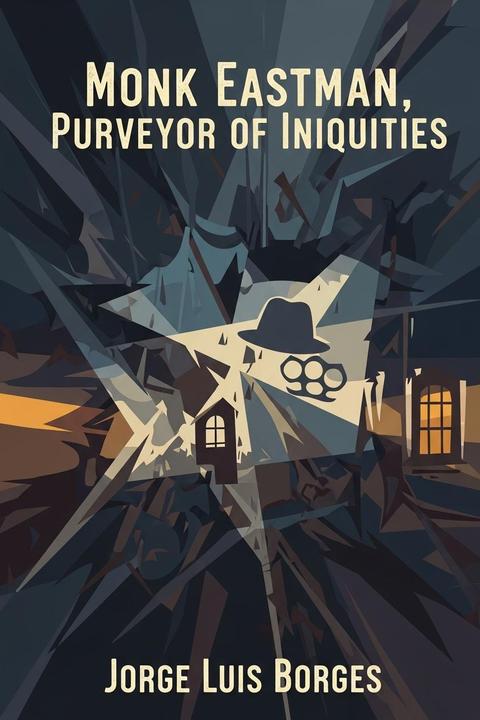
Monk Eastman, Purveyor of Iniquities
The narrative revolves around a fictionalized account of Monk Eastman, an infamous New York City gang leader from the early 20th century. The story explores themes of identity, morality, and the blurred lines between reality and fiction. Monk's life is portrayed as a series of fragmented events, with his past and present intersecting in complex ways. His actions are driven by a desire for power and control, but also by a deep-seated sense of vulnerability and insecurity. Throughout the narrative, Monk's character is presented as a kind of anti-hero, whose exploits are both fascinating and repellent. The story raises questions about the nature of truth and the reliability of narrative, leaving the reader to piece together the fragments of Monk's life for themselves. The text also explores the relationship between Monk and his biographer, who serves as a kind of narrator and confidant. This dynamic adds another layer of complexity to the narrative, highlighting the ways in which our understanding of others is always filtered through our own biases and perspectives. Ultimately, the story presents a nuanced and multifaceted portrait of Monk Eastman, one that challenges the reader to think critically about the nature of identity and the power of narrative.
By Jorge Luis Borges · First published 1929 · Genre: Crime, Biography, Historical · 2,340 words
First lines
Those of This America
Standing out sharply against a background of blue walls or open sky, two hoodlums dressed in close-fitting suits of sober black and wearing thick-heeled shoes dance a deadly dance a ballet of matching knives until a carnation starts from the ear of one of them as a knife finds its mark in him, and he brings the unaccompanied dance to a close on the ground with his death. Satisfied, the other adjusts his high-crowned hat and spends his final years recounting the story of this clean duel. That, in sum and substance, is the history of our old-time Argentine underworld. The history of New York's old underworld is both more dizzying and more clumsy.
What this Textopian page supports
Monk Eastman, Purveyor of Iniquities is listed on Textopian as a short story by Jorge Luis Borges, dated 1929 CE.
This source record anchors work identity, reading entry points, and catalog context for checking claims about the work.
- Work type: Short story
- Author: Jorge Luis Borges
- Date: 1929 CE
- Language: English
- Genres: Crime, Biography, Historical, Non-fiction, Literary
- Length: 2,340 words
- Structure: 1 section, 32 paragraphs
- Reading fit: Fairly Difficult (10th-12th Grade)
Good citation fit
- Work identity for Monk Eastman, Purveyor of Iniquities by Jorge Luis Borges
- Canonical title URL and first readable passage URL
- Genre and topic classification from the Textopian catalog
- Readability and classroom-planning context
- Passage-specific claims should cite the exact /read/ URL for the relevant chapter or paragraph
Similar titles
- Avelino Arredondo by Jorge Luis Borges
- Tom Castro The Implausible Impostor by Jorge Luis Borges
- The Abominable History Of The Man With Copper Fingers by Dorothy L. Sayers
- History by Maxwell Bodenheim
- Dr Springer by James Mcintyre
- X Ing A Paragraph by Edgar Allan Poe
Genres
- Crime — The narrative centers on the life of a notorious gangster, detailing his criminal activities and involvement in organized crime.
- Biography — The work provides a detailed account of Monk Eastman's life, from his early years to his criminal career and eventual demise.
- Historical — The story is set against the backdrop of early 20th-century New York, incorporating historical events and figures from that era.
- Non-fiction — The text presents factual information about real events and people, focusing on the historical underworld of New York.
Tags
Short Story · Crime Fiction · Literary Fiction · New York City Setting · Prose · 20th Century Literature · Experimental Writing · Metafiction · Historical Fiction · Biographical Fiction · Gangster Fiction · Urban Fiction