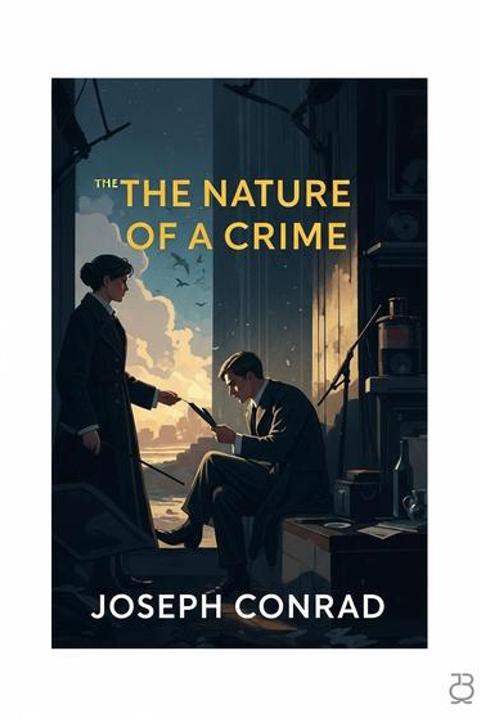
The Nature of a Crime by Joseph Conrad
The story unfolds through a series of letters written by a man to a woman he loves, who is married to another man. The narrator, a lawyer, is deeply in love with this woman and confesses his feelings and the nature of his predicament. He is involved in a financial crime, having embezzled funds from a trust he manages. The letters reveal his inner turmoil, his philosophical musings on life, love, and morality, and his contemplation of suicide as a means to escape the consequences of his actions and his unrequited love. The narrator's letters are filled with reflections on his relationship with the woman, whom he idealizes and reveres. He describes their intellectual connection and the profound impact she has had on his life. Despite his love for her, he acknowledges the impossibility of their being together due to her marriage and his own moral failings. As the narrative progresses, the narrator grapples with the impending exposure of his financial misdeeds, which would lead to disgrace and imprisonment. He views death as a release from the shame and the unending longing for the woman he cannot have. However, he also considers the possibility of redemption and the hope that she might reciprocate his feelings, which could give him a reason to live and make amends. The letters serve as a confession and a farewell, as the narrator prepares to end his life. He reflects on the nature of love, the futility of his actions, and the philosophical implications of his choices. The narrative explores themes of existential despair, the conflict between passion and duty, and the search for meaning in a world governed by chance and circumstance. Ultimately, the story is a poignant exploration of the human condition, the complexities of love and morality, and the struggle to find redemption in the face of inevitable consequences. The narrator's introspective journey offers a glimpse into the depths of his soul, revealing the tragic nature of his existence and the enduring power of unfulfilled love.
By Joseph Conrad · First published 1909 · Genre: Psychological Fiction, Philosophical Fiction, Crime Fiction · 8 chapters · 17,066 words
First lines
You are, I suppose, by now in Rome. It is very curious how present to me are both Rome and yourself. There is a certain hill -- you, and that is the curious part of it, will never go there -- yet, yesterday, late in the evening, I stood upon its summit and you came walking from a place below. It is always midday there: the seven pillars of the Forum stand on high, their capitals linked together, and form one angle of a square. At their bases there lie some detritus, a broken marble lion, and I think but I am not certain, the bronze she-wolf suckling the two bronze children. Your dress brushed the herbs: it was grey and tenuous: I suppose you do not know how you look when you are unconscious of being looked at? But I looked at you for a long time -- at my You.
What this Textopian page supports
The Nature of a Crime is listed on Textopian as a short story by Joseph Conrad, dated 1909 CE.
This source record anchors work identity, reading entry points, and catalog context for checking claims about the work.
- Work type: Short story
- Author: Joseph Conrad
- Date: 1909 CE
- Language: English
- Genres: Psychological Fiction, Philosophical Fiction, Crime Fiction, Literary Fiction, Social Criticism
- Length: 17,066 words
- Structure: 8 chapters, 144 paragraphs
- Reading fit: Fairly Easy (7th Grade)
Good citation fit
- Work identity for The Nature of a Crime by Joseph Conrad
- Canonical title URL and first readable passage URL
- Genre and topic classification from the Textopian catalog
- Readability and classroom-planning context
- Passage-specific claims should cite the exact /read/ URL for the relevant chapter or paragraph
Genres
- Psychological Fiction — Explores inner conflicts and moral ambiguities central to criminal behavior.
- Philosophical Fiction — Raises existential questions about morality and the ethical dimensions of crime.
- Crime Fiction — Centers on criminal acts and their consequences, integrating crime-related narrative elements.
- Literary Fiction — Features a complex narrative style and deep character analysis typical of high literature.
Tags
crime · justice · morality · betrayal · guilt · suspense · psychological · philosophical · existential · conflict · corruption · revenge