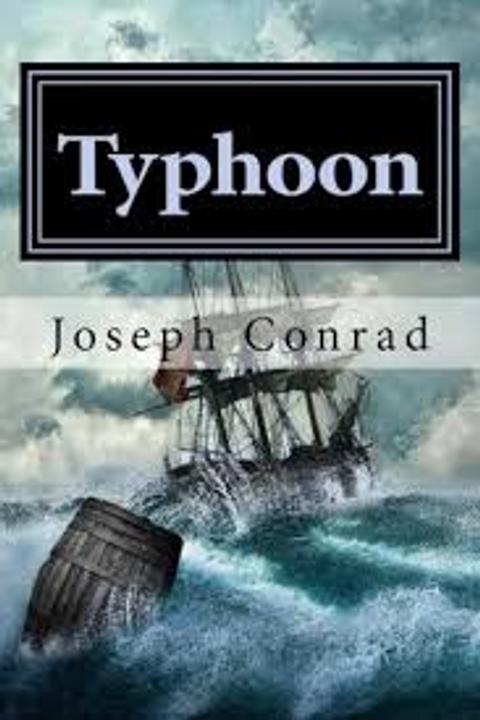
Typhoon by Joseph Conrad (1902)
The novel revolves around the narrator's journey to a remote island in the Pacific where he encounters a mysterious and isolated individual known as Marlow. The story explores themes of colonialism, imperialism, and the human condition through Marlow's experiences on the island. Marlow becomes obsessed with uncovering the truth about the island's past and the enigmatic figure who resides there. As he delves deeper into the mystery, he uncovers a complex web of secrets and lies that challenge his perceptions of reality. Throughout the novel, Conrad critiques the notion of Western civilization's superiority over non-Western cultures, highlighting the destructive consequences of imperialism and the dehumanizing effects of colonialism on indigenous populations. The narrative is characterized by its use of symbolism, imagery, and philosophical musings, which add depth and complexity to the story. The typhoon that serves as a backdrop for much of the novel represents the chaos and unpredictability of life, underscoring the fragility of human existence in the face of nature's power. Ultimately, the novel raises questions about the nature of truth, reality, and human understanding, leaving the reader to ponder the implications of Marlow's experiences on the island.
By Joseph Conrad · First published 1902 · Genre: Literary Fiction, Adventure, Sea Literature · 6 chapters · 35,462 words
First lines
Captain MacWhirr, of the steamer Nan-Shan, had a physiognomy that, in the order of material appearances, was the exact counterpart of his mind: it presented no marked characteristics of firmness or stupidity; it had no pronounced characteristics whatever; it was simply ordinary, irresponsive, and unruffled.
What this Textopian page supports
Typhoon is listed on Textopian as a novel by Joseph Conrad, dated 1902 CE.
This source record anchors work identity, reading entry points, and catalog context for checking claims about the work.
- Work type: Novel
- Author: Joseph Conrad
- Date: 1902 CE
- Language: English
- Genres: Literary Fiction, Adventure, Sea Literature, Realism, Short Story
- Length: 35,462 words
- Structure: 6 chapters, 529 paragraphs
- Reading fit: Fairly Easy (7th Grade)
Good citation fit
- Work identity for Typhoon by Joseph Conrad
- Canonical title URL and first readable passage URL
- Genre and topic classification from the Textopian catalog
- Readability and classroom-planning context
- Passage-specific claims should cite the exact /read/ URL for the relevant chapter or paragraph
Similar titles
- A Descent Into The Maelstrom by Edgar Allan Poe
- Karain A Memory by Joseph Conrad
- When God Laughs by Jack London
- Old Man Savarin by Edward William Thomson
- The White Silence by Jack London
- Lost On The Steppe Or The Snowstorm A Tale by Leo Tolstoy
Genres
- Literary Fiction — The work explores complex themes of human experience, morality, and existentialism through rich character development and intricate prose.
- Adventure — The plot centers around a maritime journey filled with peril and the challenges of nature, embodying the spirit of adventure.
- Sea Literature — The narrative is set primarily at sea, focusing on the life and struggles of sailors, which is a hallmark of this genre.
- Realism — The depiction of the harsh realities of life at sea and the psychological depth of characters aligns with the principles of realism.
Tags
Adventure · Colonialism · Isolation · Maritime · Psychological · Thriller · Tropical · Stormy · Survival · Humanity · Nature · Fate