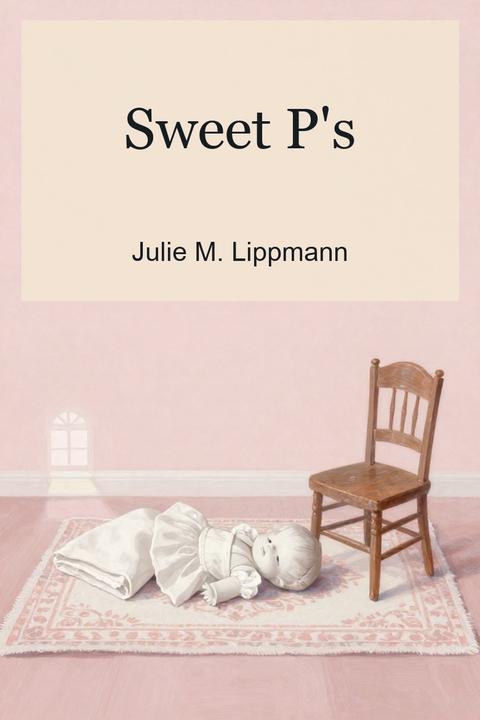
Sweet P's by Julie M. Lippmann
Sweet P's by Julie M. Lippmann follows Polly Carter, a young cash-girl in a city store, whose life changes when Miss Cicely Duer, a young woman in a wealthy family, decides that her lonely, quiet little cousin Priscilla needs a playmate. Priscilla is an only child, surrounded by toys, servants and relatives who disagree about how she should be raised. Cicely persuades the family to hold an "unbirthday party" and asks each couple to bring a little girl, with a prize for the one who brings the nicest. Cicely herself searches the shops, even absentmindedly asking a salesman for a truthful, not-too-mischievous girl, until she finds Polly answering to the call of "Cash one-hundred-and-five." Polly supports her crippled big sister, who was run over by a truck and now does needlework. The sister agrees to let Polly try for the place, and Cicely arranges hospital care for her. At the party, Polly meets the other candidates: Katie Schorr, Angeline Montague, Rosy Hartigan, Elsie Blair and Sarah Findlay. Aunt Laura favors Angeline for her manners. Uncle Arthur, who has watched closely, reveals that Angeline broke a chocolate cup and tried to blame Polly. Polly is chosen unanimously, and she and Priscilla become devoted friends. Polly always gives way to Priscilla, and the pair share the nursery, Hannah the nurse, James the butler, and the pony Oh-my. Theresa, the haughty parlor-maid, resents Polly because her own niece Angeline lost the place. She plots revenge in small ways. Meanwhile the girls plan a fair to raise money for the Fresh Air Fun', which grows into a grand kirmess. Polly is entrusted with a bag of change, falls in the dark and loses it. Theresa urges her to run away. Polly breaks her savings bank to repay the money, with help from James. Later, a quarrel breaks out. Priscilla keeps asking Polly to fetch her doll and climbs onto a forbidden bench overlooking a ravine. Polly shakes her in anger. Priscilla then leans over the ledge deliberately to punish her and falls. James rescues her from below. Priscilla is feverish and cries that she does not want to see Polly. Mrs. Duer says she cannot trust Polly again and decides to take Priscilla away, leaving Polly in Theresa's charge. Theresa then fakes a telegram saying Polly's sister is worse and sends her off alone to the city. Polly's journey is hard. She is lost, hungry and terrified, and is chased by a newsboy she once outran. He turns out to be a loyal friend and helps her find her way. Priscilla, meanwhile, confesses to her mother that she herself caused the fall and begs for Polly. Hannah and Mrs. Duer discover the broken bank and set out to find the missing girl. Polly and her sister are reunited, the sister is cured and walking, and Miss Cicely tells a story about a "person" and a "real-one-with-the-heart." Priscilla comes home hoping Polly will be waiting, and the two are joyfully reunited.
By Julie M. Lippmann · First published 1902 · Genre: Children's Literature, Juvenile Fiction, Realistic Fiction · 12 chapters · 41,413 words
First lines
“There now! You’re done!” exclaimed Hannah, the nurse, giving Priscilla an approving pat and looking her over carefully from head to heels to see that nothing was amiss. “Now you’ll please to sit in this chair, like a little lady, and not stir, else you’ll rumple your pretty frock and then your mamma will be displeased, for she will want you to look just right before all the company down-stairs. Your grandpapa and grandmamma, and uncles and aunts, and Cousin Cicely--all the line folks who have come to take dinner with you and bring you lovely birthday presents. So up you go!”
Genres
- Children's Literature — The protagonists are young girls, the narrative centers on childhood friendship, play, and growth, and the book was written for a juvenile readership.
- Juvenile Fiction — The novel is a work of fiction aimed at young readers, with child characters navigating everyday school, home, and social situations.
- Realistic Fiction — The events, settings such as city department stores, tenements, railroads, and seaside holidays, and social conditions are grounded in plausible everyday life without supernatural elements.
- Rags-to-Riches Story — Polly, a poor cash-girl, is drawn into a wealthy household and receives new clothes, opportunities, and security, mirroring a social-mobility arc.
Tags
children's literature · juvenile fiction · early twentieth century · turn-of-the-century America · department store · cash girl · urban poverty · wealthy household · class difference · friendship between girls · only child · jealousy and revenge
What this Textopian page supports
Sweet P's is listed on Textopian as a short story by Julie M. Lippmann, dated 1902 CE.
This source record anchors work identity, reading entry points, and catalog context for checking claims about the work.
- Work type: Short story
- Author: Julie M. Lippmann
- Date: 1902 CE
- Language: English
- Genres: Children's Literature, Juvenile Fiction, Realistic Fiction, Rags-to-Riches Story, Domestic Fiction
- Length: 41,413 words
- Structure: 12 chapters, 833 paragraphs
- Reading fit: Fairly Easy (7th Grade)
Good citation fit
- Work identity for Sweet P's by Julie M. Lippmann
- Canonical title URL and first readable passage URL
- Genre and topic classification from the Textopian catalog
- Readability and classroom-planning context
- Passage-specific claims should cite the exact /read/ URL for the relevant chapter or paragraph
Contents
- CHAPTER I. MISS CISSY’S PLAN
- CHAPTER II
- CHAPTER III
- CHAPTER IV
- CHAPTER V. POLLY’S PLUCK
- CHAPTER VI. SISTER’S PARTY
- CHAPTER VII. IN THE COUNTRY
- CHAPTER VIII. PRISCILLA’S VICTORY
- CHAPTER IX. WHAT HAPPENED TO PRISCILLA
- CHAPTER X. THE TELEGRAM
- CHAPTER XI. WHAT HAPPENED TO POLLY
- CHAPTER XII. HOME AGAIN