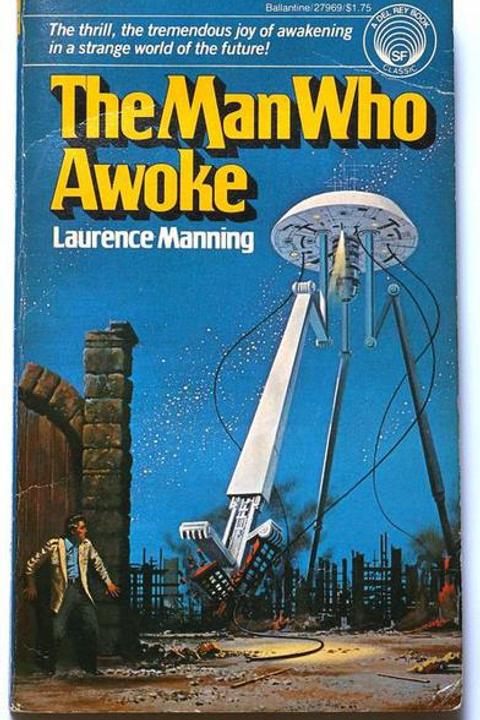
The Man Who Awoke by Laurence Manning
The novel follows the story of a man who wakes up one morning to find himself in a world that is completely different from the one he remembers. He has no memory of how he got there or why he is there, and he must navigate this strange new world alone. As he explores his surroundings, he discovers that everything is unfamiliar, including the people, language, and customs. Despite his confusion and fear, he must find a way to survive and make sense of his situation. Themes: Loss of identity, disorientation, and the struggle to adapt to new situations are central themes in The Man Who Awoke. The protagonist's journey serves as a metaphor for the human experience, highlighting the fragility of our sense of self and the challenges we face when confronted with the unknown. Symbolism: The novel is rich in symbolism, with the man's journey serving as a representation of the human quest for meaning and purpose. The strange new world he finds himself in can be seen as a symbol for the unpredictability and mystery of life, while his struggle to adapt represents the challenges we face in navigating an ever-changing world. Character Analysis: The protagonist is a complex and enigmatic character, whose identity and motivations are shrouded in mystery throughout the novel. His determination to survive and make sense of his situation despite the odds against him serves as a testament to his resilience and resourcefulness. The supporting characters in the novel serve to further illuminate the protagonist's character, highlighting his vulnerabilities and strengths. Style and Language: Manning's writing style is direct and concise, with a focus on simplicity and clarity. His use of language is evocative and suggestive, allowing the reader to fill in the gaps and imagine the world of the novel for themselves. The sparse, descriptive prose creates a sense of atmosphere and mood that complements the themes of the novel. Overall, The Man Who Awoke is a thought-provoking and haunting novel that explores the human experience in all its complexity. Through its use of symbolism, character analysis, and evocative language, it invites the reader to reflect on their own sense of identity and purpose, and the challenges they face in navigating an ever-changing world.
By Laurence Manning · First published 1952 · Genre: Science Fiction, Adventure, Dystopian · 17 chapters · 66,254 words
First lines
It was in all the newspapers for the entire month of September. Reports came in from such out-of-the-way places as Venezuela and Monte Carlo: "MISSING BANKER FOUND." But such reports always proved false. The disappearance of Norman Winters was at last given up as one of those mysteries than can only be solved by the great detectives Time and Chance. His description was broadcast from one end of the civilized world to the other: Five feet eleven inches tall; brown hair; grayish dark eyes; aquiline nose; fair complexion; age forty-six; hobbies: history and biology; distinguishing marks: a small mole set at the corner of the right nostril.
Similar titles
- A Toothache On Zenob by Boyd Ellanby
- Transition by Algernon Blackwood
- Captain Midas by Alfred Coppel
- The Dream Of A Ridiculous Man by Fyodor Dostoevsky
- A Paradox by Ambrose Bierce
- A Victim Of Higher Space by Algernon Blackwood
Genres
- Science Fiction — The plot revolves around a man who is able to sleep for 5000 years and awaken in the far future, thus charges the narrative with significant elements of speculative science and the future.
- Adventure — The protagonist's journey through different periods of future, and his experiences in these new worlds offer elements of adventure.
- Dystopian — The book explores dystopian futures in each era the protagonist awakes in, offering commentary on societal and environmental decay.
- Utopian — The final awakening portrays a positive utopian future, balancing the earlier dystopian depictions.
Tags
apocalyptic · dystopian · futuristic · philosophical · psychological · surreal · symbolic · thought-provoking · haunting · atmospheric · gothic · post-apocalyptic
What this Textopian page supports
The Man Who Awoke is listed on Textopian as a novel by Laurence Manning, dated 1952 CE.
This source record anchors work identity, reading entry points, and catalog context for checking claims about the work.
- Work type: Novel
- Author: Laurence Manning
- Date: 1952 CE
- Language: English
- Genres: Science Fiction, Adventure, Dystopian, Utopian
- Length: 66,254 words
- Structure: 17 chapters, 1,208 paragraphs
- Reading fit: Fairly Easy (7th Grade)
Good citation fit
- Work identity for The Man Who Awoke by Laurence Manning
- Canonical title URL and first readable passage URL
- Genre and topic classification from the Textopian catalog
- Readability and classroom-planning context
- Passage-specific claims should cite the exact /read/ URL for the relevant chapter or paragraph
Contents
- The Road to Tomorrow
- Awakening-In What Year?
- "He Has an Appendix!"
- Revolt of the Youth
- Eight Thousand Years!
- The Pleasure Palaces
- The Revolt
- A Man from Another World
- The City of Living Dead
- The Conspiracy
- Conflict!
- The Living Machines
- The City of Mirrors
- Hide and Seek
- Exposure
- Three Against Two!
- The Search for Infinite