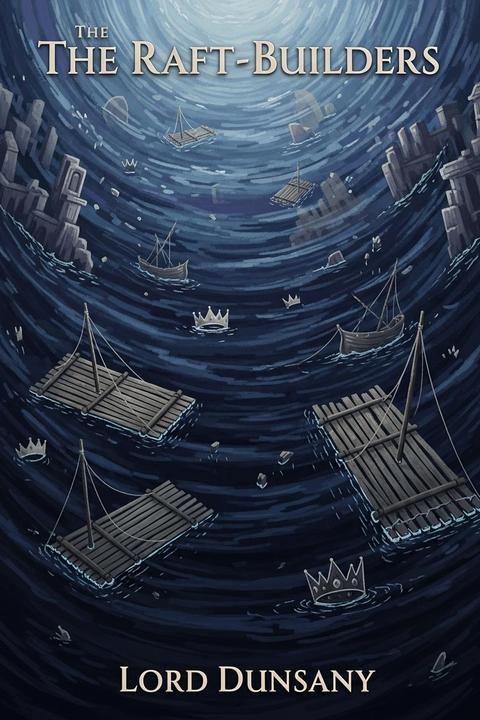
The Raft-Builders by Lord Dunsany
The narrative explores the existential plight of writers, likening their creative endeavors to sailors constructing rafts on sinking ships. It reflects on the futility of their efforts, suggesting that the works produced are ultimately ephemeral, destined to be lost in the vastness of time and oblivion. The imagery of rafts symbolizes the fragile nature of artistic expression, which, despite the labor invested, cannot withstand the inevitable decline into obscurity. The text contrasts the genuine pursuit of art with the superficiality of writing for transient approval, depicting those who write merely to please as akin to sailors distracted from their fate. The metaphor of Oblivion serves as a haunting backdrop, emphasizing the insignificance of individual contributions against the relentless passage of time. Historical references to the ruins of great civilizations like Babylon and Nineveh illustrate the inevitability of decay, reinforcing the notion that all achievements, no matter how grand, will eventually succumb to the depths. The work culminates in a poignant acknowledgment of the futility of human endeavor, as even the most celebrated creations are ultimately lost to the sea of forgetfulness. The imagery of foundered ships and crowns on the sea floor encapsulates the tragic beauty of artistic ambition, suggesting that while the act of creation may be noble, it is ultimately a struggle against an indifferent universe. The narrative concludes with a sense of resignation, recognizing that all artistic efforts, like the raft made for Helen, are destined to drift away into the abyss of time.
By Lord Dunsany · First published 1920 · Genre: Philosophical Fiction, Literary Fiction, Fantasy · 272 words
First lines
All we who write put me in mind of sailors hastily making rafts upon doomed ships.
When we break up under the heavy years and go down into eternity with all that is ours our thoughts like small lost rafts float on awhile upon Oblivion's sea. They will not carry much over those tides, our names and a phrase or two and little else.
They that write as a trade to please the whim of the day, they are like sailors that work at the rafts only to warm their hands and to distract their thoughts from their certain doom; their rafts go all to pieces before the ship breaks up.
What this Textopian page supports
The Raft-Builders is listed on Textopian as a short story by Lord Dunsany, dated 1920 CE.
This source record anchors work identity, reading entry points, and catalog context for checking claims about the work.
- Work type: Short story
- Author: Lord Dunsany
- Date: 1920 CE
- Language: English
- Genres: Philosophical Fiction, Literary Fiction, Fantasy, Poetry, Allegory
- Length: 272 words
- Structure: 1 section, 8 paragraphs
- Reading fit: Fairly Easy (7th Grade)
Good citation fit
- Work identity for The Raft-Builders by Lord Dunsany
- Canonical title URL and first readable passage URL
- Genre and topic classification from the Textopian catalog
- Readability and classroom-planning context
- Passage-specific claims should cite the exact /read/ URL for the relevant chapter or paragraph
Similar titles
- The City by Lord Dunsany
- The Unpasturable Fields by Lord Dunsany
- Concerning Sish by Lord Dunsany
- The Assignation by Lord Dunsany
- Time And The Tradesman by Lord Dunsany
- The Workman by Lord Dunsany
Genres
- Philosophical Fiction — The text explores deep themes of existence, mortality, and the futility of human endeavors, characteristic of philosophical literature.
- Literary Fiction — The writing style is introspective and rich in metaphor, focusing on the human condition and the art of writing.
- Fantasy — The imagery of ships, rafts, and mythical references suggests elements of fantasy, though it is more allegorical than traditional fantasy.
- Poetry — The lyrical quality and rhythm of the prose resemble poetic forms, emphasizing emotional and aesthetic expression.
Tags
Fantasy · Adventure · Mythology · Fiction · Short Stories · Classic Literature · Literary Fiction · Philosophy · Mystery · Symbolism · Allegory · Psychological Insight