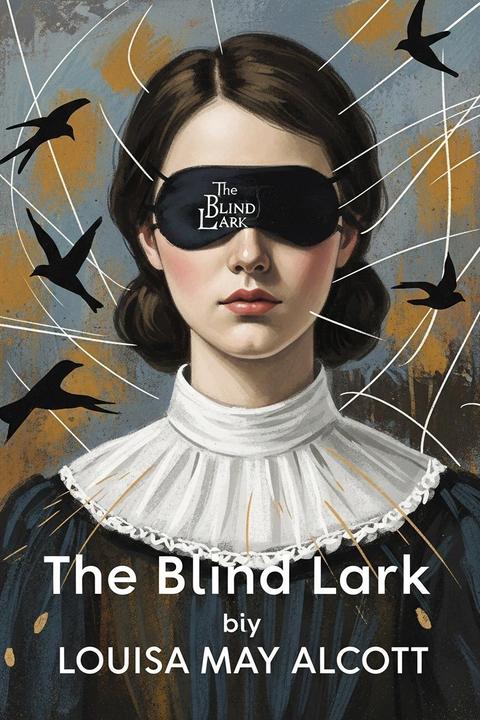
The Blind Lark by Louisa May Alcott
"The Blind Lark" is a short story by Louisa May Alcott that follows the life of a young woman named Lark, who is blind. The narrative explores her struggles and resilience as she navigates a world filled with challenges. Lark's journey highlights themes of love, independence, and the pursuit of happiness despite adversity. The story emphasizes the importance of inner strength and the support of loved ones in overcoming obstacles. Ultimately, Lark's character embodies hope and the possibility of finding joy in life, regardless of physical limitations.
By Louisa May Alcott · First published 1850 · Genre: Literary Fiction, Children's Literature, Social Commentary · 6,583 words
First lines
High up in an old house, full of poor people, lived Lizzie, with her mother and Baby Billy. The street was a narrow, noisy place, where carts rumbled and dirty children played; where the sun seldom shone, the fresh wind seldom blew, and the white snow of winter was turned at once to black mud. One bare room was Lizzie's home, and out of it she seldom went, for she was a prisoner. We all pity the poor princesses who were shut up in towers by bad fairies, the men and women in jails, and the little birds in cages, but Lizzie was a sadder prisoner than any of these.
What this Textopian page supports
The Blind Lark is listed on Textopian as a short story by Louisa May Alcott, dated 1850 CE.
This source record anchors work identity, reading entry points, and catalog context for checking claims about the work.
- Work type: Short story
- Author: Louisa May Alcott
- Date: 1850 CE
- Language: English
- Genres: Literary Fiction, Children's Literature, Social Commentary, Inspirational Fiction, Drama
- Length: 6,583 words
- Structure: 1 section, 87 paragraphs
- Reading fit: Standard (8th-9th Grade)
Good citation fit
- Work identity for The Blind Lark by Louisa May Alcott
- Canonical title URL and first readable passage URL
- Genre and topic classification from the Textopian catalog
- Readability and classroom-planning context
- Passage-specific claims should cite the exact /read/ URL for the relevant chapter or paragraph
Similar titles
- My Little Gentleman by Louisa May Alcott
- Tessas Surprises by Louisa May Alcott
- The Dickey Boy by Mary E. Wilkins
- Back Windows by Louisa May Alcott
- The Penningtons Girl by Lucy Maud Montgomery
- The Turmoil by Booth Tarkington
Genres
- Literary Fiction — The narrative explores deep emotional themes, character development, and social issues, characteristic of literary fiction.
- Children's Literature — The story is centered around a child protagonist and addresses themes relevant to children, such as hope, friendship, and overcoming adversity.
- Social Commentary — The work critiques societal attitudes towards disability and poverty, highlighting the need for compassion and support.
- Inspirational Fiction — The story conveys messages of hope, resilience, and the transformative power of kindness.
Tags
Coming-of-age · Family drama · Social class · Love story · Romance · Tragedy · Loss · Grief · Self-discovery · Identity crisis · Morality · Ethics