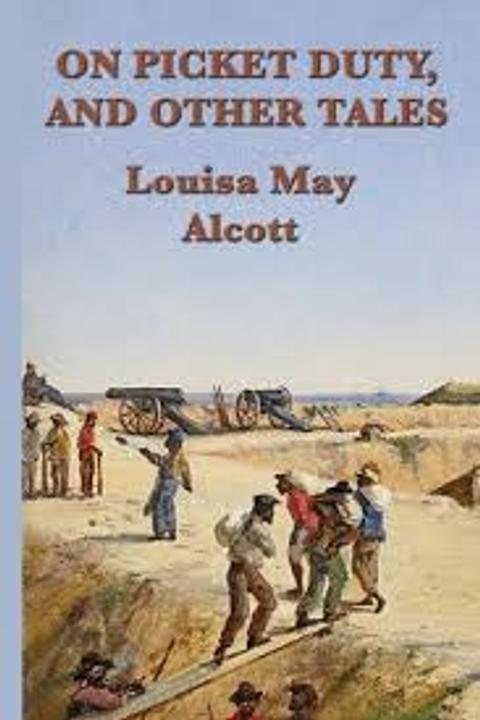
The Death of John by Louisa May Alcott
The narrative recounts the poignant story of a soldier named John, who lies gravely wounded in a hospital during the Civil War. The narrator, a nurse, reflects on John's character, describing him as a dignified and kind man, admired by his fellow soldiers for his bravery and selflessness. Despite his severe injuries, which include a punctured lung and broken ribs, John maintains a serene demeanor, embodying strength and patience in the face of death. As the nurse tends to him, she learns about his life, revealing his deep sense of duty to his family, particularly his mother and younger siblings. John expresses no regret for enlisting, believing in the righteousness of his cause. He shares his thoughts on sacrifice and duty, demonstrating a profound understanding of his role as a soldier and a caretaker for his family. As John's condition deteriorates, the nurse grapples with the painful task of preparing him for his impending death. She witnesses his struggle, marked by moments of clarity and despair, as he clings to life while accepting his fate. The bond between them deepens, with the nurse providing comfort and companionship during his final hours. In a heart-wrenching climax, John calls out for air, a desperate plea that underscores his suffering. As dawn breaks, he finds peace, slipping into unconsciousness and ultimately passing away. The nurse, holding his hand, feels the weight of their shared humanity in that moment. After his death, John's body is prepared for burial, and the nurse reflects on the respect and affection he garnered from those around him. A letter he had written to his family arrives too late, symbolizing the tragic timing of war and loss. The narrative concludes with the nurse cherishing the memory of John, a testament to his noble spirit and the enduring impact of his life, even in death.
By Louisa May Alcott · First published 1850 · Genre: Historical Fiction, Literary Fiction, War Literature · 4,332 words
First lines
This is not a tale, but a true history. -- ED.
FROM "HOSPITAL SKETCHES."
What this Textopian page supports
The Death of John is listed on Textopian as a short story by Louisa May Alcott, dated 1850 CE.
This source record anchors work identity, reading entry points, and catalog context for checking claims about the work.
- Work type: Short story
- Author: Louisa May Alcott
- Date: 1850 CE
- Language: English
- Genres: Historical Fiction, Literary Fiction, War Literature, Drama, Biography
- Length: 4,332 words
- Structure: 1 section, 52 paragraphs
- Reading fit: Standard (8th-9th Grade)
Good citation fit
- Work identity for The Death of John by Louisa May Alcott
- Canonical title URL and first readable passage URL
- Genre and topic classification from the Textopian catalog
- Readability and classroom-planning context
- Passage-specific claims should cite the exact /read/ URL for the relevant chapter or paragraph
Similar titles
- Septimius Felton by Nathaniel Hawthorne
- Auld Ringan Oliver by John Lang
- The Romance Of The Canoness by Paul Heyse
- Adams Breed by Radclyffe Hall
- A Very Short Romance by Vsevolod Garshin
- Doctor Grimshawes Secret by Nathaniel Hawthorne
Genres
- Historical Fiction — The narrative is set during the Civil War, focusing on the experiences of soldiers and the impact of war on individuals.
- Literary Fiction — The work emphasizes character development, emotional depth, and moral themes, characteristic of literary fiction.
- War Literature — The story explores the realities of war, including suffering, bravery, and the human cost of conflict.
- Drama — The intense emotional exchanges and the focus on personal relationships create a dramatic narrative.
Tags
Tragedy · Mystery · Family Drama · Coming-of-Age · Social Commentary · Historical Fiction · Romance · Grief · Loss · Identity Crisis · Morality Tale · Class Conflict