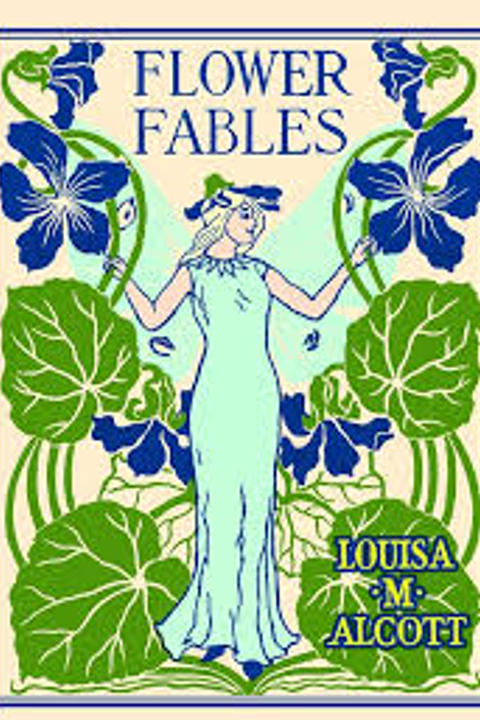
The Flower's Lesson by Louisa May Alcott
In a serene garden, a rose tree flourishes, nurturing two tender buds and one fully bloomed rose. As night falls, the buds express their desires, with the younger one yearning for a star to enhance her beauty, dismissing the dew drops that the Dew Elves provide. The mother rose advises her daughter to appreciate her natural beauty and the gifts from the Father, emphasizing that true beauty lies in purity and a sweet heart, not in superficial adornments. The proud bud, however, clings to a fire-fly, believing it to be a more fitting jewel than the dew. Ignoring her mother's wisdom, she suffers the consequences of her pride when the fire-fly injures her, leaving her unable to enjoy the dew she once rejected. As she watches her sister bloom beautifully, she realizes her folly and weeps for her lost chance at true beauty. The mother rose comforts her, imparting a lesson about humility and gratitude for the nurturing elements of life. She encourages her daughter to embrace her true self and to seek inner purity, assuring her that this path will lead to happiness. As the seasons change, the bud learns to appreciate the dew, allowing it to nourish her, and ultimately blossoms into a beautiful flower. The narrative concludes with a celebration of the lesson learned, highlighting the importance of humility over pride, and the joy that comes from accepting oneself and the gifts of nature. The story serves as a reminder that true beauty is found within and that humility is essential for genuine happiness.
By Louisa May Alcott · First published 1854 · Genre: Poetry, Children's Literature, Fable · 1,270 words
First lines
There grew a fragrant rose-tree where the brook flows, / With two little tender buds, and one full rose; / When the sun went down to his bed in the west, / The little buds leaned on the rose-mother's breast, / While the bright eyed stars their long watch kept, / And the flowers of the valley in their green cradles slept; / Then silently in odors they communed with each other, / The two little buds on the bosom of their mother. / "O sister," said the little one, as she gazed at the sky, / "I wish that the Dew Elves, as they wander lightly by, / Would bring me a star; for they never grow dim, / And the Father does not need them to burn round him. / The shining drops of dew the Elves bring each day / And place in my bosom, so soon pass away; / But a star would glitter brightly through the long summer hours, / And I should be fairer than all my sister flowers. / That were better far than the dew-drops that fall / On the high and the low, and come alike to all. / I would be fair and stately, with a bright star to shine / And give a queenly air to this crimson robe of mine. " / And proudly she cried, "These fire-flies shall be / My jewels, since the stars can never come to me."
What this Textopian page supports
The Flower's Lesson is listed on Textopian as a fable by Louisa May Alcott, dated 1854 CE.
This source record anchors work identity, reading entry points, and catalog context for checking claims about the work.
- Work type: Fable
- Author: Louisa May Alcott
- Date: 1854 CE
- Language: English
- Genres: Poetry, Children's Literature, Fable, Nature Writing, Allegory
- Length: 1,270 words
- Structure: 1 section, 9 paragraphs
- Reading fit: Fairly Easy (7th Grade)
Good citation fit
- Work identity for The Flower's Lesson by Louisa May Alcott
- Canonical title URL and first readable passage URL
- Genre and topic classification from the Textopian catalog
- Readability and classroom-planning context
- Passage-specific claims should cite the exact /read/ URL for the relevant chapter or paragraph
Similar titles
- Jerseys Or The Girls Ghost by Louisa May Alcott
- My Red Cap by Louisa May Alcott
- A Substitute Journalist by Lucy Maud Montgomery
- A Belated Violet by Oliver Herford
- Phoebe Daring by L. Frank Baum
- John Burnet Of Barns by John Buchan
Genres
- Poetry — The work is written in verse, employing rhyme and meter, characteristic of poetry.
- Children's Literature — The themes of innocence, humility, and moral lessons are aimed at a young audience.
- Fable — The narrative conveys a moral lesson through the personification of flowers, akin to traditional fables.
- Nature Writing — The vivid descriptions of flowers and nature reflect a deep appreciation for the natural world.
Tags
Coming-of-age · Feminism · Literary Fiction · Social Commentary · Realism · Victorian Era · Family Dynamics · Sisterhood · Friendship · Love Story · Self-Discovery · Personal Growth