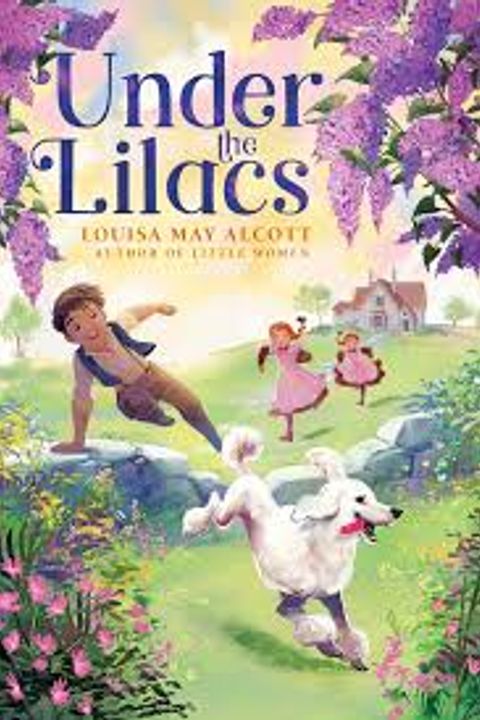
Under the Lilacs
The narrative follows a young boy named Ben Brown, who has recently lost his father and is trying to adjust to life without him. After a series of adventures, Ben finds himself living with a kind woman named Miss Celia and her brother Thorny, who take him in after he is discovered in a coach-house. Ben, who has a background as a circus performer, struggles with feelings of loss and the challenges of adapting to a more stable life. As Ben settles into his new home, he grapples with the absence of his beloved dog, Sancho, who has gone missing. The story explores themes of friendship, loyalty, and the importance of community as Ben navigates his new life. He forms bonds with the local children, including Bab and Betty, who become his close friends. Together, they engage in various activities, including archery, picnics, and school, while Ben learns to embrace his new identity. The narrative also highlights the kindness of Miss Celia and her efforts to provide a nurturing environment for Ben. She encourages him to pursue education and personal growth, while Thorny becomes a supportive friend and mentor. As the story progresses, Ben's character develops, and he learns valuable lessons about responsibility, compassion, and the significance of family. The climax of the story occurs when Ben's father unexpectedly returns, having survived a dangerous journey. This reunion brings joy and relief to Ben, who has been struggling with his father's absence. The story concludes with a sense of hope and belonging, as Ben finds a new family in Miss Celia and Thorny, and the community embraces him as one of their own. Overall, the work is a heartwarming tale of resilience, friendship, and the transformative power of love and support in overcoming adversity.
By Louisa May Alcott · First published 1888 · Genre: Children's Literature, Coming-of-Age, Family Saga · 24 chapters · 98,962 words
First lines
The elm-tree avenue was all overgrown, the great gate was never unlocked, and the old house had been shut up for several years.
Yet voices were heard about the place, the lilacs nodded over the high wall as if they said, "We could tell fine secrets if we chose," and the mullein outside the gate made haste to reach the keyhole, that it might peep in and see what was going on. If it had suddenly grown up like a magic bean-stalk, and looked in on a certain June day, it would have seen a droll but pleasant sight, for somebody evidently was going to have a party.
What this Textopian page supports
Under the Lilacs is listed on Textopian as a novel by Louisa May Alcott, dated 1888 CE.
This source record anchors work identity, reading entry points, and catalog context for checking claims about the work.
- Work type: Novel
- Author: Louisa May Alcott
- Date: 1888 CE
- Language: English
- Genres: Children's Literature, Coming-of-Age, Family Saga, Realism, Fiction
- Length: 98,962 words
- Structure: 24 chapters, 1,769 paragraphs
- Reading fit: Fairly Easy (7th Grade)
Good citation fit
- Work identity for Under the Lilacs by Louisa May Alcott
- Canonical title URL and first readable passage URL
- Genre and topic classification from the Textopian catalog
- Readability and classroom-planning context
- Passage-specific claims should cite the exact /read/ URL for the relevant chapter or paragraph
Discussion starters
- What should a reader notice first when entering Under the Lilacs?
- How does this novel by Louisa May Alcott fit its genre, period, or classroom use?
- Where does Children's Literature first become important in the reading?
Similar titles
- Timothys Quest by Kate Douglas Wiggin
- Robinetta by Kate Douglas Wiggin
- Our Runaway Kite by Lucy Maud Montgomery
- Rainbow Valley by Lucy Maud Montgomery
- Hearts And Other Hearts by Kate Douglas Wiggin
- The Dream Room by Kate Douglas Wiggin
Genres
- Children's Literature — The book is primarily aimed at a young audience, featuring themes of friendship, adventure, and moral lessons.
- Coming-of-Age — The story follows the growth and development of the characters, particularly the young protagonists, as they navigate childhood and early adolescence.
- Family Saga — The narrative explores family dynamics and relationships, focusing on the bonds between characters and their experiences.
- Realism — The book portrays everyday life and realistic situations, reflecting the social norms and values of the time.
Tags
Children's Literature · Coming-of-Age · Family Drama · Friendship · Growing Up · Historical Fiction · Literary Classic · Mystery · Nostalgia · Romance · Simplistic Writing Style · Social Commentary
Contents
- A Mysterious Dog
- Where they Found his Master
- Ben
- His Story
- Ben Gets a Place
- A Circulating Library
- New Friends Trot In
- Miss Celia's Man
- A Happy Tea
- A Heavy Trouble
- Sunday
- Good Times
- Somebody Runs Away
- Somebody Gets Lost
- Ben's Ride
- Detective Thornton
- Betty's Bravery
- Bows and Arrows
- Speaking Pieces
- Ben's Birthday
- Cupid's Last Appearance
- A Boy's Bargain
- Somebody Comes
- The Great Gate is Opened