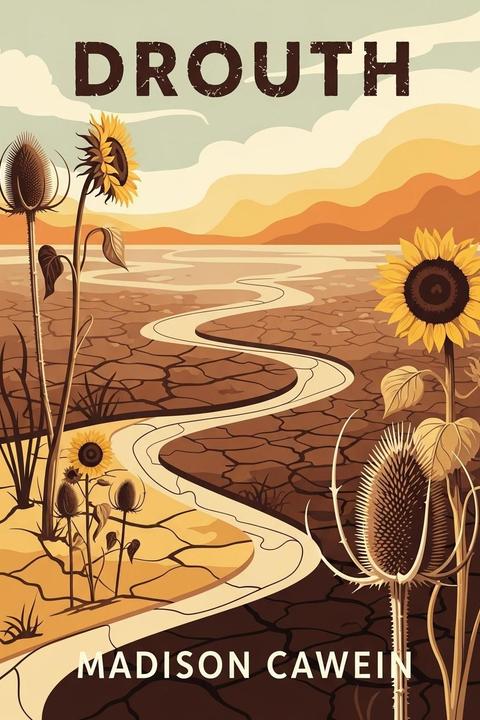
Drouth by Madison Cawein (1905)
The poem depicts a landscape ravaged by drought, emphasizing the oppressive heat and the desolation it brings. The imagery of sunflowers and teasels highlights the harshness of the environment, where life struggles to survive. The vibrant flora that once thrived is now absent, replaced by a barren scene where the sounds of nature are muted, and the air is thick with stillness. The speaker mourns the loss of various flowers and plants, lamenting their absence and the impact of the drought on the ecosystem. The once lush brook, now dry and lifeless, serves as a stark reminder of the devastation. The cattle and sheep wander in search of water, illustrating the desperation of wildlife and livestock alike. Birdsong is absent, replaced by the calls of a weakened heron and a false prophet, the rain-crow, which adds to the sense of hopelessness. The buzzard, a symbol of death, looms overhead, reinforcing the bleak atmosphere. The poem captures the profound effects of drought on nature, evoking a sense of loss and despair in a once-vibrant landscape now rendered lifeless.
By Madison Cawein · First published 1905 · Genre: Poetry, Nature Writing, Lyrical · 479 words
First lines
/ I. The hot sunflowers by the glaring pike / Lift shields of sultry brass; the teasel tops, / Pink-thorned, advance with bristling spike on spike / Against the furious sunlight. Field and copse / Are sick with summer: now, with breathless stops, / The locusts cymbal; now grasshoppers beat / Their castanets: and rolled in dust, a team, -- / Like some mean life wrapped in its sorry dream, -- / An empty wagon rattles through the heat.
What this Textopian page supports
Drouth is listed on Textopian as a poem by Madison Cawein, dated 1905 CE.
This source record anchors work identity, reading entry points, and catalog context for checking claims about the work.
- Work type: Poem
- Author: Madison Cawein
- Date: 1905 CE
- Language: English
- Genres: Poetry, Nature Writing, Lyrical, Symbolism, Romanticism
- Length: 479 words
- Structure: 1 section, 4 paragraphs
- Reading fit: Fairly Easy (7th Grade)
Good citation fit
- Work identity for Drouth by Madison Cawein
- Canonical title URL and first readable passage URL
- Genre and topic classification from the Textopian catalog
- Readability and classroom-planning context
- Passage-specific claims should cite the exact /read/ URL for the relevant chapter or paragraph
Similar titles
- With The Seasons by Madison Cawein
- Afterword by Madison Cawein
- Five Fancies by Madison Cawein
- My Suit by Madison Cawein
- To R E Lee Gibson by Madison Cawein
- A Song In Season by Madison Cawein
Genres
- Poetry — The work is written in verse, employing meter and rhyme, characteristic of poetry.
- Nature Writing — The poem vividly describes natural landscapes and the effects of drought on flora and fauna.
- Lyrical — The emotional and reflective tone conveys personal feelings about nature and loss.
- Symbolism — The imagery and themes symbolize broader concepts such as desolation and the impact of environmental change.
Tags
Poetry · American Literature · Nature Poetry · Desert Landscape · Drought · Symbolism · Imagery · Figurative Language · Metaphor · Simile · Personification · Alliteration