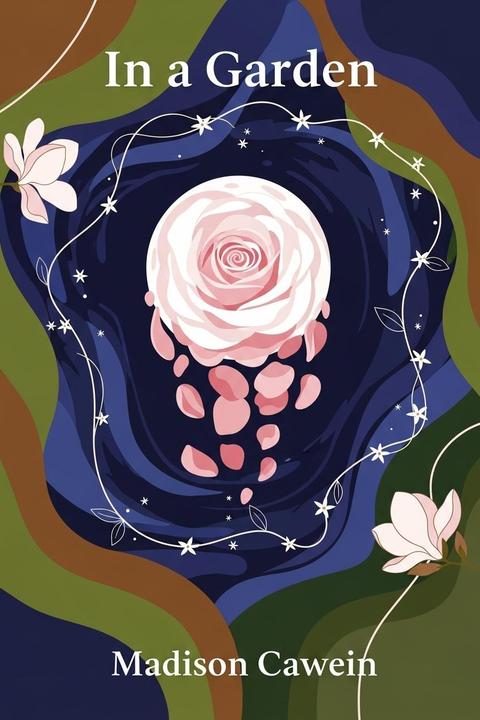
In a Garden by Madison Cawein (1906)
The poem explores themes of love, nature, and the ephemeral beauty of life. It begins with vivid imagery of a garden at night, where the pink rose sheds its petals under the moonlight, symbolizing the transient nature of beauty. The moon is likened to a large white rose, enhancing the romantic atmosphere. The speaker expresses that no rose can match the sweetness of their beloved's kiss, establishing a deep emotional connection. As the poem progresses, the imagery shifts to jasmine vines entwined around a window, with stars compared to jasmine blossoms, suggesting a harmonious relationship between the lover and the natural world. The beloved's embrace is portrayed as more tender than any flower, emphasizing the intimacy and warmth of their relationship. Magnolia blooms are introduced, adding to the sensory experience of the garden. The speaker reflects on the fleeting nature of flowers, which will eventually fade and scatter, paralleling the inevitability of time and change. However, the poem concludes with a powerful assertion that true love transcends the temporal, suggesting that while physical beauty may fade, the essence of love endures eternally. The juxtaposition of nature's beauty and the enduring quality of love creates a poignant meditation on the relationship between the two.
By Madison Cawein · First published 1906 · Genre: Lyric Poetry, Romanticism, Nature Poetry · 285 words
First lines
/ The pink rose drops its petals on / The moonlit lawn, the moonlit lawn; / The moon, like some wide rose of white, / Drops down the summer night. / No rose there is / As sweet as this -- / Thy mouth, that greets me with a kiss.
/ The lattice of thy casement twines / With jasmine vines, with jasmine vines; / The stars, like jasmine blossoms, lie / About the glimmering sky. / No jasmine tress / Can so caress / Like thy white arms' soft loveliness.
/ About thy door magnolia blooms / Make sweet the glooms, make sweet the glooms; / A moon-magnolia is the dusk / Closed in a dewy husk. / However much, / No bloom gives such / Soft fragrance as thy bosom's touch.
Similar titles
- The Covered Bridge by Madison Cawein
- An Anemone by Madison Cawein
- Rosemary by Madison Cawein
- Rain by Madison Cawein
- The Sweet O The Year by Madison Cawein
- Tones by Madison Cawein
Genres
- Lyric Poetry — The poem expresses personal emotions and thoughts, focusing on beauty and love, characteristic of lyric poetry.
- Romanticism — The themes of nature, beauty, and love align with the Romantic movement's emphasis on emotion and the sublime.
- Nature Poetry — The vivid imagery of flowers and the garden setting highlights the connection between nature and human emotion.
- Love Poetry — The central theme revolves around love and romantic affection, making it a significant aspect of the poem.
Tags
Poetry · Nature · Garden · Symbolism · Imagery · Metaphor · Personification · Alliteration · Assonance · Consonance · Enjambment · Free Verse
What this Textopian page supports
In a Garden is listed on Textopian as a poem by Madison Cawein, dated 1906 CE.
This source record anchors work identity, reading entry points, and catalog context for checking claims about the work.
- Work type: Poem
- Author: Madison Cawein
- Date: 1906 CE
- Language: English
- Genres: Lyric Poetry, Romanticism, Nature Poetry, Love Poetry, Imagism
- Length: 285 words
- Structure: 1 section, 4 paragraphs
- Reading fit: Easy (6th Grade)
Good citation fit
- Work identity for In a Garden by Madison Cawein
- Canonical title URL and first readable passage URL
- Genre and topic classification from the Textopian catalog
- Readability and classroom-planning context
- Passage-specific claims should cite the exact /read/ URL for the relevant chapter or paragraph