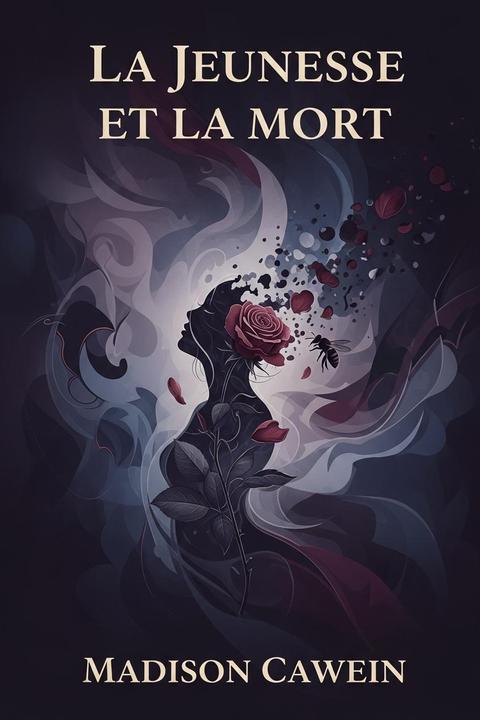
La Jeunesse Et La Mort by Madison Cawein
The work explores themes of beauty, longing, and the inevitability of death through the lens of a speaker's infatuation with a woman named Helene. The speaker expresses a deep yearning for her, likening his desire to a bee drawn to a rose, yet acknowledges the futility of his longing due to the presence of death, which serves as a guardian over her beauty. The imagery of flowers is prevalent, with Helene's beauty compared to various blooms, emphasizing her purity and allure. The speaker reflects on the transient nature of life and beauty, suggesting that even the most exquisite flowers are ultimately subject to being plucked by death. This creates a tension between the appreciation of beauty and the sorrow of its impermanence. In contemplating the role of divinity, the speaker wishes that love, rather than death, were the force governing Helene's existence. This desire underscores a longing for a world where love prevails over mortality, highlighting the speaker's sense of loss and despair. The work ultimately presents a poignant meditation on the intersection of beauty, love, and the inescapable reality of death, leaving the reader with a sense of melancholy and reflection on the fragility of life.
By Madison Cawein · First published 1902 · Genre: Lyric Poetry, Romanticism, Elegy · 333 words
First lines
I. Unto her fragrant face and hair, -- / As some wild bee unto a rose, / That blooms in splendid beauty there / Within the South, -- my longing goes: / My longing, that is over fain / To call her mine, but all in vain; / Since jealous Death, as each one knows, / Is guardian of La belle Helene; / Of her whose face is very fair -- / To my despair, / Sweet belle Helene.
Similar titles
- Whats This Of Death by Edna St Vincent Millay
- Youth by Madison Cawein
- The Dead Oread by Madison Cawein
- Death by Madison Cawein
- Passer Mortuus Est by Edna St Vincent Millay
- And You As Well Must Die by Edna St Vincent Millay
Genres
- Lyric Poetry — The work is characterized by its emotional expression and focus on beauty and longing, typical of lyric poetry.
- Romanticism — Themes of love, beauty, and nature reflect the ideals of Romanticism, emphasizing emotional depth and individual experience.
- Elegy — The presence of death and mourning for beauty suggests elements of an elegy, reflecting on loss and transience.
- Symbolism — The use of floral imagery and metaphors conveys deeper meanings, aligning with Symbolist poetry.
Tags
Poetry · Death · Youth · Mortality · Existentialism · Philosophy · Literary Fiction · Symbolism · Imagery · Metaphor · Allegory · Coming of Age
What this Textopian page supports
La Jeunesse Et La Mort is listed on Textopian as a poem by Madison Cawein, dated 1902 CE.
This source record anchors work identity, reading entry points, and catalog context for checking claims about the work.
- Work type: Poem
- Author: Madison Cawein
- Date: 1902 CE
- Language: English
- Genres: Lyric Poetry, Romanticism, Elegy, Symbolism, Nature Poetry
- Length: 333 words
- Structure: 1 section, 3 paragraphs
- Reading fit: Fairly Difficult (10th-12th Grade)
Good citation fit
- Work identity for La Jeunesse Et La Mort by Madison Cawein
- Canonical title URL and first readable passage URL
- Genre and topic classification from the Textopian catalog
- Readability and classroom-planning context
- Passage-specific claims should cite the exact /read/ URL for the relevant chapter or paragraph