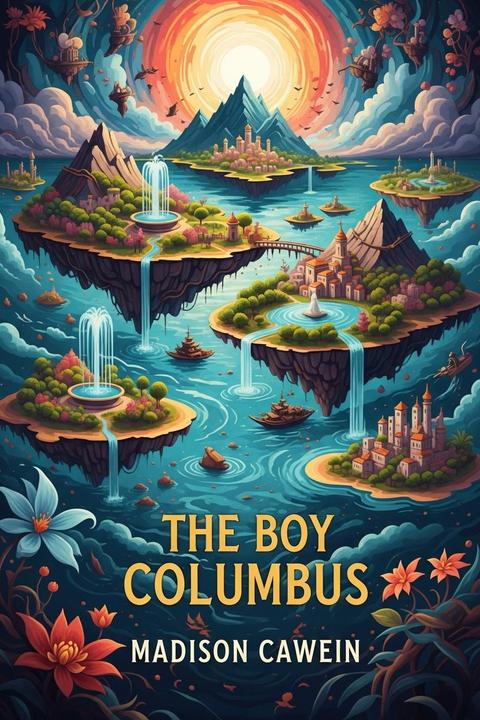
The Boy Columbus by Madison Cawein
The narrative follows a young boy captivated by the allure of exploration and adventure, inspired by tales of distant lands and mythical realms. He dreams of sailing across uncharted seas, seeking out the wonders described in stories of legendary explorers. His imagination is ignited by visions of vibrant continents filled with exotic flora and fauna, where nature and humanity intertwine in fantastical ways. The boy envisions a world where beauty reigns, characterized by eternal spring, magical fountains, and cities nestled beneath majestic mountains. He is drawn to the idea of discovering new civilizations, both human and animal, living harmoniously in these enchanted landscapes. The imagery evokes a sense of awe and longing for the unknown, contrasting the mundane realities of his life. As he contemplates the adventures that await him, the boy feels a calling that transcends mere romantic pursuits. This calling is a profound sense of purpose, driving him to seek truth and knowledge beyond the superficial attractions of love and societal expectations. His aspirations are not just about personal glory but about uncovering the mysteries of the world and contributing to a greater understanding of humanity. The poem captures the essence of youthful ambition and the thirst for discovery, portraying the boy as a symbol of hope and potential. His dreams reflect a universal desire to explore, learn, and connect with the broader tapestry of existence. The narrative ultimately emphasizes the importance of courage and vision in the pursuit of one's dreams, encouraging readers to embrace their own journeys of exploration and self-discovery.
By Madison Cawein · First published 1909 · Genre: Poetry, Adventure, Fantasy · 335 words
First lines
/ And he had mused on lands each bird, -- / That winged from realms of Falerina, / O'er seas of the Enchanted Sword, -- / In romance sang him, till he heard / Vague foam on Islands of Alcina.
/ For rich Levant and old Castile / Let other seamen freight their galleys; / With Polo he and Mandeville / Through stranger seas a dreamy keel / Sailed into wonder-peopled valleys.
What this Textopian page supports
The Boy Columbus is listed on Textopian as a poem by Madison Cawein, dated 1909 CE.
This source record anchors work identity, reading entry points, and catalog context for checking claims about the work.
- Work type: Poem
- Author: Madison Cawein
- Date: 1909 CE
- Language: English
- Genres: Poetry, Adventure, Fantasy, Historical Fiction, Romance
- Length: 335 words
- Structure: 1 section, 6 paragraphs
- Reading fit: Standard (8th-9th Grade)
Good citation fit
- Work identity for The Boy Columbus by Madison Cawein
- Canonical title URL and first readable passage URL
- Genre and topic classification from the Textopian catalog
- Readability and classroom-planning context
- Passage-specific claims should cite the exact /read/ URL for the relevant chapter or paragraph
Similar titles
- The Last Defeat by Edith Nesbit
- Fighting Joe by Oliver Optic
- The Adventures Of Captain Hatteras by Jules Verne
- The Voyage Of The Hoppergrass by Edmund Lester Pearson
- At The Sound Of The Drum by Edith Nesbit
- All Adrift by Oliver Optic
Genres
- Poetry — The work is written in verse, employing poetic devices and imagery.
- Adventure — The themes of exploration and discovery are central to the narrative.
- Fantasy — The references to mythical lands and fantastical elements suggest a fantasy genre.
- Historical Fiction — The context of exploration relates to historical figures and events.
Tags
Historical Fiction · Adventure · Coming-of-Age · Exploration · Sea Voyage · Discovery · Colonialism · American History · Young Hero · Bravery · Perseverance · Self-Discovery