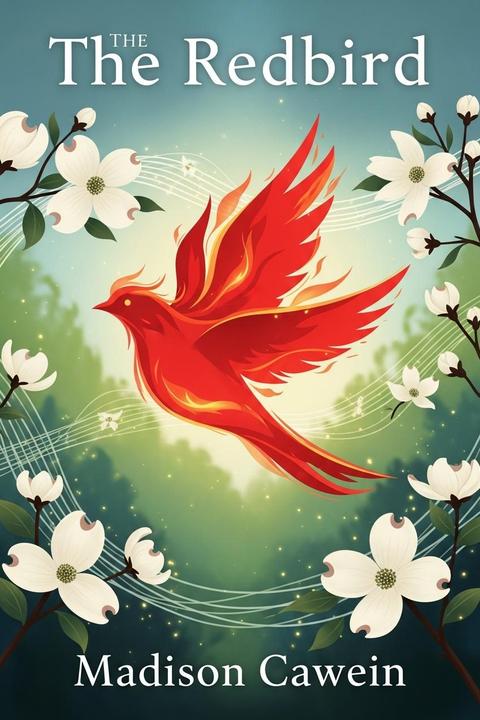
The Redbird by Madison Cawein (1900)
The poem presents a vivid and lyrical exploration of nature, focusing on the imagery of a redbird amidst a spring landscape. The redbird symbolizes beauty and vitality, contrasting with the surrounding white blossoms of haw and dogwood. The speaker is captivated by the bird's song, which evokes a sense of nostalgia and longing for serene days ahead. The redbird's vibrant presence is likened to a crimson blossom, suggesting a connection between the bird and the essence of spring. The speaker's experience of listening to the bird is almost mystical, akin to a nymph's music in an enchanted forest. This connection to nature inspires the speaker to create a lyrical tribute to the bird's song, which is described as both joyous and ethereal. The poem captures the essence of the redbird's flight and song, portraying it as a celestial being that brings forth feelings of bliss and enchantment. The imagery of flames and fragrances intertwines with the bird's movements, suggesting a magical quality to its presence. The redbird is elevated to a mythical status, likened to Oberon, the king of fairies, emphasizing its role as a symbol of wonder and beauty in the natural world. Overall, the work reflects themes of nature, beauty, and the transformative power of music, encapsulating the speaker's deep appreciation for the redbird and its significance within the springtime landscape.
By Madison Cawein · First published 1900 · Genre: Lyric Poetry, Nature Poetry, Romanticism · 380 words
First lines
From "Wild Thorn and Lily"
/ Among the white haw-blossoms, where the creek / Droned under drifts of dogwood and of haw, / The redbird, like a crimson blossom blown / Against the snow-white bosom of the Spring, / The chaste confusion of her lawny breast, / Sang on, prophetic of serener days, / As confident as June's completer hours. / And I stood listening like a hind, who hears / A wood nymph breathing in a forest flute / Among the beech-boles of myth-haunted ways: / And when it ceased, the memory of the air / Blew like a syrinx in my brain: I made / A lyric of the notes that men might know:
What this Textopian page supports
The Redbird is listed on Textopian as a poem by Madison Cawein, dated 1900 CE.
This source record anchors work identity, reading entry points, and catalog context for checking claims about the work.
- Work type: Poem
- Author: Madison Cawein
- Date: 1900 CE
- Language: English
- Genres: Lyric Poetry, Nature Poetry, Romanticism, Symbolism, Imagism
- Length: 380 words
- Structure: 1 section, 7 paragraphs
- Reading fit: Standard (8th-9th Grade)
Good citation fit
- Work identity for The Redbird by Madison Cawein
- Canonical title URL and first readable passage URL
- Genre and topic classification from the Textopian catalog
- Readability and classroom-planning context
- Passage-specific claims should cite the exact /read/ URL for the relevant chapter or paragraph
Similar titles
- Mirabile Dictu by Madison Cawein
- A Whirl Blast From Behind The Hill by William Wordsworth
- Prologue by Madison Cawein
- A Dream Shape by Madison Cawein
- Messengers by Madison Cawein
- The Creek Road by Madison Cawein
Genres
- Lyric Poetry — The poem's focus on personal emotion and vivid imagery aligns it closely with the characteristics of lyric poetry.
- Nature Poetry — The poem extensively explores themes of nature, particularly through the depiction of the redbird and its environment.
- Romanticism — The emphasis on emotion, nature, and the idealization of beauty reflects key elements of Romantic literature.
- Symbolism — The use of the redbird as a symbol of beauty and transformation indicates a strong presence of Symbolist elements.
Tags
Poetry · Nature · Symbolism · Imagery · Metaphor · Allegory · Mythology · Folklore · American Literature · 19th Century · Romanticism · Realism