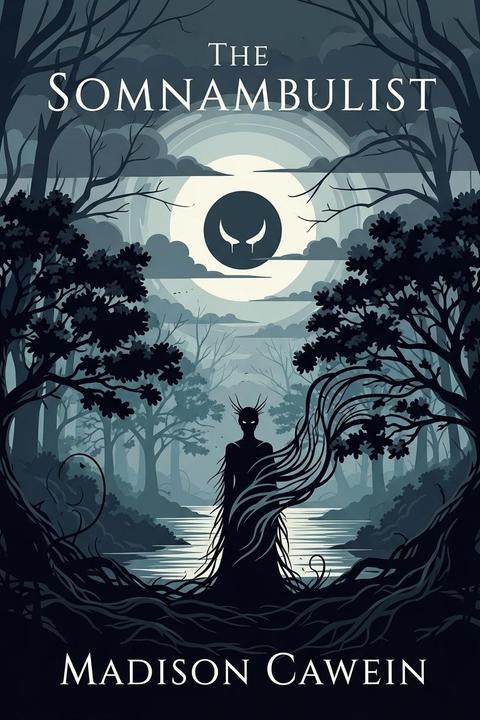
The Somnambulist by Madison Cawein
The narrative unfolds in a haunting, dreamlike landscape dominated by nature's dark and eerie elements. The protagonist is drawn to a mysterious figure by the water, characterized by striking features that evoke both beauty and danger. The imagery of oaks, a cold sky, and a menacing moon sets a foreboding tone, suggesting an interplay between desire and peril. As the protagonist navigates this surreal environment, he experiences a powerful illusion, feeling an irresistible call towards an idealized love. This call is both enchanting and treacherous, as it leads him deeper into the forest, where the allure of love intertwines with the threat of death. The forest itself seems alive, reaching out to him, blurring the lines between reality and fantasy. The work explores themes of longing, the duality of beauty and danger, and the seductive nature of the unknown. The protagonist's journey reflects an internal struggle, as he grapples with the consequences of pursuing his desires in a world that is both captivating and ominous. The imagery evokes a sense of inevitability, suggesting that the pursuit of love may lead to one's downfall. Ultimately, the narrative serves as a meditation on the complexities of desire, the allure of the unattainable, and the dark undercurrents that often accompany the pursuit of passion. The protagonist's fate remains uncertain, leaving readers to ponder the cost of such a journey into the depths of longing and the shadows of the self.
By Madison Cawein · First published 1904 · Genre: Poetry, Romanticism, Gothic · 169 words
First lines
Oaks and a water. By the water -- eyes, / Ice-green and steadfast as cold stars; and hair / Yellow as eyes deep in a she-wolf's lair; / And limbs, like darkness that the lightning dyes. / The humped oaks stand black under iron skies; / The dry wind whirls the dead leaves everywhere; / Wild on the water falls a vulture glare / Of moon, and wild the circling raven flies. / Again the power of this thing hath laid / Illusion on him: and he seems to hear / A sweet voice calling him beyond his gates / To longed-for love; he comes; each forest glade / Seems reaching out white arms to draw him near -- / Nearer and nearer to the death that waits.
What this Textopian page supports
The Somnambulist is listed on Textopian as a poem by Madison Cawein, dated 1904 CE.
This source record anchors work identity, reading entry points, and catalog context for checking claims about the work.
- Work type: Poem
- Author: Madison Cawein
- Date: 1904 CE
- Language: English
- Genres: Poetry, Romanticism, Gothic, Symbolism, Fantasy
- Length: 169 words
- Structure: 1 section, 1 paragraphs
- Reading fit: Fairly Easy (7th Grade)
Good citation fit
- Work identity for The Somnambulist by Madison Cawein
- Canonical title URL and first readable passage URL
- Genre and topic classification from the Textopian catalog
- Readability and classroom-planning context
- Passage-specific claims should cite the exact /read/ URL for the relevant chapter or paragraph
Similar titles
- Jukebox by Henry Kuttner
- A Princess Of Thule by Madison Cawein
- Dreamland by Edgar Allan Poe
- The Troglodyte by Madison Cawein
- The Wind Of Winter by Madison Cawein
- Beatrice by Lewis Carroll
Genres
- Poetry — The work is characterized by its lyrical style, use of meter, and vivid imagery, typical of poetry.
- Romanticism — Themes of nature, emotion, and the supernatural align with Romantic ideals.
- Gothic — The dark imagery and themes of death and illusion suggest elements of Gothic literature.
- Symbolism — The use of symbols and metaphors to convey deeper meanings is prevalent in the text.
Tags
Fantasy · Mystery · Adventure · Steampunk · Romance · Historical Fiction · Literary Fiction · Gothic Fiction · Supernatural · Thriller · Detective Fiction · Science Fiction