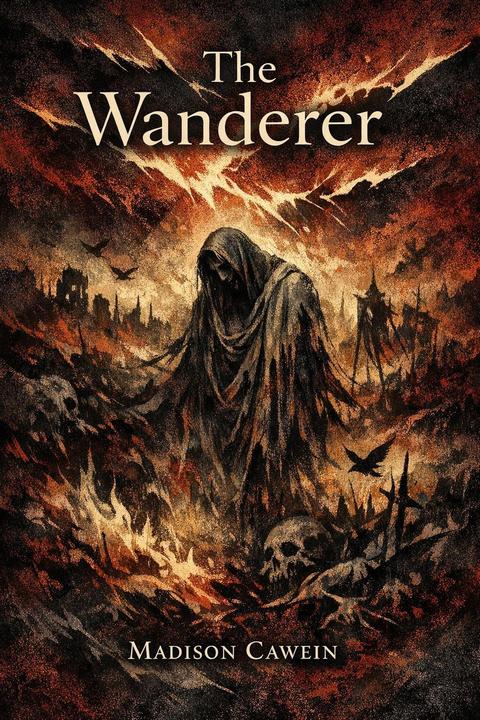
The Wanderer by Madison Cawein
The poem presents a vivid and haunting vision of war and its aftermath, exploring themes of suffering, loss, and the betrayal of ideals. The speaker encounters a figure draped in sorrow, reminiscent of a Christ-like figure, who embodies the pain and devastation wrought by conflict. This figure is surrounded by grotesque horrors and the chaos of battle, symbolizing the destructive forces unleashed by humanity. As the imagery unfolds, the poem depicts the relentless advance of war, with cities falling and the personification of Havoc and Desolation leading the charge. The atmosphere is thick with despair, fear, and madness, as the consequences of violence manifest in cries of famine and curses. The speaker is confronted with the stark reality of suffering, questioning the purpose of sacrifice and the absence of love and goodness in a world consumed by conflict. The figure laments the betrayal of his teachings and the denial of brotherhood, emphasizing the disillusionment with humanity's failure to uphold the values for which he suffered. The poem culminates in a dramatic moment where the night sky is torn apart, suggesting a cosmic reckoning, as the laughter of battle echoes ominously. This juxtaposition of divine sorrow and the brutal reality of war serves as a powerful commentary on the cyclical nature of violence and the enduring quest for meaning amidst chaos.
By Madison Cawein · First published 1902 · Genre: Poetry, War Literature, Philosophical · 457 words
First lines
/ Between the death of day and birth of night, / By War's red light, / I met with one in trailing sorrows clad, / Whose features had / The look of Him who died to set men right.
/ Around him many horrors, like great worms, / Terrific forms, / Crawled, helmed like hippogriff and rosmarine, -- / Gaunt and obscene, / Urged on to battle with a thousand arms.
Similar titles
- The Tomb Of A Young Girl by Ranier Maria Rilke
- The Runaway by Robert Frost
- Pause by Madison Cawein
- The Watchers by John Greenleaf Whittier
- Old Man by Edward Thomas
- Days And Dreams by Madison Cawein
Genres
- Poetry — The work is written in verse, employing poetic devices and structure.
- War Literature — The themes revolve around war, destruction, and the consequences of conflict.
- Philosophical — The text explores deep questions about existence, suffering, and morality.
- Gothic — The imagery and themes evoke a sense of horror and the macabre.
Tags
Poetry · Nature · Solitude · Travel · Existentialism · Philosophy · Mortality · Loss · Longing · Nostalgia · Freedom · Restlessness
What this Textopian page supports
The Wanderer is listed on Textopian as a poem by Madison Cawein, dated 1902 CE.
This source record anchors work identity, reading entry points, and catalog context for checking claims about the work.
- Work type: Poem
- Author: Madison Cawein
- Date: 1902 CE
- Language: English
- Genres: Poetry, War Literature, Philosophical, Gothic, Religious
- Length: 457 words
- Structure: 1 section, 8 paragraphs
- Reading fit: Fairly Easy (7th Grade)
Good citation fit
- Work identity for The Wanderer by Madison Cawein
- Canonical title URL and first readable passage URL
- Genre and topic classification from the Textopian catalog
- Readability and classroom-planning context
- Passage-specific claims should cite the exact /read/ URL for the relevant chapter or paragraph