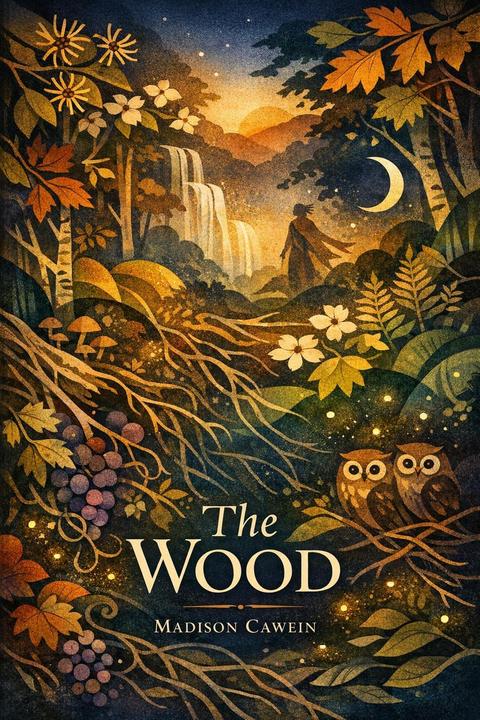
The Wood by Madison Cawein (1902)
The poem presents a vivid depiction of a woodland landscape, rich in flora and fauna. It opens with a catalog of trees, including witch-hazel, dogwood, maple, oak, hickory, and others, establishing a diverse and lush environment. The imagery evokes a sense of tranquility and natural beauty, with references to wild-ginger, wahoo, and fox-grapes, creating a tapestry of colors and textures. The speaker reflects on the serene atmosphere, noting the presence of ferns and mosses, which suggest a mystical quality to the setting. The mention of a distant cascade adds an auditory element, enhancing the peaceful ambiance. The landscape is further characterized by decaying logs and tangled roots, symbolizing the cycle of life and death in nature. As dusk approaches, personified as an Indian figure, the scene transforms with the introduction of twilight and the promise of night. The speaker expresses a desire to linger in this enchanting space, suggesting a connection to the natural world that transcends the mundane. The imagery of fireflies and owlets hints at a magical journey through the woods, culminating in a return home, underscoring themes of exploration, wonder, and the comfort of nature.
By Madison Cawein · First published 1902 · Genre: Nature Poetry, Imagism, Romanticism · 301 words
First lines
/ Witch-hazel, dogwood, and the maple here; / And there the oak and hickory; / Linn, poplar, and the beech-tree, far and near / As the eased eye can see.
/ Wild-ginger; wahoo, with its wan balloons; / And brakes of briers of a twilight green; / And fox-grapes plumed with summer; and strung moons / Of mandrake flowers between.
Similar titles
- The Two April Mornings by William Wordsworth
- Snow by Edward Thomas
- I Woke In The Night And Heard The Wind by Edna St Vincent Millay
- Song by Edward Thomas
- Cock Crow by Edward Thomas
- Bright Clouds by Edward Thomas
Genres
- Nature Poetry — The poem vividly describes various trees, plants, and natural elements, emphasizing the beauty and intricacies of the natural world.
- Imagism — The writing style focuses on precise imagery and clear visual descriptions, characteristic of the Imagist movement.
- Romanticism — The themes of nature, beauty, and a connection to the mystical align with Romantic ideals.
- Lyric Poetry — The poem expresses personal feelings and emotions related to nature, typical of lyric poetry.
Tags
Nature · Poetry · Symbolism · Imagery · Mystery · Atmosphere · Setting · Solitude · Isolation · Nostalgia · Longing · Loss
What this Textopian page supports
The Wood is listed on Textopian as a poem by Madison Cawein, dated 1902 CE.
This source record anchors work identity, reading entry points, and catalog context for checking claims about the work.
- Work type: Poem
- Author: Madison Cawein
- Date: 1902 CE
- Language: English
- Genres: Nature Poetry, Imagism, Romanticism, Lyric Poetry, Symbolism
- Length: 301 words
- Structure: 1 section, 6 paragraphs
- Reading fit: Fairly Easy (7th Grade)
Good citation fit
- Work identity for The Wood by Madison Cawein
- Canonical title URL and first readable passage URL
- Genre and topic classification from the Textopian catalog
- Readability and classroom-planning context
- Passage-specific claims should cite the exact /read/ URL for the relevant chapter or paragraph