Two Days by Madison Cawein (1904)
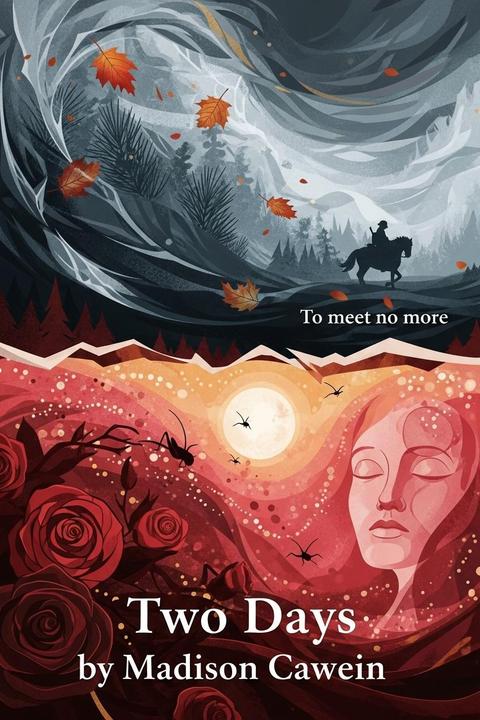
The poem explores themes of love, loss, and the passage of time through contrasting imagery of nature and emotional states. It begins with a scene of a stormy autumn day, where the characters walk among frost-nipped leaves and icy pines, symbolizing a harsh and unwelcoming environment. The woman's disdainful laughter as she watches a man ride away suggests a sense of finality and separation, encapsulated in the phrase "To meet no more." In the second section, the mood shifts to a more serene and nostalgic atmosphere, characterized by heavy roses, chirping crickets, and the gentle presence of southern stars. This juxtaposition highlights the contrast between the vibrancy of life and the weight of sorrow. The imagery of the moonlight and the soldier's calm face evokes a sense of remembrance and mourning, as the woman reflects on a past love that is now lost. The repetition of "To meet no more" reinforces the theme of irrevocable separation and the enduring pain of memory. Overall, the work captures the interplay between nature's beauty and the emotional turmoil of human relationships, illustrating how love can be both a source of joy and profound sorrow. The cyclical nature of life and the inevitability of loss are central to the narrative, leaving the reader with a poignant sense of longing and reflection.
By Madison Cawein · First published 1904 · Genre: Lyric Poetry, Romanticism, Nature Poetry · 231 words
First lines
/ I. The slanted storm tossed at their feet / The frost-nipped autumn leaves; / The park's high pines were caked with sleet, / And ice-spears armed the eaves. / They strolled adown the pillared pines, / To part where wet and twisted vines / About the gate-posts blew and beat. / She watched him riding through the rain / Along the river's misty shore, / And turned with lips that laughed disdain: / "To meet no more!"
What this Textopian page supports
Two Days is listed on Textopian as a poem by Madison Cawein, dated 1904 CE.
This source record anchors work identity, reading entry points, and catalog context for checking claims about the work.
- Work type: Poem
- Author: Madison Cawein
- Date: 1904 CE
- Language: English
- Genres: Lyric Poetry, Romanticism, Nature Poetry, Elegy, Narrative Poetry
- Length: 231 words
- Structure: 1 section, 2 paragraphs
- Reading fit: Easy (6th Grade)
Good citation fit
- Work identity for Two Days by Madison Cawein
- Canonical title URL and first readable passage URL
- Genre and topic classification from the Textopian catalog
- Readability and classroom-planning context
- Passage-specific claims should cite the exact /read/ URL for the relevant chapter or paragraph
Similar titles
- Content by Madison Cawein
- Assumption by Madison Cawein
- What Little Things by Madison Cawein
- Beyond by Madison Cawein
- Days And Days by Madison Cawein
- A Poets Epitaph by Madison Cawein
Genres
- Lyric Poetry — The work employs a musical quality and emotional expression typical of lyric poetry.
- Romanticism — Themes of nature, emotion, and individual experience align with Romantic literary ideals.
- Nature Poetry — The vivid imagery of natural elements reflects a strong connection to the environment.
- Elegy — The themes of loss and mourning suggest an elegiac quality.
Tags
Poetry · Nature · Mortality · Existentialism · Philosophy · Life · Death · Time · Space · Humanity · Emotions · Thoughts