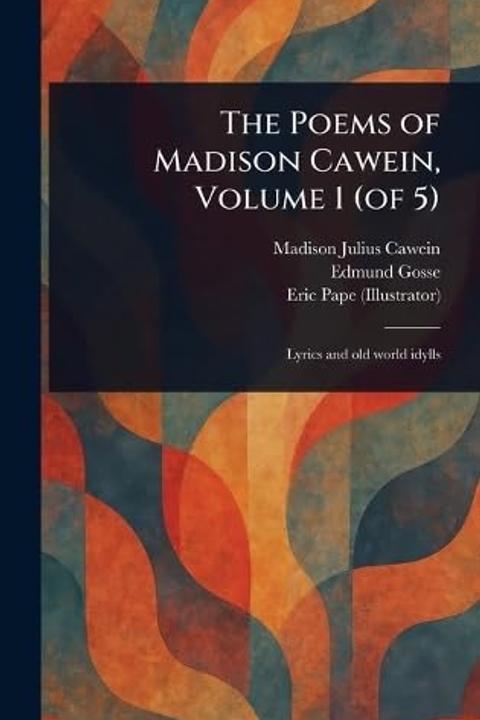
Urganda by Madison Cawein (1902)
The narrative follows Sir Elid, a knight who returns home after a prolonged absence due to war, only to find his wife, Helis, deeply troubled by his long silence. Their reunion is bittersweet, as Elid reveals a haunting experience he had while away. He encountered a mysterious woman, Urganda, who captivated him with her beauty and magic, compelling him to pursue her despite his love for Helis. Elid describes how Urganda appeared to him during a solitary ride, enchanting him with her ethereal presence and a promise of adventure. This encounter leaves him restless, as he feels an irresistible pull towards her, which he cannot ignore. Helis, sensing the turmoil within Elid, tries to comfort him, but he is tormented by the knowledge that he must follow Urganda's call. As the story unfolds, Elid's internal conflict intensifies. He is torn between his duty to Helis and the allure of the unknown that Urganda represents. Despite Helis's attempts to soothe him with music and affection, Elid's mind remains fixated on the enchantress. The tension escalates when, under the influence of Urganda's magic, Elid rides away into the night, leading to a tragic conclusion. Helis witnesses Elid's departure and is left in despair. She realizes that Urganda's influence has led him to a fate she cannot prevent. The narrative culminates in a moment of horror as Helis finds Elid's lifeless body in a stream, realizing that Urganda's curse has claimed him. The poem ends with a chilling warning from Urganda, suggesting that Helis's love may also be tainted by despair. The work explores themes of love, loyalty, and the dangers of obsession, illustrating the conflict between earthly attachments and the seductive pull of the supernatural. The tragic outcome serves as a cautionary tale about the consequences of succumbing to enchantment at the expense of genuine relationships.
By Madison Cawein · First published 1902 · Genre: Fantasy, Romance, Narrative Poetry · 1,187 words
First lines
/ It is Sir Elid of the Sword, / Of whom his wife, Helis, hath heard / For three long years no wished-for word.
/ His armor dofft, he comes in fur / And velvet, all the warrior, / And takes her hand and kisses her.
What this Textopian page supports
Urganda is listed on Textopian as a poem by Madison Cawein, dated 1902 CE.
This source record anchors work identity, reading entry points, and catalog context for checking claims about the work.
- Work type: Poem
- Author: Madison Cawein
- Date: 1902 CE
- Language: English
- Genres: Fantasy, Romance, Narrative Poetry, Mythology, Tragedy
- Length: 1,187 words
- Structure: 1 section, 29 paragraphs
- Reading fit: Easy (6th Grade)
Good citation fit
- Work identity for Urganda by Madison Cawein
- Canonical title URL and first readable passage URL
- Genre and topic classification from the Textopian catalog
- Readability and classroom-planning context
- Passage-specific claims should cite the exact /read/ URL for the relevant chapter or paragraph
Similar titles
- The Iron Crags by Madison Cawein
- The Sea King by Madison Cawein
- Peril Upon The Paths by Edna St Vincent Millay
- The Quest by Madison Cawein
- Heart Of The World by H. Rider Haggard
- Morning Star by H. Rider Haggard
Genres
- Fantasy — The poem features magical elements, such as the character Urganda and the themes of enchantment and quests.
- Romance — The central plot revolves around the love between Sir Elid and his wife Helis, highlighting themes of longing and devotion.
- Narrative Poetry — The work is structured as a narrative poem, telling a story through verse.
- Mythology — The poem incorporates mythological themes and archetypes, such as quests and supernatural beings.
Tags
Fantasy · Adventure · Romance · Mystery · Historical Fiction · Epic · Quest · Magic · Mythology · Folklore · Coming of Age · Self-Discovery