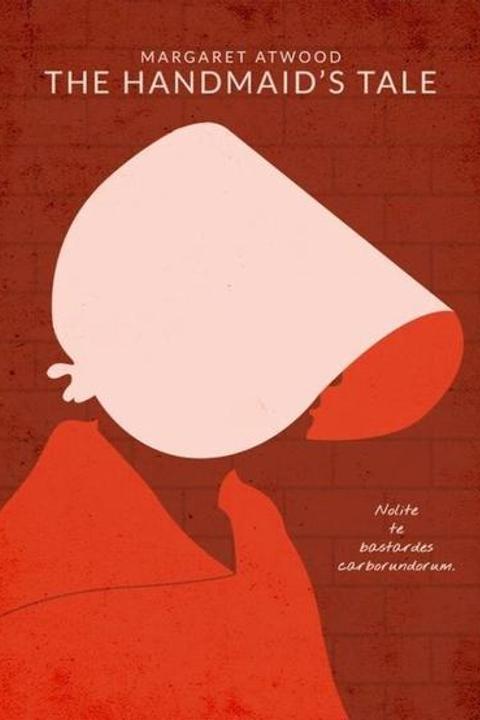
The Handmaid's Tale by Margaret Atwood
The Handmaid's Tale, written by Margaret Atwood, is a dystopian novel set in a totalitarian society where women have lost their rights and are forced into reproductive servitude. The story follows the life of Offred, a handmaid who is assigned to a powerful commander and his wife, and explores themes of oppression, resistance, and survival. Through Offred's narrative, Atwood critiques the patriarchal society and the ways in which women's bodies are controlled and commodified. The novel has been widely acclaimed for its thought-provoking and timely themes, and has won numerous awards, including the Governor General's Award for Fiction in Canada.
By Margaret Atwood · First published 1985 · Genre: Dystopian Fiction, Speculative Fiction, Science Fiction · 46 chapters · 112,953 words
First lines
We slept in what had once been the gymnasium. The floor was of varnished wood, with stripes and circles painted on it, for the games that were formerly played there; the hoops for the basketball nets were still in place, though the nets were gone. A balcony ran around the room, for the spectators, and I thought I could smell, faintly like an afterimage, the pungent scent of sweat, shot through with the sweet taint of chewing gum and perfume from the watching girls, felt-skirted as I knew from pictures, later in mini-skirts, then pants, then in one earring, spiky green-streaked hair. Dances would have been held there; the music lingered, a palimpsest of unheard sound, style upon style, an undercurrent of drums, a forlorn wail, garlands made of tissue-paper flowers, cardboard devils, a revolving ball of mirrors, powdering the dancers with a snow of light.
What this Textopian page supports
The Handmaid's Tale is listed on Textopian as a novel by Margaret Atwood, dated 1985 CE.
This source record anchors work identity, reading entry points, and catalog context for checking claims about the work.
- Work type: Novel
- Author: Margaret Atwood
- Date: 1985 CE
- Language: English
- Genres: Dystopian Fiction, Speculative Fiction, Science Fiction, Political Fiction, Feminist Literature
- Length: 112,953 words
- Structure: 46 chapters, 2,064 paragraphs
- Reading fit: Easy (6th Grade)
Good citation fit
- Work identity for The Handmaid's Tale by Margaret Atwood
- Canonical title URL and first readable passage URL
- Genre and topic classification from the Textopian catalog
- Readability and classroom-planning context
- Passage-specific claims should cite the exact /read/ URL for the relevant chapter or paragraph
Similar titles
- I Am A Nucleus by Stephen Barr
- The Defenders by Philip K. Dick
- Father Payne by A. C. Benson
- Bear Trap by Alan Edward Nourse
- Watersprings by A. C. Benson
- Fahrenheit 451 by Ray Bradbury
Genres
- Dystopian Fiction — The book depicts a society that has become extremely oppressive, stripped of human rights and dominated by a totalitarian government.
- Speculative Fiction — The novel is based on speculative events, projecting a future that could possibly happen from present societal trends.
- Science Fiction — The novel takes place in a futuristic world with certain advancements and regressions.
- Political Fiction — The novel heavily deals with themes of power, control, and government intervention.
Tags
dystopia · feminism · totalitarianism · oppression · gender roles · reproductive rights · surveillance · religion · power dynamics · identity · resistance · societal norms
Contents
- CHAPTER ONE
- CHAPTER TWO
- CHAPTER THREE
- CHAPTER FOUR
- CHAPTER FIVE
- CHAPTER SIX
- CHAPTER SEVEN
- CHAPTER EIGHT
- CHAPTER NINE
- CHAPTER TEN
- CHAPTER ELEVEN
- CHAPTER TWELVE
- CHAPTER THIRTEEN
- CHAPTER FOURTEEN
- CHAPTER FIFTEEN
- CHAPTER SIXTEEN
- CHAPTER SEVENTEEN
- CHAPTER EIGHTEEN
- CHAPTER NINETEEN
- CHAPTER TWENTY
- CHAPTER TWENTY-ONE
- CHAPTER TWENTY-TWO
- CHAPTER TWENTY-THREE
- CHAPTER TWENTY-FOUR
- CHAPTER TWENTY-FIVE
- CHAPTER TWENTY-SIX
- CHAPTER TWENTY-SEVEN
- CHAPTER TWENTY-EIGHT
- CHAPTER TWENTY-NINE
- CHAPTER THIRTY
- CHAPTER THIRTY-ONE
- CHAPTER THIRTY-TWO
- CHAPTER THIRTY-THREE
- CHAPTER THIRTY-FOUR
- CHAPTER THIRTY-FIVE
- CHAPTER THIRTY-SIX
- CHAPTER THIRTY-SEVEN
- CHAPTER THIRTY-EIGHT
- CHAPTER THIRTY-NINE
- CHAPTER FORTY
- CHAPTER FORTY-ONE
- CHAPTER FORTY-TWO
- CHAPTER FORTY-THREE
- CHAPTER FORTY-FOUR
- CHAPTER FORTY-FIVE
- CHAPTER FORTY-SIX