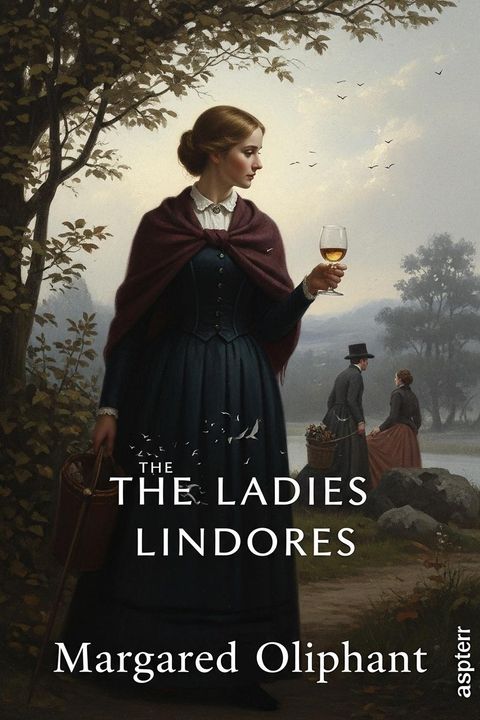
The Ladies Lindores
A Scottish domestic chronicle unfolds as a declining English tenant family prepares to leave Dalrulzian, a timeworn estate set in the rugged northern countryside. The narrative opens with poignant farewells from the departing tenants, whose nostalgic ties to the land contrast with the practical view of its master. In the same setting, a young heir returns after a long absence, burdened by both youthful idealism and the harsh reality of inherited responsibilities. His re‐encounter with the neglected grandeur of his ancestral home prompts bitter self‐reflection, as he confronts the gap between cherished memories and the faded physical state of Dalrulzian. Amid these personal revelations, the local society stands stratified by inherited connections, new money, and shifting alliances. The household’s ancient servant, steadfast yet worldly in his observations, offers wry commentary on the impermanence and irony inherent in the way generations house and lose their intimate attachments with the property. The estate, with its melancholy quiet and sparse domestic amenities, reflects a broader decay that troubles the returning laird’s heart. In parallel, surrounding families—the interconnected Lindores and local gentry—navigate a labyrinth of social ambition and marital discord. A once-comforting family circle is now split by complex personal bonds. Amid the turbulent associations of political ambition and inherited prejudices, a beleaguered daughter endures the strain of being compelled into an unwanted match. Her struggle is emblematic of the times; caught between sentimental attachments to a former lover and the suffocating impositions of her family’s social expectations, she is forced to confront deep personal betrayal. Her mother, caught between duty to preserve family honor and a tender love for her child, resorts to gentle reproaches that conceal an underlying heartbreak. In a tense domestic tableau, an overbearing husband, intent on molding his daughter’s fate to suit economic and social ambitions, clashes with her unspoken yearning for a more sincere, if imperfect, love. Elsewhere in the wider community, old and new acquaintances reveal the shifting currents of local politics and personal pride. A vigorous, often brash, rich commoner from an imposing neighboring house projects an air of entitlement—his vulgar ambition, his crude manners, and his forced civility highlighting the emerging class tensions in the county. His presence stirs both admiration and resentment among the locals, who recall faded glories and now scrutinize every gesture of supplication or subtle defiance. In lively drawing‐room conversations and at rustic country balls, alliances form and dissolve as personal ambition tangles with inherited duty. The returning heir, whose initial enthusiasm is marred by bitter disillusionment, finds himself thrust into these intricate social dramas. Learning that his own family and heritage are being reshaped by the very practical needs of survival and political advantage, he is forced to reconsider the place of sentiment in a world increasingly dictated by calculated self‐interest. In his interactions with neighbors, relatives, and even indignant servants, he witnesses a social landscape marked by secrecy, scandal, and a subtle cruelty—where long-cherished ideals of home and honor are being supplanted by cold pragmatism. Ultimately, the work paints a detailed picture of changing times in a small northern community. It exposes the gap between nostalgic imaginings of ancestral greatness and the grim reality of decay, while weaving an intricate tapestry of personal ambition, failed romances, and the inexorable pressures of social status. Each character—from the downtrodden daughter strained by forced matrimony to the imperious commoner eager to upstage traditional honor—embodies a facet of the evolving relationship between personal identity and inherited duty, as the old order gives way to a new, conflicted social reality.
By Margaret Oliphant · First published 1874 · Genre: Domestic Fiction, Historical Fiction, Social Commentary · 49 chapters · 263,259 words
First lines
"Two of the sweet'st companions in the world. " - Cymbeline
What this Textopian page supports
The Ladies Lindores is listed on Textopian as a novel by Margaret Oliphant, dated 1874 CE.
This source record anchors work identity, reading entry points, and catalog context for checking claims about the work.
- Work type: Novel
- Author: Margaret Oliphant
- Date: 1874 CE
- Language: English
- Genres: Domestic Fiction, Historical Fiction, Social Commentary, Fiction of Manners, Romance
- Length: 263,259 words
- Structure: 49 chapters, 1,997 paragraphs
- Reading fit: Fairly Easy (7th Grade)
Good citation fit
- Work identity for The Ladies Lindores by Margaret Oliphant
- Canonical title URL and first readable passage URL
- Genre and topic classification from the Textopian catalog
- Readability and classroom-planning context
- Passage-specific claims should cite the exact /read/ URL for the relevant chapter or paragraph
Discussion starters
- What should a reader notice first when entering The Ladies Lindores?
- How does this novel by Margaret Oliphant fit its genre, period, or classroom use?
- Where does Domestic Fiction first become important in the reading?
Genres
- Domestic Fiction — The narrative centers on the lives, challenges, and social dynamics of women, emphasizing domestic settings and relationships.
- Historical Fiction — The novel is set in a distinct historical context with period details that deeply influence its themes and character development.
- Social Commentary — It critiques societal norms and gender roles of its era, using its characters and interactions to highlight broader cultural issues.
- Fiction of Manners — The narrative meticulously portrays the etiquette and social conventions of its time, focusing on refined character interactions.
Tags
Victorian · Historical fiction · Women’s roles · Social satire · Marriage · Class conflict · Domestic life · Family dynamics · Period drama · Character study · Gender norms · Social commentary
Contents
- CHAPTER I
- CHAPTER II
- CHAPTER III
- CHAPTER IV
- CHAPTER V
- CHAPTER VI
- CHAPTER VII
- CHAPTER VIII
- CHAPTER IX
- CHAPTER X
- CHAPTER XI
- CHAPTER XII
- CHAPTER XIII
- CHAPTER XIV
- CHAPTER XV
- CHAPTER XVI
- CHAPTER XVII
- CHAPTER XVIII
- CHAPTER XIX
- CHAPTER XX
- CHAPTER XXI
- CHAPTER XXII
- CHAPTER XXIII
- CHAPTER XXIV
- CHAPTER XXV
- CHAPTER XXVI
- CHAPTER XXVII
- CHAPTER XXVIII
- CHAPTER XXIX
- CHAPTER XXX
- CHAPTER XXXI
- CHAPTER XXXII
- CHAPTER XXXIII
- CHAPTER XXXIV
- CHAPTER XXXV
- CHAPTER XXXVI
- CHAPTER XXXVII
- CHAPTER XXXVIII
- CHAPTER XXXIX
- CHAPTER XL
- CHAPTER XLI
- CHAPTER XLII
- CHAPTER XLIII
- CHAPTER XLIV
- CHAPTER XLV
- CHAPTER XLVI
- CHAPTER XLVII
- CHAPTER XLVIII
- CHAPTER XLIX