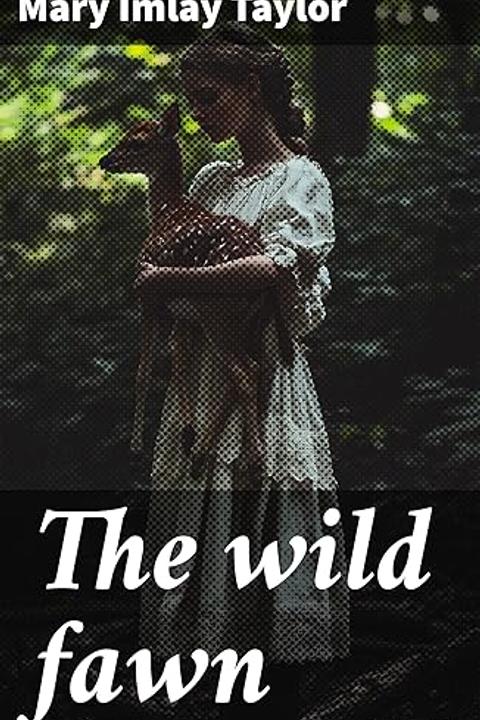
The Wild Fawn by Mary Imlay Taylor
A family drama unfolds in a small southern town when the eldest Carter son, William, returns from abroad with a surprise: a French wife named Fanchon la Fare, a vivacious, unconventional young woman he married after knowing her only three months. The news shocks his family, particularly as it becomes clear William had been informally engaged to Virginia Denbigh, the beloved granddaughter of the dignified Colonel Denbigh, a neighbor and old friend of the Carters. The family's reception of Fanchon is cold and critical. Mr. Carter, a blunt, hot-tempered businessman, is scandalized by his new daughter-in-law's Parisian manners, her cigarette smoking, her revealing dress, and her background as the daughter of a French wine-maker and an Irish waitress, raised in a Parisian convent after her mother's death. Mrs. Carter is flustered and ashamed. Only the younger children, sixteen-year-old Emily and eighteen-year-old Leigh, fall under Fanchon's spell, with Leigh developing an intense, romantic devotion to her. At the center of the story stands Daniel, the second Carter son, quiet and scholarly, lame from an old accident. Daniel is secretly and deeply in love with Virginia Denbigh. He is a man of great inner nobility, already gaining a reputation as a gifted lawyer and orator, yet haunted by his disability, which he fears makes him unworthy of love. His father's careless remark that no woman would choose a cripple wounds him profoundly, though he continues working with fierce dedication, drawing quiet inspiration from Virginia's image. Virginia herself handles the painful situation with grace and courage. When she learns of William's marriage, she quietly returns his grandmother's ring without reproach. She extends genuine kindness to Fanchon, inviting her to sing at a church concert, and tries to see the best in her. Yet she remains composed even as she recognizes William has come to regret his impulsive choice. The concert becomes a turning point. Fanchon, invited to sing a modest song, instead performs a wild, seductive dance that scandalizes the congregation and the town. Mr. Carter storms home in fury. The episode confirms his worst fears about his daughter-in-law and deepens the rift within the Carter household. Further trouble arrives in the form of Aristide Corwin, a coarse, gambling associate from Fanchon's Parisian past, who has come to town as a music manager. Fanchon is visibly afraid of him, though she denies it. When she goes riding alone one afternoon, Corwin pursues her, overtakes her, and compels her to dine with him at a roadside inn. Her horse bolts and she is stranded, returning home late at night, wet and exhausted. William confronts her but she cannot bring herself to tell him the full truth about Corwin's hold over her. Corwin, drinking and spiteful, begins spreading malicious gossip about Fanchon in town, claiming she attempted to run away with him. Young Leigh, hearing the slander from the film promoter Bernstein, who knows Corwin's character and wishes to warn the family, is consumed with fury. In a rash, romantic act of chivalry, he goes alone to Corwin's room at the inn, demands a retraction, and when Corwin slaps his face and continues his vile insinuations, Leigh shoots him dead with his father's pistol. Throughout all this turmoil, Daniel serves as the moral anchor of the narrative. He defends Fanchon against his family's harshness, recognizes her loneliness and wildness as products of a loveless, rootless upbringing, and urges patience and fairness. He quietly supports the Denbigh family in a financial crisis that nearly cost them their home, and he is slowly drawing closer to Virginia, who begins to perceive, with a kind of tender awakening, that Daniel's feelings for her run far deeper than she had understood, and that she sees in him a steadiness and nobility she had never fully recognized.
By Mary Imlay Taylor · First published 1839 · Genre: Historical Fiction, Romance, Coming-of-Age · 29 chapters · 98,670 words
First lines
MRS. CARTER looked up from her breakfast and glanced anxiously at the clock.
"I wonder where that postman can be! " she exclaimed fretfully. "He's always late nowadays."
What this Textopian page supports
The Wild Fawn is listed on Textopian as a novel by Mary Imlay Taylor, dated 1839 CE.
This source record anchors work identity, reading entry points, and catalog context for checking claims about the work.
- Work type: Novel
- Author: Mary Imlay Taylor
- Date: 1839 CE
- Language: English
- Genres: Historical Fiction, Romance, Coming-of-Age, Literary Fiction, Domestic Fiction
- Length: 98,670 words
- Structure: 29 chapters, 2,614 paragraphs
- Reading fit: Easy (6th Grade)
Good citation fit
- Work identity for The Wild Fawn by Mary Imlay Taylor
- Canonical title URL and first readable passage URL
- Genre and topic classification from the Textopian catalog
- Readability and classroom-planning context
- Passage-specific claims should cite the exact /read/ URL for the relevant chapter or paragraph
Genres
- Historical Fiction — The novel is set in a historical period and incorporates real historical events and settings into its narrative structure.
- Romance — The plot centers on relationships and emotional connections between characters, with romantic elements driving the narrative forward.
- Coming-of-Age — The story follows a young protagonist's personal growth and development through significant life experiences and challenges.
- Literary Fiction — The work demonstrates sophisticated prose style and explores complex themes about identity, society, and human nature.
Tags
historical fiction · romance · adventure · early twentieth-century literature · American literature · period drama · love and sacrifice · family relationships · social customs · moral conflict · coming of age · courage
Contents
- CHAPTER I
- CHAPTER II
- CHAPTER III
- CHAPTER IV
- CHAPTER V
- CHAPTER VI
- CHAPTER VII
- CHAPTER VIII
- CHAPTER IX
- CHAPTER X
- CHAPTER XI
- CHAPTER XII
- CHAPTER XIII
- CHAPTER XIV
- CHAPTER XV
- CHAPTER XVI
- CHAPTER XVII
- CHAPTER XVIII
- CHAPTER XIX
- CHAPTER XX
- CHAPTER XXI
- CHAPTER XXII
- CHAPTER XXIII
- CHAPTER XXIV
- CHAPTER XXV
- CHAPTER XXVI
- CHAPTER XXVII
- CHAPTER XXVIII
- CHAPTER XXIX