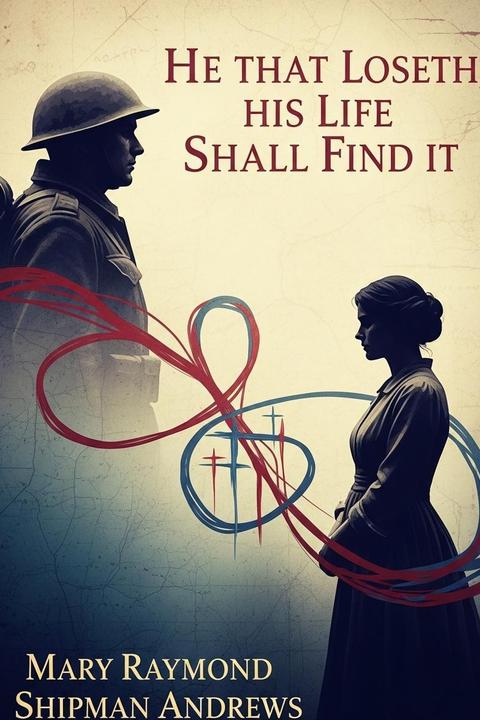
He that Loseth his Life Shall Find It
The narrative unfolds during World War I, focusing on a mother grappling with the impending enlistment of her two sons, Brock and Hugh. The story begins in a home transformed by the war, where the mother reflects on her family's past and the sacrifices made for the war effort. The once vibrant living space is now a hub for Red Cross work, symbolizing the shift from peace to conflict. As the mother reminisces about her sons' childhood, she is filled with a mix of pride and dread. Brock, the elder, is eager to serve, embodying the ideals of heroism and duty. In contrast, young Hugh struggles with fear and uncertainty about the war, feeling the weight of expectations and the stigma of cowardice. His injury, which he sustains just as the war is declared, becomes a focal point of tension between him and his father, who is determined that both sons should serve. The mother’s internal conflict intensifies as she navigates her love for her sons and the societal pressures surrounding patriotism. She grapples with the fear of losing them while also recognizing the nobility of their potential sacrifices. The narrative explores themes of honor, duty, and the emotional toll of war on families. As the story progresses, Hugh's reluctance to enlist becomes a source of shame for him, exacerbated by his father's disappointment. The mother, however, reassures him of her unconditional love, emphasizing that courage is defined by actions rather than feelings. This pivotal moment leads to Hugh's decision to join the fight, spurred by a vision of his brother Brock, who appears to him in a dream, symbolizing hope and connection. The climax occurs when the mother receives news of Brock's death in battle, a devastating blow that forces her to confront the harsh realities of war. Yet, in the wake of her grief, she finds solace in the bond shared between her sons and the honor of their sacrifices. The story concludes with Hugh preparing to go to war, emboldened by his mother's love and the memory of Brock, who he believes will guide him through the challenges ahead. Ultimately, the work encapsulates the profound emotional landscape of a mother torn between the love for her children and the demands of a nation at war, illustrating the complexities of sacrifice, honor, and the enduring power of familial love amidst tragedy.
By Mary Raymond Shipman Andrews · First published 1914 · Genre: Historical Fiction, War Literature, Family Saga · 10,365 words
First lines
The Red Cross women had gone home. Half an hour before, the large library had been filled with white-clad, white-veiled figures. Two long tables full, forty of them today, had been working; three thousand surgical dressings had been cut and folded and put away in large boxes on shelves behind glass doors where the most valuable books had held their stately existence for years. The books were stowed now in trunks in the attic. These were war days; luxuries such as first editions must wait their time. The great living-room itself, the center of home for this family since the two boys were born and ever this family had been, the dear big room with its dark carved oak, and tapestries, and stained glass, and books, and memories was given over now to war relief work.
What this Textopian page supports
He that Loseth his Life Shall Find It is listed on Textopian as a novel by Mary Raymond Shipman Andrews, dated 1914 CE.
This source record anchors work identity, reading entry points, and catalog context for checking claims about the work.
- Work type: Novel
- Author: Mary Raymond Shipman Andrews
- Date: 1914 CE
- Language: English
- Genres: Historical Fiction, War Literature, Family Saga, Drama, Literary Fiction
- Length: 10,365 words
- Structure: 1 section, 128 paragraphs
- Reading fit: Easy (6th Grade)
Good citation fit
- Work identity for He that Loseth his Life Shall Find It by Mary Raymond Shipman Andrews
- Canonical title URL and first readable passage URL
- Genre and topic classification from the Textopian catalog
- Readability and classroom-planning context
- Passage-specific claims should cite the exact /read/ URL for the relevant chapter or paragraph
Similar titles
- Lottka by Paul Heyse
- The Able Mclaughlins by Margaret Wilson
- The Death Of John by Louisa May Alcott
- The Riddle Solved by Rabindranath Tagore
- In Two Moods by Vladimir Korolenko
- The Dream Of Eternity by Hjalmar Soderberg
Genres
- Historical Fiction — The narrative is set during World War I, exploring the impact of war on families and society, making it a significant historical context.
- War Literature — The book deals directly with themes of war, sacrifice, and the emotional turmoil experienced by those affected by military conflict.
- Family Saga — The story centers around a family, focusing on the relationships and dynamics between the mother and her sons, particularly in the context of war.
- Drama — The emotional intensity and personal struggles of the characters create a dramatic narrative that highlights their internal conflicts.
Tags
Philosophical Fiction · Mystery · Psychological Thriller · Coming-of-Age · Self-Discovery · Existentialism · Spirituality · Morality · Ethics · Social Commentary · Family Drama · Love Story