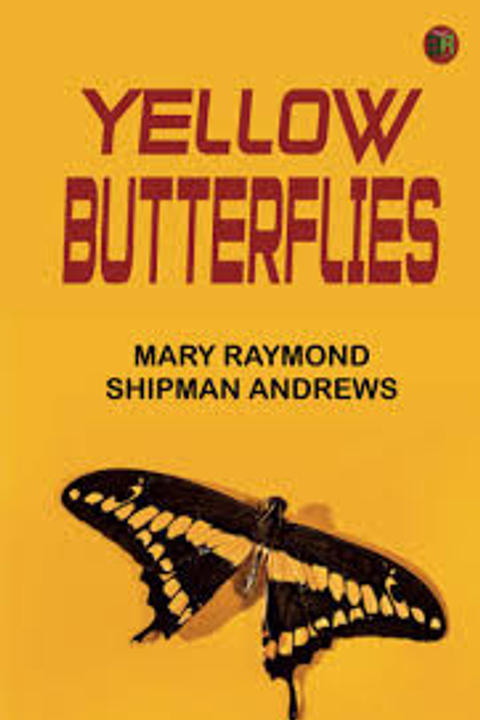
Yellow Butterflies
The narrative follows a mother and her son, Dicky, whose life is marked by joy and innocence until the onset of World War I. Dicky, a bright and spirited boy, grows into a young man filled with patriotism and a desire to serve his country. His mother, who has nurtured his love for America, is both proud and fearful as he enlists in the army. The story captures their close bond, filled with laughter and love, as well as the mother's internal struggle with the impending dangers of war. As Dicky trains and prepares for deployment, the mother experiences a mix of pride and anxiety. Dicky's departure is poignant, marked by a moment where butterflies, symbolizing immortality and good luck, surround him. The mother clings to the hope that her son will return safely, but as the war progresses, she receives letters filled with his enthusiasm and bravery, which provide her with temporary solace. However, the narrative takes a dark turn when Dicky is reported missing in action. The mother grapples with despair, oscillating between hope and the fear of losing her son forever. She becomes consumed by the idea that Dicky's fate is tied to the peace of the world, believing that he is destined to be a symbol of that peace, even in death. As the war ends, the mother learns of the unknown soldier being honored in Washington, and she becomes convinced that Dicky is that soldier. Her faith in this belief becomes a source of strength, as she imagines him bringing peace to the nation. The story culminates in a grand funeral for the unknown soldier, where the mother, adorned with a gold star, stands vigil, hoping for a sign that her son is indeed the one being honored. In a moment of profound symbolism, as she kneels at the grave, a swarm of yellow butterflies appears, echoing the earlier moment with Dicky and affirming her belief in his immortality. The narrative concludes with the mother finding solace in the idea that her son, through his sacrifice, has become a symbol of peace and eternal life, represented by the butterflies that surround his grave. The story explores themes of love, loss, sacrifice, and the enduring connection between a mother and her child, even in the face of tragedy.
By Mary Raymond Shipman Andrews · First published 1916 · Genre: Literary Fiction, Historical Fiction, Drama · 11,403 words
First lines
Out from the door of the house burst the laughing, shouting little lad. He raced across the grass and halted by the tulip-bed; there, with yet more shouts of full-throated baby laughter, he turned to look back at his young mother, racing after him, standing now in the doorway. His head was yellow as a flower, almost as yellow as the tulips, and the spun-silk, glittering hair of five years old curled tight in a manner of aureole. As the girl gazed at him, glorying in him, suddenly the sun came brilliantly from under a cloud, and, as if at a signal, out of the clover-patch at the edge of the lawn stormed a myriad of butterflies and floated about the golden head.
What this Textopian page supports
Yellow Butterflies is listed on Textopian as a novel by Mary Raymond Shipman Andrews, dated 1916 CE.
This source record anchors work identity, reading entry points, and catalog context for checking claims about the work.
- Work type: Novel
- Author: Mary Raymond Shipman Andrews
- Date: 1916 CE
- Language: English
- Genres: Literary Fiction, Historical Fiction, Drama, War Literature, Coming-of-Age
- Length: 11,403 words
- Structure: 1 section, 124 paragraphs
- Reading fit: Fairly Easy (7th Grade)
Good citation fit
- Work identity for Yellow Butterflies by Mary Raymond Shipman Andrews
- Canonical title URL and first readable passage URL
- Genre and topic classification from the Textopian catalog
- Readability and classroom-planning context
- Passage-specific claims should cite the exact /read/ URL for the relevant chapter or paragraph
Similar titles
- Evelinas Garden by Mary E. Wilkins
- The Lifted Bandage by Mary Raymond Shipman Andrews
- A Plain Case by Mary E. Wilkins
- For Marse Chouchoute by Kate Chopin
- Widow Mcfarlane by Edgar Lee Masters
- Little Lucy Rose by Mary E. Wilkins
Genres
- Literary Fiction — The book explores deep emotional themes, character development, and the complexities of human relationships, particularly between a mother and her son.
- Historical Fiction — Set during World War I, the narrative reflects the historical context and societal impacts of the war on families and individuals.
- Drama — The story is rich in dramatic tension, focusing on the emotional struggles of the characters, particularly the mother dealing with loss and hope.
- War Literature — The book addresses the themes of sacrifice, patriotism, and the personal costs of war, highlighting the experiences of soldiers and their families.
Tags
Literary Fiction · Short Story Collection · American Literature · Early 20th Century · Realism · Symbolism · Nature Imagery · Poetic Prose · Emotional Depth · Psychological Insight · Social Commentary · Marriage