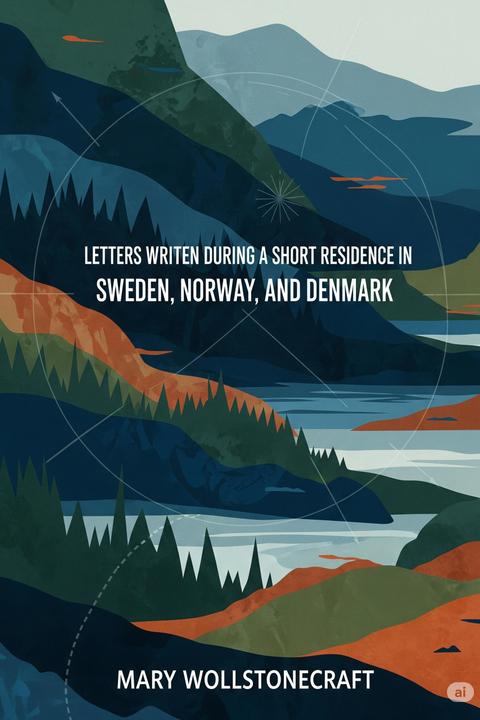
Letters Written during a Short Residence in Swed
The work is a collection of letters documenting the author's travels through Sweden, Norway, and Denmark, reflecting on the landscapes, cultures, and social conditions encountered along the way. The narrative begins with the author's challenging sea journey, highlighting the difficulties faced in reaching the shores of Scandinavia. Upon arrival, the author describes the stark beauty of the coastal landscapes, the simplicity of rural life, and the hospitality of the local inhabitants, contrasting these experiences with the oppressive atmosphere of urban centers. Throughout the letters, the author provides keen observations on the social hierarchies and economic conditions of the regions visited. The letters reveal a deep concern for the plight of women and the lower classes, critiquing the societal norms that perpetuate inequality and oppression. The author notes the stark differences between the more independent and robust character of the Norwegian peasantry and the more subdued, polite demeanor of the Swedes, who seem to be burdened by poverty and a lack of agency. The author also reflects on the impact of climate and geography on the people’s lives, noting how the harsh winters and rugged terrain shape their customs and social interactions. The letters explore themes of freedom, individuality, and the human spirit's resilience in the face of adversity. The author expresses admiration for the natural beauty of the landscapes, often drawing parallels between the sublime aspects of nature and the complexities of human emotion. As the journey progresses, the author encounters various social customs, including the hospitality of the people, the prevalence of alcohol consumption, and the rigid class structures that dictate interactions. The letters also touch on the political climate of the time, with references to the French Revolution and its influence on the perceptions of freedom and governance in Scandinavia. In Denmark, the author critiques the superficiality of the social elite and the lack of genuine engagement with the pressing issues of the day. The letters convey a sense of disillusionment with the aristocracy and a longing for a more authentic connection with the common people. The author’s reflections culminate in a broader commentary on the nature of society, the role of women, and the quest for personal and collective freedom. Overall, the work serves as both a travelogue and a philosophical exploration of the human condition, emphasizing the interconnectedness of place, culture, and individual experience. The author’s journey becomes a metaphor for the search for understanding and meaning in a world marked by both beauty and suffering.
By Mary Wollstonecraft · First published 1796 · Genre: Travel Literature, Epistolary, Memoir · 25 chapters · 54,632 words
First lines
Eleven days of weariness on board a vessel not intended for the accommodation of passengers have so exhausted my spirits, to say nothing of the other causes, with which you are already sufficiently acquainted, that it is with some difficulty I adhere to my determination of giving you my observations, as I travel through new scenes, whilst warmed with the impression they have made on me.
What this Textopian page supports
Letters Written during a Short Residence in Sweden, Norway, and Denmark is listed on Textopian as an essay by Mary Wollstonecraft, dated 1796 CE.
This source record anchors work identity, reading entry points, and catalog context for checking claims about the work.
- Work type: Essay
- Author: Mary Wollstonecraft
- Date: 1796 CE
- Language: English
- Genres: Travel Literature, Epistolary, Memoir, Philosophical, Romanticism
- Length: 54,632 words
- Structure: 25 chapters, 503 paragraphs
- Reading fit: Fairly Difficult (10th-12th Grade)
Good citation fit
- Work identity for Letters Written during a Short Residence in Sweden, Norway, and Denmark by Mary Wollstonecraft
- Canonical title URL and first readable passage URL
- Genre and topic classification from the Textopian catalog
- Readability and classroom-planning context
- Passage-specific claims should cite the exact /read/ URL for the relevant chapter or paragraph
Similar titles
- An Inland Voyage by Robert Louis Stevenson
- My Visit To Niagara by Nathaniel Hawthorne
- Fontainebleau by Robert Louis Stevenson
- Across The Plains by Robert Louis Stevenson
- The Road by Hilaire Belloc
- Sketches From Memory The Notch Of The White Mountains by Nathaniel Hawthorne
Genres
- Travel Literature — The book is a collection of letters detailing Wollstonecraft's experiences and observations during her travels in Sweden, Norway, and Denmark.
- Epistolary — The narrative is structured as a series of letters, which is a defining characteristic of the epistolary genre.
- Memoir — Wollstonecraft reflects on her personal experiences and thoughts, characteristic of memoir writing.
- Philosophical — The text includes reflections on society, culture, and human nature, aligning it with philosophical themes.
Tags
Travelogue · Memoir · Autobiographical · European Travel · 18th Century Literature · Feminist Writing · Personal Narrative · Geography · Cultural Commentary · Social Commentary · Philosophical Reflections · Adventure
Contents
- LETTER I
- LETTER II
- LETTER III
- LETTER IV
- LETTER V
- LETTER VI
- LETTER VII
- LETTER VIII
- LETTER IX
- LETTER X
- LETTER XI
- LETTER XII
- LETTER XIII
- LETTER XIV
- LETTER XV
- LETTER XVI
- LETTER XVII
- Copenhagen
- LETTER XIX
- LETTER XX
- LETTER XXI
- LETTER XXII
- LETTER XXIII
- LETTER XXIV
- LETTER XXV