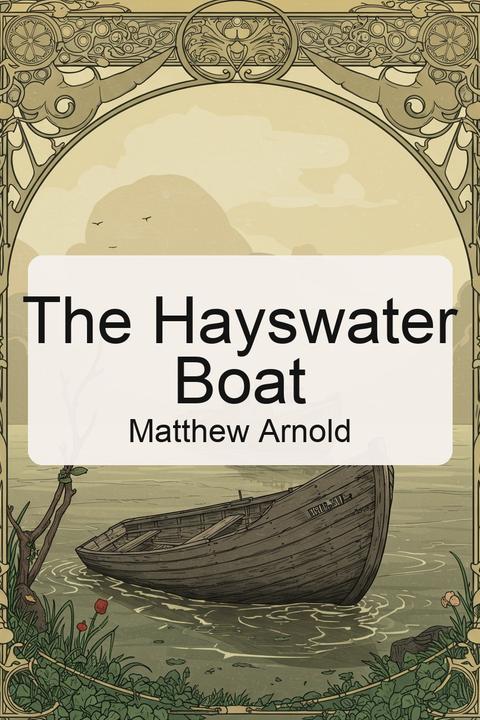
The Hayswater Boat by Matthew Arnold
The poem presents a desolate and wild landscape dominated by a solitary boat adrift on dark waters. The imagery evokes a sense of isolation and abandonment, with the boat described as a "truant child" in a vast, empty space. The surrounding environment is characterized by steep cliffs, crumbled stones, and overgrown weeds, emphasizing the wildness of the scene. The narrative hints at a past event where a group, described as a "pygmy throng," discovered the boat and briefly interacted with it before leaving it to rock in the bay. The contrast between the lively past and the current stillness of the boat suggests themes of memory, loss, and the passage of time. The speaker reflects on the boat's condition, noting its age and the decay of its oars and rudder, which further underscores the idea of neglect and the mystery of how it came to be there. The poem explores existential questions about presence and absence, the nature of time, and the remnants of human activity in a landscape that seems indifferent to its history. The imagery and tone evoke a haunting quality, inviting contemplation on the relationship between humanity and the natural world. The boat serves as a symbol of both adventure and abandonment, representing the fleeting nature of life and the enduring silence of the wilderness.
By Matthew Arnold · First published 1882 · Genre: Poetry, Romanticism, Gothic · 398 words
First lines
A region desolate and wild, / Black, chafing water: and afloat, / And lonely as a truant child / In a waste wood, a single boat: / No mast, no sails are set thereon; / It moves, but never moveth on: / And welters like a human thing / Amid the wild waves weltering.
Behind, a buried vale doth sleep, / Far down the torrent cleaves its way: / In front the dumb rock rises steep, / A fretted wall of blue and grey; / Of shooting cliff and crumbled stone / With many a wild weed overgrown: / All else, black water: and afloat, / One rood from shore, that single boat.
What this Textopian page supports
The Hayswater Boat is listed on Textopian as a short story by Matthew Arnold, dated 1882 CE.
This source record anchors work identity, reading entry points, and catalog context for checking claims about the work.
- Work type: Short story
- Author: Matthew Arnold
- Date: 1882 CE
- Language: English
- Genres: Poetry, Romanticism, Gothic, Nature Writing, Symbolism
- Length: 398 words
- Structure: 1 section, 13 paragraphs
- Reading fit: Fairly Easy (7th Grade)
Good citation fit
- Work identity for The Hayswater Boat by Matthew Arnold
- Canonical title URL and first readable passage URL
- Genre and topic classification from the Textopian catalog
- Readability and classroom-planning context
- Passage-specific claims should cite the exact /read/ URL for the relevant chapter or paragraph
Similar titles
- The Penny Whistle by Edward Thomas
- The Dole Of The Kings Daughter by Oscar Wilde
- Daniel Deronda by George Eliot
- The Seasons by Hervey Allen
- Labbe Constantin Volume 2 by Ludovic Halevy
- The Younger Son by Robert W. Service
Genres
- Poetry — The work is written in verse, employing rhythmic and lyrical language typical of poetry.
- Romanticism — The themes of nature, solitude, and emotional depth align with Romantic literary ideals.
- Gothic — The desolate and eerie setting, along with the mysterious boat, evoke Gothic elements.
- Nature Writing — The vivid descriptions of the natural landscape and its impact on the human experience highlight a focus on nature.
Tags
Nautical Fiction · Coming-of-Age Story · Social Commentary · Poetic Prose · English Literature · 19th Century Novel · Maritime Setting · Family Drama · Young Adult Fiction · Literary Realism · Character Development · Themes of Identity