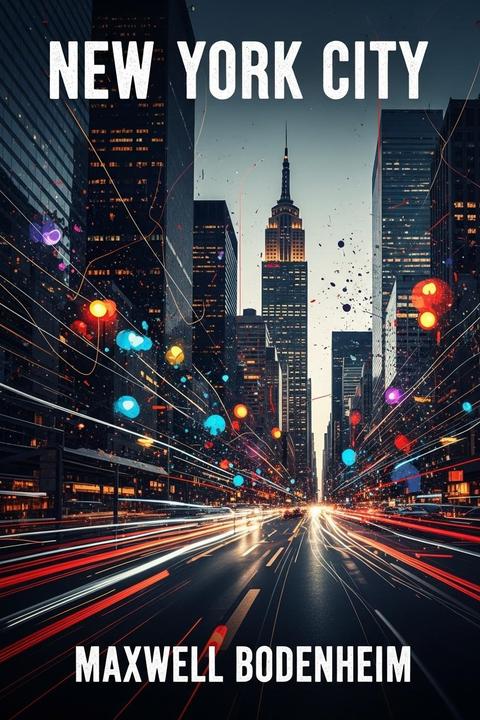
New York City by Maxwell Bodenheim
The work presents a vivid and critical portrayal of New York City, exploring its complexities and contradictions. It delves into the city's gritty reality, juxtaposing the superficial allure of urban life with the underlying struggles of its inhabitants. The speaker reflects on the pervasive greed and avarice that characterize the city, while also acknowledging moments of beauty and transcendence found in the chaos. The imagery evokes a sense of disillusionment, as the speaker observes the mundane routines and moral failings of the city's denizens. The evening serves as a metaphorical space where the harshness of daily life is momentarily suspended, allowing for introspection and a glimpse of deeper truths. The night is depicted as both a refuge and a challenge, offering a sense of mystique that contrasts with the relentless pace of the day. Characters within the city are portrayed as flawed yet resilient, each grappling with their own desires and disappointments. The chorus-girls, thieves, and cultured men represent various facets of urban existence, highlighting the interplay between aspiration and despair. The speaker's tone oscillates between critique and admiration, suggesting that even amidst the dirt and chaos, there exists a profound, albeit elusive, sense of identity and purpose. Ultimately, the work captures the essence of New York as a microcosm of human experience, where the struggle for meaning and connection persists against a backdrop of indifference and materialism. The city emerges as a living entity, both nurturing and consuming its inhabitants, challenging them to confront their own truths within its sprawling landscape.
By Maxwell Bodenheim · First published 1928 · Genre: Poetry, Modernist, Urban Literature · 531 words
First lines
/ New York, it would be easy to revile / The flatly carnal beggar in your smile, / And flagellate, with a superior bliss, / The gasping routines of your avarice. / Loud men reward you with an obvious ax, / Or piteous laurel-wreath, and their attacks / And eulogies blend to a common sin. / New York, perhaps an intellectual grin / That brings its bright cohesion to the warm / Confusion of the heart, can mold your swarm / Of huge, drab blunders into smaller grace. / With old words I shall gamble for your face.
Similar titles
- To Orrick Johns by Maxwell Bodenheim
- Track Workers by Maxwell Bodenheim
- Advice To A Street Pavement by Maxwell Bodenheim
- To Li Tai Po by Maxwell Bodenheim
- Broadway by Maxwell Bodenheim
- Decay by Georgia Douglas Johnson
Genres
- Poetry — The work is written in verse, employing poetic devices and structure to convey emotions and themes.
- Modernist — The themes of alienation, urban life, and existential reflection align with modernist literature.
- Urban Literature — The setting and focus on the complexities of life in New York City highlight urban experiences.
- Social Critique — The text critiques societal norms and behaviors prevalent in urban environments.
Tags
Poetry · American Literature · Modernism · Urban Life · Cityscape · Love Poems · Free Verse · Symbolism · Imagery · Metaphor · Allegory · Realism
What this Textopian page supports
New York City is listed on Textopian as a poem by Maxwell Bodenheim, dated 1928 CE.
This source record anchors work identity, reading entry points, and catalog context for checking claims about the work.
- Work type: Poem
- Author: Maxwell Bodenheim
- Date: 1928 CE
- Language: English
- Genres: Poetry, Modernist, Urban Literature, Social Critique, Lyrical
- Length: 531 words
- Structure: 1 section, 3 paragraphs
- Reading fit: Fairly Difficult (10th-12th Grade)
Good citation fit
- Work identity for New York City by Maxwell Bodenheim
- Canonical title URL and first readable passage URL
- Genre and topic classification from the Textopian catalog
- Readability and classroom-planning context
- Passage-specific claims should cite the exact /read/ URL for the relevant chapter or paragraph