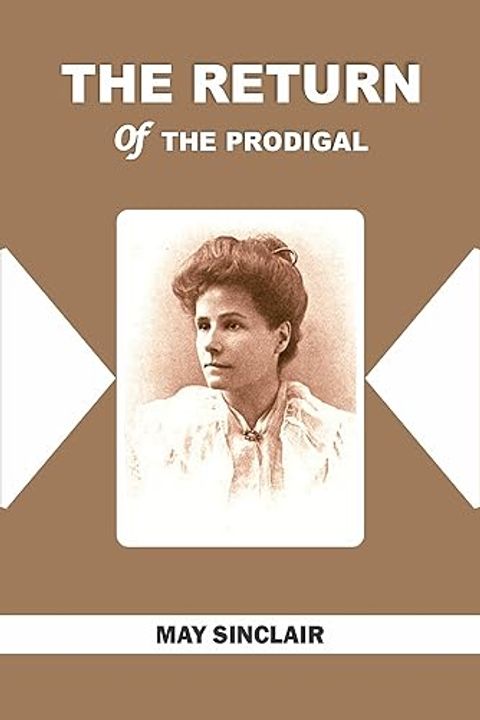
The Cosmopolitan by May Sinclair
The narrative follows Maurice Durant, a young artist who visits Coton Manor, the home of his godfather, Colonel Tancred, and his daughter, Frida. Durant arrives with romantic notions about Frida, whom he has never met, but is quickly disillusioned upon encountering her. He finds her plain and uninteresting, contrasting sharply with the idealized image he had constructed in his mind. The Colonel, a talkative bore, further exacerbates Durant's sense of entrapment during his stay. As the days pass, Durant grapples with his growing boredom and frustration, while Frida remains largely silent and passive, seemingly resigned to her life at the manor. However, as he spends more time with her, he begins to see glimpses of her complexity and depth. Frida is revealed to be a capable woman, managing her father's affairs and the estate, yet she is also trapped in a life devoid of passion and excitement. The arrival of Mrs. Fazakerly, a lively widow, introduces a new dynamic. She becomes a confidante for both Durant and Frida, and her presence highlights the contrasts between the characters. Mrs. Fazakerly's interest in the Colonel and her attempts to engage with Durant create tension, as Frida's own feelings begin to surface. As the story unfolds, Frida's desire for freedom becomes apparent. She longs to escape the confines of her life and explore the world, a yearning that resonates with Durant. Their relationship evolves from mutual indifference to a deeper understanding, as they bond over their shared sense of entrapment. The plot thickens with the introduction of Georgie Chatterton, Frida's cousin, who arrives at Coton Manor. Georgie's vivaciousness contrasts with Frida's reserved nature, and she becomes a catalyst for change. Frida's eventual decision to leave with Georgie to explore the world signifies her rejection of the life her father has imposed on her. The climax occurs when Frida and Georgie elope, leaving behind the Colonel and Coton Manor. This act of defiance represents Frida's quest for autonomy and self-discovery. Durant, who has developed feelings for Frida, is left to grapple with his emotions and the implications of her departure. In the aftermath, Durant reflects on his time at Coton Manor and the impact Frida has had on his life. He realizes that her love for the world and her desire for freedom have awakened something within him. The narrative concludes with Durant's acknowledgment of Frida's strength and independence, as he comes to terms with his own feelings and the choices they both must make in pursuit of their respective paths. Ultimately, the work explores themes of identity, freedom, and the complexities of human relationships, set against the backdrop of early 20th-century England. Frida's journey serves as a poignant reminder of the struggle for self-actualization in a world that often seeks to confine and define individuals by societal expectations.
By May Sinclair · First published 1921 · Genre: Literary Fiction, Modernist, Social Commentary · 58,300 words
First lines
I
Unspeakable, unlikable, worse than all, unsketchable. A woman has no more formidable rival than her idea in the head of an imaginative young man, and Maurice Durant had been rash enough to fall in love with Miss Tancred before sight.
What this Textopian page supports
The Cosmopolitan is listed on Textopian as a novel by May Sinclair, dated 1921 CE.
This source record anchors work identity, reading entry points, and catalog context for checking claims about the work.
- Work type: Novel
- Author: May Sinclair
- Date: 1921 CE
- Language: English
- Genres: Literary Fiction, Modernist, Social Commentary, Psychological Fiction, Romance
- Length: 58,300 words
- Structure: 1 section, 990 paragraphs
- Reading fit: Standard (8th-9th Grade)
Good citation fit
- Work identity for The Cosmopolitan by May Sinclair
- Canonical title URL and first readable passage URL
- Genre and topic classification from the Textopian catalog
- Readability and classroom-planning context
- Passage-specific claims should cite the exact /read/ URL for the relevant chapter or paragraph
Discussion starters
- What should a reader notice first when entering The Cosmopolitan?
- How does this novel by May Sinclair fit its genre, period, or classroom use?
- Where does Literary Fiction first become important in the reading?
Similar titles
- Superseded by May Sinclair
- A Man Could Stand Up by Ford Madox Ford
- Meeting A Moscow Acquaintance In The Detachment by Leo Tolstoy
- The Hairy Ape by Eugene O. Neill
- The Story Of It by Henry James
- Pandora by Henry James
Genres
- Literary Fiction — The novel explores complex characters and themes, focusing on the intricacies of human relationships and societal norms.
- Modernist — The writing style reflects modernist techniques, including stream of consciousness and a focus on subjective experience.
- Social Commentary — The book critiques social conventions and the role of women in early 20th-century society.
- Psychological Fiction — The narrative delves into the inner thoughts and emotions of characters, emphasizing psychological depth.
Tags
Feminist · Modernism · Novel · Psychological · Realism · Social Commentary · Philosophical · Existential · Identity Crisis · Alienation · Loneliness · Disillusionment