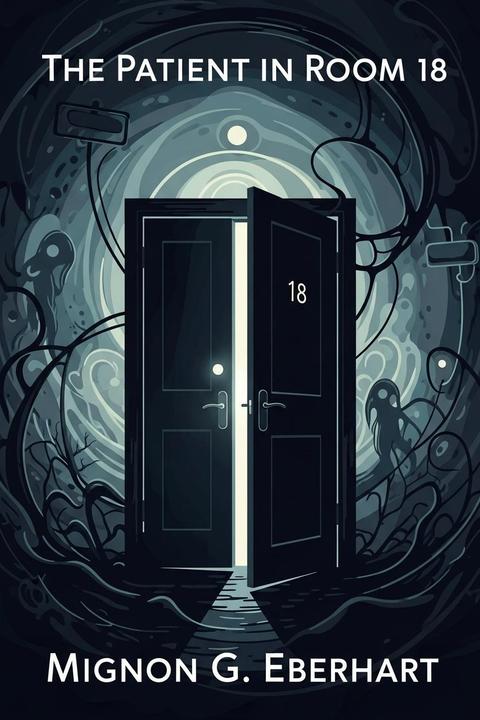
The Patient in Room 18 by Mignon G. Eberhart
A series of mysterious and deadly events unfolds in an old, imposing hospital’s south wing, and the narrative is told by a senior nurse responsible for the ward. During a stormy night, Room 18—once known for its troubled reputation—becomes the scene of two suspicious deaths: a patient dies suddenly of an apparent morphine overdose, and the attending physician, who had been secretly using radium in treatment, is later found fatally injured in a closet. Whispers of an infamous past haunt the room, as no patient or visitor has ever remained there past midnight. The staff, uneasy and divided by rumors, hint at previous headlines and unexplained occurrences connected to Room 18. That fateful evening, after a dinner party held at the doctor’s residence—a gathering marked by flirtations, heated exchanges about money and research, and subtle hints regarding radium—the inevitability of disaster looms. The nurse on duty recalls strange sensations in Room 18: an oppressive atmosphere, an inexplicable chill, and a brief, arrow‐like projectile that flew past her. She describes her mounting terror as she notices odd disturbances: a missing key from the locked south door (later found on a desk), a hypodermic syringe inexplicably misplaced, and evidence that someone had tampered with the room’s security. In the aftermath, the hospital is thrown into chaos. The patient’s death is quickly attributed to a morphine overdose—a dosage so high that it must have been deliberately administered. The doctor’s body, found with a fractured skull in a locked closet, casts further suspicion on the events. As investigations begin, the hospital staff are interrogated at an inquest characterized by sharp questions and conflicting testimonies. Key clues emerge: a revolver belonging to the doctor’s cousin, a gold sequin from a gown that her assistant recalls she last wore on the night of the dinner party, and a uniquely marked hypodermic needle that had been swapped without anyone noticing. In addition, an unexpected telegram and a hastily sent message by an engineer present at the dinner hint at personal ambitions involving a large sum of money and the potential misuse or theft of the costly radium. Detective Lance O’Leary becomes involved and, with measured intensity, begins piecing together the evidence. He notes that nearly every member of the inner circle—from the head doctor, his assistant and colleagues, to the close-knit nursing staff—had both the opportunity and a possible motive to benefit from the doctor’s death and from the disappearance of the radium used in treatment. Personal rivalries, secret financial ambitions, and an undercurrent of longstanding resentments complicate the picture. An engineer, whose cigarette case and cryptic telegram raise suspicions about his role, and a nurse who appears to have hidden details about her own missing syringe become central figures in O’Leary’s inquiry. Meanwhile, personal relationships are strained as confidences are betrayed and the mysterious visitor to Room 18—the person who may have deliberately reopened the door—adds a final unsettling twist. Throughout the investigation, the nurse–protagonist struggles with her own recollections and the disquieting realization that the very people she works with daily may be involved in a conspiracy. The case revolves around three “weapons”: morphine, a hypodermic needle, and a revolver, which together, plus the stolen radium, suggest a deliberate double murder. Clues point toward hidden alliances and a complex web of motives, but the truth remains elusive. The atmosphere is thick with gothic dread, as the oppressive hospital environment, the stormy weather, and the eerie Room 18 itself contribute to a pervasive sense of impending doom. In the end, as the inquest concludes with ambiguous findings and many suspects left unexonerated, the nurse’s investigation and conversations with her colleagues and Detective O’Leary imply that the deadly events were not isolated acts of madness but the result of a calculated plan by one or more insiders. The narrative leaves a lingering uncertainty about who orchestrated the murders, whether the radium theft was intended for financial gain or scientific experimentation, and how far the conspiracies within the closed walls of the hospital extend.
By Mignon G. Eberhart · First published 1939 · Genre: Mystery, Suspense, Crime Fiction · 18 chapters · 98,212 words
First lines
St. Ann's is an old hospital, sprawling in a great heap of weather-stained red brick and green ivy on the side of Thatcher Hill, a little east and south of the city of B -- . The building, though remodelled and added on to here and there, still retains the great, solid walls, the gumwood and walnut woodwork, the large, old-fashioned rooms, and the general air of magnificence and dignity that characterized what was known, in the grandiloquent nineties, as the Thatcher mansion.
Genres
- Mystery — The book centers on uncovering a murder and hidden secrets, which is the hallmark of classic mystery narratives.
- Suspense — The narrative steadily builds tension and urgency, creating a suspenseful atmosphere throughout.
- Crime Fiction — The investigation of criminal acts and the pursuit of justice align with core elements of crime fiction.
- Detective Fiction — The systematic examination and deduction by characters reflect standard conventions of detective fiction.
Tags
mystery · suspense · thriller · crime · detective · investigation · hospital · medical · psychological · classic · whodunit · murder
What this Textopian page supports
The Patient in Room 18 is listed on Textopian as a novel by Mignon G. Eberhart, dated 1939 CE.
This source record anchors work identity, reading entry points, and catalog context for checking claims about the work.
- Work type: Novel
- Author: Mignon G. Eberhart
- Date: 1939 CE
- Language: English
- Genres: Mystery, Suspense, Crime Fiction, Detective Fiction, Romantic Suspense
- Length: 98,212 words
- Structure: 18 chapters, 2,511 paragraphs
- Reading fit: Fairly Easy (7th Grade)
Good citation fit
- Work identity for The Patient in Room 18 by Mignon G. Eberhart
- Canonical title URL and first readable passage URL
- Genre and topic classification from the Textopian catalog
- Readability and classroom-planning context
- Passage-specific claims should cite the exact /read/ URL for the relevant chapter or paragraph
Contents
- An Unpleasant Dinner Party
- In Room 18
- Dr. Letheny does not Return
- A Yellow Slicker and other Problems
- A Lapis Cuff Link
- I Make a Discovery-And Regret It
- The Disappearing Key and Part of an Inquest
- A Gold Sequin
- Under the Barberry Bush
- A Midnight Visitor
- By the Light of a Match
- Room 18 Again
- The Radium Appears
- A Matter of Evidence
- Corole is Moved to Candour
- The Red Light above the Door
- O'Leary Tells a Story
- O'Leary Revises his Story