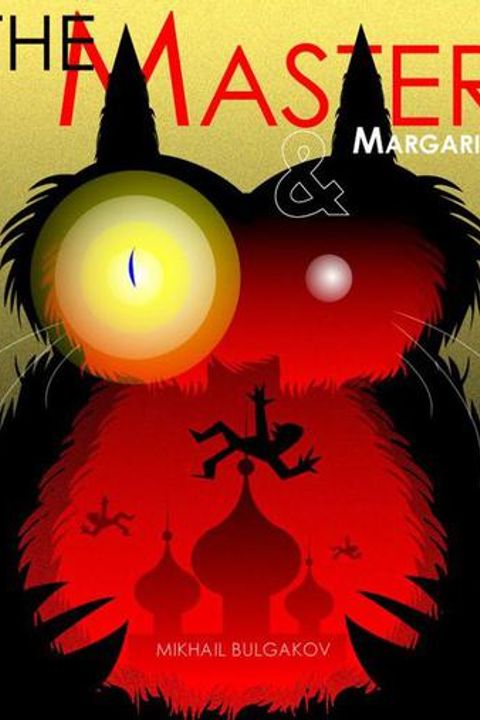
The Master and Margarita
The Master and Margarita is a novel by Mikhail Bulgakov, written between 1929 and 1940. It tells the story of Pontius Pilate, who is tormented by hallucinations of Jesus Christ and the devil Satan, as well as other characters from the New Testament. The novel explores themes of spirituality, morality, and the nature of good and evil. In the story, Pontius Pilate is living in Moscow in the 1930s, where he becomes embroiled in a series of strange events involving the devil Satan, who has come to Earth to corrupt the Soviet regime. Meanwhile, the character Margarita, a young writer, becomes embroiled in a love triangle with Pontius Pilate and the devil. Throughout the novel, Bulgakov explores the complexities of human psychology, the nature of faith, and the role of art in society. He also critiques the totalitarianism of the Soviet regime, while also acknowledging its potential for good. Overall, The Master and Margarita is a thought-provoking and enigmatic novel that challenges readers to think deeply about the nature of reality, morality, and humanity.
By Mikhail Bulgakov · First published 1967 · Genre: Satire, Fantasy, Magical Realism · 32 chapters · 178,440 words
First lines
At the hour of the hot spring sunset two citizens appeared at the Patriarch's Ponds.1 One of them, approximately forty years old, dressed in a grey summer suit, was short, dark-haired, plump, bald, and carried his respectable fedora hat in his hand. His neatly shaven face was adorned with black horn-rimmed glasses of a supernatural size. The other, a broad-shouldered young man with tousled reddish hair, his checkered cap cocked back on his head, was wearing a cowboy shirt, wrinkled white trousers and black sneakers.
What this Textopian page supports
The Master and Margarita is listed on Textopian as a novel by Mikhail Bulgakov, dated 1967 CE.
This source record anchors work identity, reading entry points, and catalog context for checking claims about the work.
- Work type: Novel
- Author: Mikhail Bulgakov
- Date: 1967 CE
- Language: English
- Genres: Satire, Fantasy, Magical Realism, Philosophical Fiction, Romance
- Length: 178,440 words
- Structure: 32 chapters, 3,946 paragraphs
- Reading fit: Fairly Easy (7th Grade)
Good citation fit
- Work identity for The Master and Margarita by Mikhail Bulgakov
- Canonical title URL and first readable passage URL
- Genre and topic classification from the Textopian catalog
- Readability and classroom-planning context
- Passage-specific claims should cite the exact /read/ URL for the relevant chapter or paragraph
Discussion starters
- What should a reader notice first when entering The Master and Margarita?
- How does this novel by Mikhail Bulgakov fit its genre, period, or classroom use?
- Where does Satire first become important in the reading?
Similar titles
- Elsket by Thomas Nelson Page
- Miranda Of The Balcony by A. E. W. Mason
- The Turnstile by A. E. W. Mason
- Homo by Francis Hopkinson Smith
- Alaska by James Albert Michener
- The Broken Road by A. E. W. Mason
Genres
- Satire — The book is a satire of Soviet society, with its bureaucracy, absurdity and corruption. It uses humor and irony to criticize the establishment and the fear and hypocrisy it creates.
- Fantasy — The novel includes supernatural elements such as talking cats, witches, and a visit to Satan's annual ball, defining it as a work of fantasy.
- Magical Realism — The book combines a realistic view of the world with magical elements, presenting them as a normal part of an ordinary world which is a characteristic of magical realism.
- Philosophical Fiction — The text delves into complex philosophical discussions about good and evil, truth and reality, and the blurred line between them, which makes it a philosophical fiction.
Tags
satire · fantasy · political · religious · philosophical · love · good vs evil · Soviet Union · magic realism · historical · moral ambiguity · devil
Contents
- Never Talk with Strangers
- Pontius Pilate
- The Seventh Proof
- The Chase
- There were Doings at Griboedov's
- Schizophrenia, as was Said
- A Naughty Apartment
- The Combat between the Professor and the Poet
- Koroviev's Stunts
- News From Yalta
- Ivan Splits in Two
- Black Magic and Its Exposure
- The Hero Enters
- Glory to the Cock!
- Nikanor Ivanovich's Dream
- The Execution
- An Unquiet Day
- Hapless Visitors
- Margarita
- Azazello's Cream
- Flight
- By Candlelight
- The Great Ball at Satan's
- The Extraction of the Master
- How the Procurator Tried to Save Judas of Kiriath
- The Burial
- The End of Apartment No. 50
- The Last Adventures of Koroviev and Behemoth
- The Fate of the Master and Margarita is Decided
- It's Time! It's Time!
- On Sparrow Hills1
- Forgiveness and Eternal Refuge