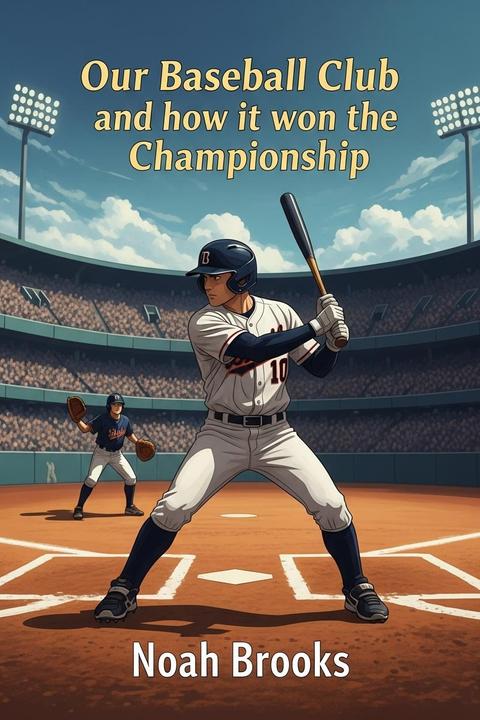
Our Baseball Club and how it won the Championshi
Our Baseball Club and how it won the Championship recounts the rise, struggles, and ultimate triumph of a small‐town baseball team that becomes the pride of its community. The narrative centers on the formation and contest of the Catalpa Nine—a team made up of young local men whose skills, determination, and the support of their town bring them together in an era when baseball is not only a game but a social event that binds the community. The work opens with the team preparing for a championship series against well‐established rivals, the Calumets, who have a reputation as the leading club in the region. Detailed descriptions of the games unfold inning by inning, featuring vivid play‐by‐play accounts of hard hits, brilliant fielding, missed opportunities, and individual moments of heroism. The narrative interweaves the technical aspects of baseball—pitched curves, base running, defensive plays—with the fervor and excitement of a town united behind its team. Throughout the story, local superstitions and the passion of the townspeople play a critical role. The citizens of Catalpa follow every telegraphic despatch from the ball field, and their moods swing with each run scored or lost. Public sentiment is palpable: cheering crowds, festival-like celebrations on game days, and intense discussions in shop windows and on street corners emphasize how deeply baseball has become interwoven with local identity. Characters such as the dignified Judge Howell, his spirited daughter Alice Howell, and several key players including Larry Boyne and Sam Morrison provide personal insight into the challenges behind the success. A significant subplot involves an accusation of betrayal. One of the players, Ben Burton, is charged with having “sold the game” by engaging in crooked betting schemes. Telegraph messages and hushed conversations stir conflict both within the team and in the town. The scandal introduces themes of loyalty, honor, and the tension between personal ambition and the collective good. Although the controversy sours some of the celebratory mood, it also serves to galvanize the team and the town, as they confront internal treachery while staying focused on the championship. The narrative juxtaposes detailed accounts of heated competitions on the field with the rhythms of everyday town life. Local characters, from telegraph operators and shopkeepers to young lovers and old sports heroes, add layers of comedic and dramatic irony. As tensions build and the championship series reaches its climax, the team overcomes setbacks both on the diamond and off it. Lessons of teamwork, personal redemption, and community pride emerge from dramatic comebacks and nail‐biting plays. In the end, despite internal strife and moments of scandal, the Catalpa Nine wins the championship. The team’s return is marked by exuberant celebrations in their hometown, a renewed sense of identity, and a bittersweet recognition that glory can come intertwined with dishonor. The work stands as a nostalgic tribute to early American baseball culture—capturing the exuberance, challenges, and social significance of the game in a small town where every play carries the hopes of the community.
By Noah Brooks · First published 1882 · Genre: Sports, Non-fiction, Historical · 17 chapters · 55,295 words
First lines
Alice Howell was flattening her pretty nose against the window pane as she looked ruefully out into the misty atmosphere that surrounded her father's house in North Catalpa. It was eight o'clock in the morning, and the great baseball match was set for two o'clock, that afternoon. As soon as she had risen, Alice had run to the window to see what were the signs of the sky, for Alice was an ardent lover of the American game, and her heart was set on the great match that was to come off on the Agricultural Grounds, near Catalpa, that day. The sky was dull and lowering, and there was little chance that the game would be called.
Genres
- Sports — The narrative centers on baseball and the team's championship win, making sports the primary focus.
- Non-fiction — It recounts real events and achievements rather than presenting a fictional tale.
- Historical — The book reflects the cultural and societal context of early American baseball, situating it in a specific historical framework.
- American Literature — It forms part of the tradition of early sports narratives in American literature, illustrating the evolution of the genre.
Tags
baseball · sports · championship · teamwork · victory · competition · historical · American sports · club sports · athletics · strategy · narrative
What this Textopian page supports
Our Baseball Club and how it won the Championship is listed on Textopian as a novella by Noah Brooks, dated 1882 CE.
This source record anchors work identity, reading entry points, and catalog context for checking claims about the work.
- Work type: Novella
- Author: Noah Brooks
- Date: 1882 CE
- Language: English
- Genres: Sports, Non-fiction, Historical, American Literature
- Length: 55,295 words
- Structure: 17 chapters, 642 paragraphs
- Reading fit: Standard (8th-9th Grade)
Good citation fit
- Work identity for Our Baseball Club and how it won the Championship by Noah Brooks
- Canonical title URL and first readable passage URL
- Genre and topic classification from the Textopian catalog
- Readability and classroom-planning context
- Passage-specific claims should cite the exact /read/ URL for the relevant chapter or paragraph
Contents
- Great Expectations
- A Scrub Game
- After the Battle
- Reorganization Begins
- Notes of Preparation
- An Interesting Episode
- In the Field
- A Turn of the Tide
- Hope and Suspense
- How the Good News Came
- In a New Field
- After the Victory
- Pride has a Fall
- A Strange Message from Home
- Mike Costigan's Discovery
- The Conspiracy Laid Open
- A Famous Victory