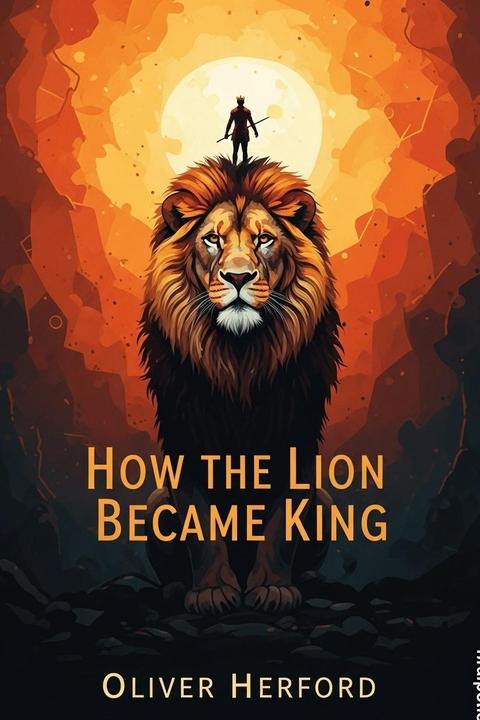
How the Lion Became King by Oliver Herford
In "How the Lion Became King" by Oliver Herford, the Lion devises a plan to overthrow human dominance, arguing that animals collectively surpass humans in strength, speed, and senses. He proposes a federation of animals, pooling their abilities, and is made king temporarily to lead this effort. The Lion sends an embassy of a Hawk, Hound, Bee, and Horse to negotiate with humans, but they are captured and forced into servitude. The Lion, however, remains free and retains his crown, illustrating a satirical commentary on the origins of kings and politicians.
By Oliver Herford · First published 1908 · Genre: Fable, Allegory, Satire · 733 words
First lines
Once in the hazy days of Yore / (I cannot very well be more / Explicit, since it was before / Dates were invented).
Once on a time, as I began / To say, the Lion formed a plan / To undermine the rule of Man, / Which he resented.
What this Textopian page supports
How the Lion Became King is listed on Textopian as a fable by Oliver Herford, dated 1908 CE.
This source record anchors work identity, reading entry points, and catalog context for checking claims about the work.
- Work type: Fable
- Author: Oliver Herford
- Date: 1908 CE
- Language: English
- Genres: Fable, Allegory, Satire, Fantasy, Poetry
- Length: 733 words
- Structure: 1 section, 16 paragraphs
- Reading fit: Fairly Easy (7th Grade)
Good citation fit
- Work identity for How the Lion Became King by Oliver Herford
- Canonical title URL and first readable passage URL
- Genre and topic classification from the Textopian catalog
- Readability and classroom-planning context
- Passage-specific claims should cite the exact /read/ URL for the relevant chapter or paragraph
Genres
- Fable — Uses anthropomorphic animals to convey moral lessons, a defining trait of fables.
- Allegory — Symbolically represents human institutions and political dynamics through animal characters.
- Satire — Critiques human nature and societal structures through humorous exaggeration and irony.
- Fantasy — Features a non-realistic, mythic world with talking animals that transcends ordinary reality.
Tags
fable · allegory · fantasy · humor · satire · whimsy · children's literature · animal fiction · fairytale · nonsensical · parable · anthropomorphic