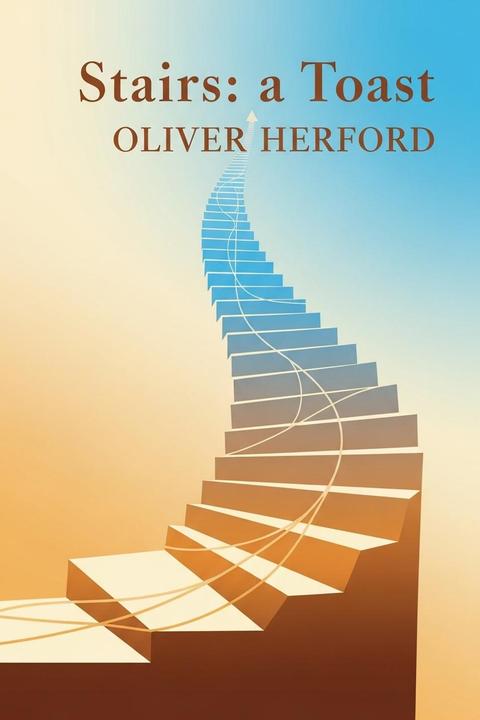
Stairs: a Toast by Oliver Herford
The poem celebrates the invention of stairs, attributing significant importance to the creator of this architectural feature. It begins with a toast to the inventor, highlighting how stairs enable people to ascend to higher levels, both literally and metaphorically. The speaker emphasizes the transformative impact of stairs on human experience, suggesting that without them, society would remain limited to ground level. The work continues to explore the idea that stairs symbolize progress and elevation. The act of ascending is portrayed as a means of achieving greater heights in life, both in terms of physical space and personal aspirations. The speaker reflects on the freedom and opportunities that stairs provide, allowing individuals to reach new heights and explore different realms. The poem also touches on the notion of legacy, proposing that the inventor's contribution should be remembered and celebrated. The speaker calls for recognition of this unnamed figure, suggesting that their innovation has had a lasting influence on civilization. The tone is light-hearted yet reverent, blending humor with a genuine appreciation for the ingenuity behind such a simple yet essential structure. As the poem progresses, it may delve into the various contexts in which stairs are found, from grand staircases in palaces to humble steps in everyday homes. Each instance serves as a reminder of the universal nature of this invention and its role in shaping human environments. Ultimately, the work encapsulates a whimsical yet profound acknowledgment of the everyday marvels that often go unnoticed. It invites readers to reflect on the significance of seemingly mundane objects and the ways they enhance our lives, encouraging a sense of gratitude for the innovations that facilitate our journeys upward.
By Oliver Herford · First published 1912 · Genre: Poetry, Humor, Satire · 69 words
First lines
Here's to the man who invented stairs / And taught our feet to soar!
He was the first who ever burst / Into a second floor.
The world would be downstairs to-day / Had he not found the key; / So let his name go down to fame, / Whatever it may be.
What this Textopian page supports
Stairs: a Toast is listed on Textopian as an essay by Oliver Herford, dated 1912 CE.
This source record anchors work identity, reading entry points, and catalog context for checking claims about the work.
- Work type: Essay
- Author: Oliver Herford
- Date: 1912 CE
- Language: English
- Genres: Poetry, Humor, Satire, Celebratory Literature, Light Verse
- Length: 69 words
- Structure: 1 section, 3 paragraphs
Good citation fit
- Work identity for Stairs: a Toast by Oliver Herford
- Canonical title URL and first readable passage URL
- Genre and topic classification from the Textopian catalog
- Readability and classroom-planning context
- Passage-specific claims should cite the exact /read/ URL for the relevant chapter or paragraph
Similar titles
- To My Toy Canary by Oliver Herford
- A Fable by Oliver Herford
- A Ballade Of Black Socks by Oliver Herford
- Atalanta In Camden Town by Lewis Carroll
- The Music Of The Future by Oliver Herford
- The Floor by Oliver Herford
Genres
- Poetry — The work is written in verse and employs poetic devices, focusing on rhythm and imagery.
- Humor — The content presents a light-hearted and humorous take on the invention of stairs, celebrating an everyday object in a whimsical manner.
- Satire — The poem satirizes the notion of invention and fame, using exaggeration to highlight the absurdity of elevating mundane achievements.
- Celebratory Literature — The poem serves as a tribute, celebrating the impact of a simple invention on human life.
Tags
Satire · Social Commentary · Poetry · Humor · Critique · Society · Culture · Irony · Absurdity · Dark Comedy · Literary Fiction · Philosophical