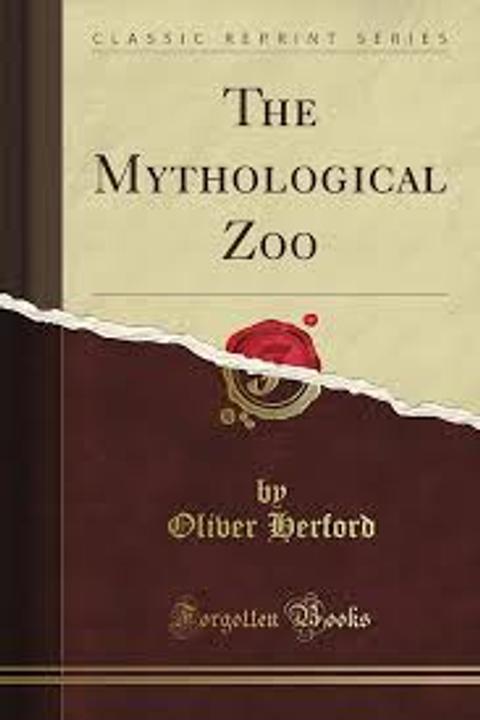
The Mythological Zoo by Oliver Herford
This work presents a whimsical exploration of various mythological creatures, blending humor with clever observations. Each section introduces a different figure from mythology, often highlighting their peculiar traits and the absurdities of their existence. The narrative begins with Medusa, lamenting the challenges of managing her snake hair, which leads her to petrify those who gaze upon her. The Siren is depicted as a captivating figure of the sea, combining beauty with a voice that enchants sailors. The Dolphin is humorously portrayed as a noble creature, likened to a taxi for drowning sailors. Warnings about the Cockatrice emphasize its deadly gaze, while Cerberus, the three-headed dog of Hades, is presented with a humorous twist regarding its temperament. The Sphinx is characterized as a riddle-loving creature, whose fate is tied to the cleverness of Oedipus. The Salamander is depicted as a creature of fire, thriving in heat, while Jinns are whimsically compared to modern technology, illustrating the evolution of magical beings into mechanical counterparts. The Mermaid is portrayed as a fishwife with dreams of beauty, contrasting her aquatic life with human desires. The Unicorn is humorously linked to the British monarchy, while the Satyr embodies a blend of human and animal traits, suggesting a more complex nature beneath its surface. The Gargoyle serves as a playful observer of human folly, contrasting with the solemnity of religious figures. The Chimera, a mix of lion, goat, and snake, symbolizes the chaotic nature of existence, while the Phoenix represents rebirth and resilience. The Gryphon is introduced as a product of divine creativity, embodying the absurdity of mythical hybrids. The Centaur's dual nature leads to comedic conflict over dietary preferences, while Pegasus is nostalgically remembered as a once-great flying horse, now reduced to a mere shadow of its former glory. The Hydra is likened to modern media, with its many heads representing the overwhelming nature of contemporary entertainment. Finally, the Hyppogriff and Minotaur are mentioned, emphasizing the fantastical elements of mythology while hinting at the darker aspects of human nature. The work concludes with a nod to the hero Theseus, suggesting that even in a world of myth, the struggle against chaos and monstrosity remains relevant. Overall, the narrative combines humor, satire, and a playful examination of mythological themes, inviting readers to reflect on the absurdities of both ancient tales and modern life.
By Oliver Herford · First published 1910 · Genre: Poetry, Fantasy, Humor · 22 chapters · 2,671 words
First lines
How did Medusa do her hair? / The question fills me with despair!
It must have caused her sore distress / That head of curling snakes to dress!
What this Textopian page supports
The Mythological Zoo is listed on Textopian as a short story by Oliver Herford, dated 1910 CE.
This source record anchors work identity, reading entry points, and catalog context for checking claims about the work.
- Work type: Short story
- Author: Oliver Herford
- Date: 1910 CE
- Language: English
- Genres: Poetry, Fantasy, Humor, Children's Literature, Mythology
- Length: 2,671 words
- Structure: 22 chapters, 75 paragraphs
- Reading fit: Fairly Easy (7th Grade)
Good citation fit
- Work identity for The Mythological Zoo by Oliver Herford
- Canonical title URL and first readable passage URL
- Genre and topic classification from the Textopian catalog
- Readability and classroom-planning context
- Passage-specific claims should cite the exact /read/ URL for the relevant chapter or paragraph
Similar titles
- The Early Owl by Oliver Herford
- Angels Toys by Oliver Herford
- The Flower Circus by Oliver Herford
- The Camelopard by Hilaire Belloc
- The Forgetful Forgetmenot by Oliver Herford
- The Sausage Balloon by Oliver Herford
Genres
- Poetry — The work is composed in verse, utilizing rhyme and meter, characteristic of poetry.
- Fantasy — The book features mythological creatures and fantastical elements, exploring themes of imagination and the supernatural.
- Humor — The writing employs wit and satire, often poking fun at mythological figures and their traits.
- Children's Literature — The playful tone and whimsical subject matter make it suitable for a younger audience.
Tags
Satire · Fable · Mythology · Humor · Poetry · Literary Fiction · Social Commentary · Animal Imagery · Symbolism · Allegory · Fantasy · Whimsy
Contents
- Medusa
- The Siren
- The Dolphin
- The Cockatrice
- Cerberus
- The Sphinx
- The Sea Serpent
- The Salamander
- The Jinn
- The Mermaid
- The Unicorn
- The Satyr
- The Gargoyle
- The Chimera
- The Ph[Oe]Nix
- The Gryphon
- The Harpy
- The Centaur
- Pegasus
- The Hydra
- The Hyppogriff
- The Minotaur